Intro
Digital marketing is one of the most crowded topics online.
Every agency, SaaS company, consultant, freelancer, affiliate site, course creator, and marketing tool wants visibility. The search results are full of long-form guides, comparison pages, software listicles, agency service pages, case studies, and blogs that have been building authority for years.
That makes link building harder than it used to be.
For marketing agencies, SEO brands, PPC tools, email platforms, affiliate sites, and growth teams that want more relevant placements, BuyNicheEdits offers digital marketing niche edits on pages connected to SEO, content marketing, PPC, email marketing, social media, affiliate marketing, SaaS, analytics, and online growth.
The goal is not just to get another backlink. It is to get a link that fits naturally inside content your audience might actually read.
A niche edit is a backlink added into an existing article. Instead of publishing a brand-new guest post, your link is placed into content that is already live. When the article is relevant, the link can feel natural because the topic, reader, and page context already line up.
The All-in-One Platform for Effective SEO
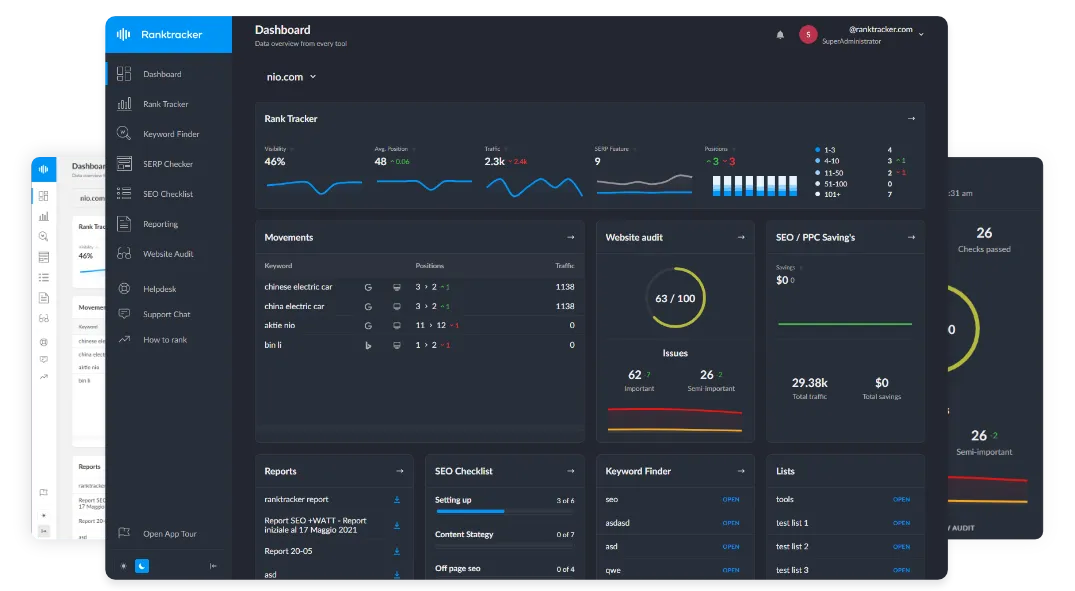
Behind every successful business is a strong SEO campaign. But with countless optimization tools and techniques out there to choose from, it can be hard to know where to start. Well, fear no more, cause I've got just the thing to help. Presenting the Ranktracker all-in-one platform for effective SEO
We have finally opened registration to Ranktracker absolutely free!
Create a free accountOr Sign in using your credentials
For digital marketing brands, that context matters. A link to an email tool from an article about lifecycle campaigns makes sense. A link to a PPC agency from a guide about paid search makes sense. A link to an SEO platform from a piece about keyword tracking makes sense. A link from a random unrelated lifestyle article usually does not.
What are digital marketing niche edits?
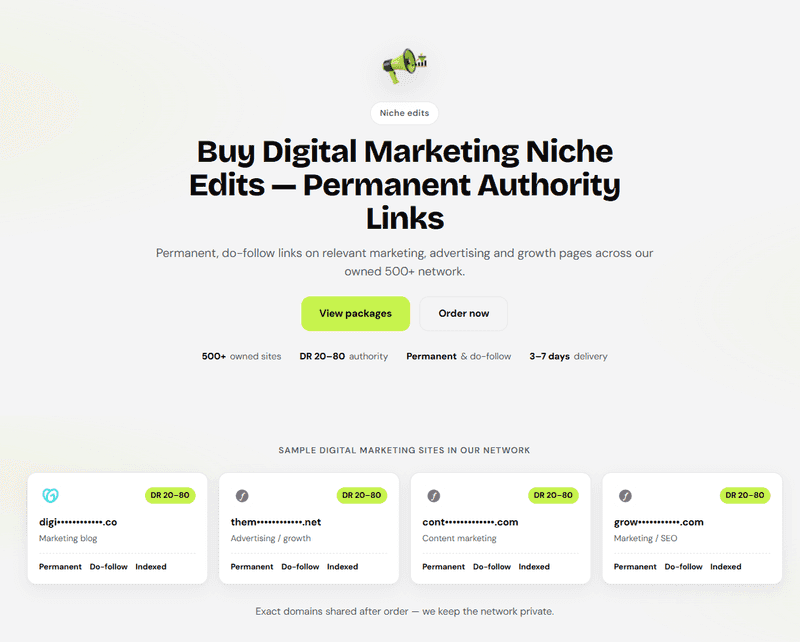
Digital marketing niche edits are contextual backlinks placed into existing content on websites related to marketing, SEO, PPC, email marketing, content strategy, social media, conversion optimisation, analytics, SaaS, affiliate marketing, or business growth.
A digital marketing niche edit might be placed inside an article about:
SEO strategy Content marketing Paid search Email automation Affiliate marketing Social media growth Conversion rate optimisation Marketing analytics Marketing tools Agency growth Lead generation SaaS marketing Ecommerce marketing AI search visibility
The link should fit naturally inside the article. It might point to a marketing tool, agency service page, strategy guide, case study, comparison article, template, or educational resource.
This is different from a guest post. A guest post is a new article written and published for the campaign. A niche edit is added to an existing article. Both can work, but they are useful in different ways. Ranktracker has a full guide on niche edits vs guest posts if you want to compare when each approach makes more sense.
The All-in-One Platform for Effective SEO
Behind every successful business is a strong SEO campaign. But with countless optimization tools and techniques out there to choose from, it can be hard to know where to start. Well, fear no more, cause I've got just the thing to help. Presenting the Ranktracker all-in-one platform for effective SEO
We have finally opened registration to Ranktracker absolutely free!
Create a free accountOr Sign in using your credentials
For digital marketing brands, niche edits can be useful because many of the pages you want to grow already exist. You may already have a service page, tool page, comparison page, case study, or long-form guide. A relevant niche edit can help support that page without needing to create a new article every time.
Why digital marketing link building can look spammy
Digital marketing is a niche where everyone knows the game.
Publishers understand links. Agencies understand anchors. SaaS companies understand commercial keywords. Competitors understand backlinks. That means poor link building is easier to spot.
A marketing link can look spammy when it is placed in the wrong context, uses awkward anchor text, or points to a page that does not really help the reader.
For example:
A PPC tool belongs in content about paid search, ads, landing pages, or campaign tracking. An email marketing platform belongs in content about newsletters, automation, retention, or CRM workflows. An SEO agency belongs in content about organic traffic, audits, content strategy, or rankings. An affiliate marketing guide belongs in content about reviews, commissions, monetisation, or comparison sites. A CRO tool belongs in content about landing pages, testing, or conversion funnels.
That kind of context makes the link feel useful.
Digital marketing also overlaps with several related areas. A campaign may naturally include SEO niche edits, PPC niche edits, email marketing niche edits, affiliate marketing niche edits, SaaS niche edits, or AI search niche edits depending on the page being promoted.
The mistake is using these categories randomly.
A PPC page should not be supported by generic marketing links only. It should also have paid search context. An email automation page should not be treated the same as an SEO audit page. A link building service page should have backlink, SEO, or agency context.
The closer the link matches the page, the less forced it feels.
What makes a good digital marketing niche edit?
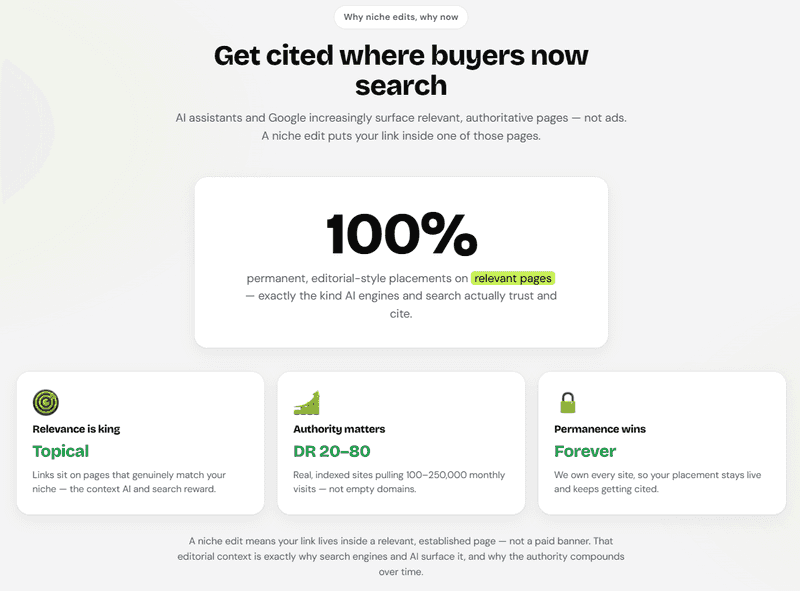
A good digital marketing niche edit should look like it belongs in the article.
The surrounding paragraph should be relevant. The anchor text should read naturally. The page you link to should help the reader continue learning, comparing, or solving the problem discussed in the article.
A poor niche edit does the opposite. It forces a commercial anchor into an unrelated sentence, links to a thin landing page, or sits on a site that has no clear connection to marketing.
Strong digital marketing niche edits usually have four things in common: topic fit, natural anchor text, a useful target page, and a publisher that makes sense.
The article should match the marketing topic
Digital marketing is broad, so the page topic matters.
An article about SEO is not the same as an article about email marketing. A guide to PPC budgets is not the same as a guide to affiliate commissions. A piece about social media growth is not the same as a technical article about analytics tracking.
The link should match the specific topic.
For example, if you are building links to an SEO tool, articles about keyword research, rank tracking, backlinks, or audits are a good fit. If you are building links to a PPC agency page, paid search, Google Ads, landing pages, and campaign management content will usually be more relevant.
If you are building links to an email platform, newsletters, automation, CRM, retention, and ecommerce email content are better matches. If the page is about affiliate marketing, then content around review sites, partnerships, commissions, and monetisation makes more sense.
This is where relevance matters more than broad metrics.
A smaller marketing blog with a tightly related article can be more useful than a larger general site with no real topical connection. The best placement is the one that makes sense to a reader.
The anchor text should sound human
Digital marketing campaigns often become over-optimised because marketers know the keywords they want.
That can lead to anchors that feel robotic or forced. A sentence that should read naturally suddenly turns into a keyword-stuffed placement.
A healthier campaign uses a mix of exact-match, partial-match, branded, URL, and natural anchors.
For example, a digital marketing campaign might use anchors like:
Digital marketing niche edits marketing link building PPC campaign guide email automation software this SEO reporting resource BrandName https://www.example.com/
The best anchor depends on the sentence.
If the article is about building links for marketing brands, “digital marketing niche edits” may fit naturally. If the article is explaining newsletter strategy, “email automation software” or “this retention guide” may read better. If the target page already has many optimised anchors, a branded or URL anchor may be safer.
Before choosing anchors, it helps to understand the keyword strategy behind the page. Ranktracker’s Keyword Finder can help identify marketing keywords, compare difficulty, and find terms that match the right search intent.
The target page should be worth linking to
Backlinks work best when the destination page is genuinely useful.
A thin service page, vague tool page, or outdated guide may not benefit much from more links. In digital marketing, the search results are often full of detailed guides, strong SaaS pages, agency pages, comparison posts, templates, and case studies. Your page needs to hold up.
Good digital marketing link targets often include:
SEO service pages PPC agency pages Email marketing tool pages Affiliate marketing guides Content marketing resources Marketing automation pages Analytics guides Case studies Comparison pages Free templates Marketing calculators SaaS feature pages AI search visibility guides
The page should match the search intent.
If someone lands on a PPC agency page, they should understand the service, process, proof, and next step. If they land on an email marketing guide, they should get practical advice. If they land on a tool page, they should quickly understand what the tool does and why it matters.
Before building links, it is worth checking the target page for technical issues. Ranktracker’s Website Audit can help identify crawl problems, missing metadata, broken links, duplicate content, and other issues that may hold the page back.
A good backlink can help a strong page compete. It cannot fully rescue a page that does not satisfy the reader.
The publisher should make sense
A good digital marketing niche edit should come from a site that has a real reason to publish about marketing, business, software, online growth, ecommerce, or analytics.
A suitable publisher might be:
A digital marketing blog An SEO publication A PPC resource site An email marketing blog A SaaS website An agency blog A business publication An ecommerce marketing site An affiliate marketing resource A content marketing blog A social media marketing site A technology publication
The publisher does not have to be huge. A focused marketing site can be more useful than a generic site that publishes about every topic.
The question is simple: would this article naturally mention your page?
If the article is about marketing automation, an email tool or CRM guide can fit. If the article is about paid search, a PPC agency or landing page guide can fit. If the article is about backlinks, an SEO tool or link building resource can fit.
If the answer is not obvious, the placement may be too forced.
Digital marketing niche edits vs guest posts
Digital marketing brands often use both niche edits and guest posts.
Guest posts are useful when you want to publish a fresh article, control the angle, or build thought leadership. For example, a guest post could work well for a new framework, campaign breakdown, marketing trend, or case study-style article.
Niche edits are useful when you want to place a link into content that already exists. This can be more direct when the page is already relevant and your link adds something useful.
For digital marketing SEO, niche edits can work well when:
You want to support an existing service or tool page You want links inside already-relevant marketing content You want to diversify beyond guest posts You want to strengthen pages that already have rankings or impressions You want contextual links to guides, templates, tools, or case studies
Guest posts still have value, especially when you need full control over the article. But if you already have a strong page and want relevant authority pointing to it, a niche edit can be more efficient.
For a broader breakdown of contextual placements, read our guide to link building niche edits.
How to plan a digital marketing niche edit campaign
A good digital marketing niche edit campaign starts with the pages that matter most.
Do not start with a random number of links. Start by choosing the pages that have business value and ranking potential.
For a marketing brand, that might include:
An SEO service page A PPC landing page An email marketing tool page A content marketing guide A marketing automation page A case study A comparison article A free template An affiliate marketing resource A reporting or analytics page An AI search visibility guide
Once you choose the target pages, map each page to the keywords it should rank for. A PPC page may target paid search terms. An email tool page may target automation or newsletter keywords. A content guide may target informational queries. A comparison article may target high-intent decision-stage keywords.
Then use Rank Tracker to record current positions before any links go live. This gives you a baseline for measuring movement.
You can also use SERP Checker to see what type of content already ranks. This matters because digital marketing SERPs vary a lot.
Some are dominated by tools. Some are dominated by agency pages. Some show long-form guides. Some favour templates or checklists. Some are filled with comparison posts. Some reward fresh trend-led content.
If your page does not match the search intent, backlinks may only help to a point.
How to choose related niche edit categories
Digital marketing overlaps with several other niches, so related categories can help when they match the page.
An SEO-focused page may fit SEO niche edits. A paid search page may fit PPC niche edits. An email platform or newsletter guide may fit email marketing niche edits. A review or monetisation site may fit affiliate marketing niche edits. A marketing SaaS product may also fit SaaS niche edits, while an AI visibility product may connect with AI search niche edits.
The category should follow the page.
For example:
An SEO tool page should lean toward SEO, SaaS, and digital marketing content. A PPC agency page should lean toward paid search and advertising content. An email platform should lean toward email marketing, CRM, and ecommerce content. An affiliate guide should lean toward affiliate marketing and SEO content. An AI visibility page should lean toward AI search and technology content.
This creates a more natural backlink profile because the links reflect the real topics behind the site.
You do not need to link every related category from every article. The goal is to connect the reader to the next useful resource.
How to track digital marketing niche edit results
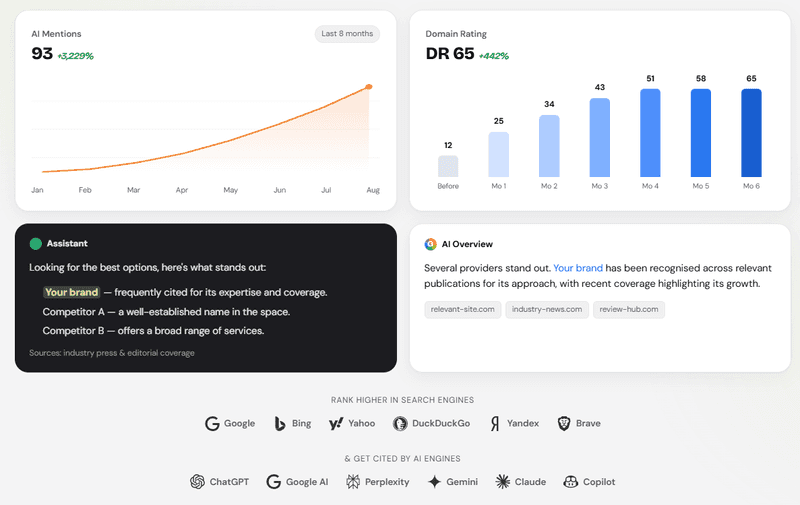
Digital marketing teams should track link building properly because they already understand how many moving parts affect SEO.
A page may move because of a new backlink, but it may also move because competitors updated content, the SERP changed, internal links improved, or search intent shifted.
At a minimum, track:
Whether the backlink stays live Whether the linking page remains indexed Whether the anchor text is correct Whether target keywords improve Whether impressions increase Whether competitors are moving Whether SERP layouts change Whether organic traffic improves
Ranktracker’s Backlink Monitor can help you track whether placed links remain live and unchanged. This matters because articles can be edited, anchors can be changed, and links can be removed.
Ranktracker’s Backlink Checker can help you review competitor backlink profiles. In digital marketing SEO, this is useful because ranking pages often have links from SaaS blogs, agency sites, marketing publications, guest posts, podcasts, partner pages, and comparison content.
Then use Rank Tracker to monitor the keywords connected to each target page. One niche edit may not move a competitive marketing keyword by itself, but a group of relevant placements combined with stronger content and internal links can make a measurable difference over time.
Tracking helps you understand what is working instead of guessing.
Common digital marketing niche edit mistakes
The biggest mistake is assuming marketing links are automatically relevant just because they come from a marketing-adjacent site.
Digital marketing is broad. An email marketing article may not be the best fit for a PPC landing page. A social media article may not be the best fit for a technical SEO tool. A general business blog may not be enough for a highly specific marketing SaaS page.
Common mistakes include:
Building links from loosely related articles Using exact-match anchors too often Sending too many links to the homepage Building links to weak or vague pages Choosing publishers only by DR or traffic Ignoring whether the linking page is indexed Not checking the SERP before building links Not tracking rankings before and after placement Forgetting internal links between related marketing resources Using link placements that would be hard to explain to a client
Internal linking is especially important for digital marketing websites. If you build external links to a guide about email automation, that guide should naturally connect to related pages about CRM, ecommerce, segmentation, templates, and analytics. If you build links to an SEO service page, that page should connect to audits, backlinks, keyword research, reporting, and case studies where relevant.
For SEO definitions around backlinks, anchor text, topical authority, crawlability, and search intent, Ranktracker’s SEO Glossary is a useful supporting resource.
Where digital marketing niche edits fit into a wider SEO strategy
Digital marketing niche edits should support a wider SEO strategy, not replace one.
The strongest campaigns usually combine:
Clear keyword research Useful service or tool pages Strong educational content Technical SEO improvements Internal linking Relevant backlinks Competitor analysis Rank tracking Regular content updates
Niche edits can help strengthen important pages, but those pages still need to deserve visibility.
If a service page is vague, a tool page does not explain the product clearly, or a guide is outdated, backlinks may not be enough. The page still needs to satisfy the user. It still needs to match the search intent. It still needs to make the next step clear.
A good niche edit adds authority. A good SEO strategy makes sure that authority is going to the right page.
The All-in-One Platform for Effective SEO
Behind every successful business is a strong SEO campaign. But with countless optimization tools and techniques out there to choose from, it can be hard to know where to start. Well, fear no more, cause I've got just the thing to help. Presenting the Ranktracker all-in-one platform for effective SEO
We have finally opened registration to Ranktracker absolutely free!
Create a free accountOr Sign in using your credentials
That is why digital marketing brands should treat niche edits as part of a system. They work best when they are connected to content quality, keyword research, technical SEO, internal links, and proper performance tracking.
Final thoughts
Digital marketing niche edits can help agencies, SaaS companies, PPC brands, email platforms, affiliate sites, and growth teams build backlinks that feel more relevant and natural.
The best placements come from pages that already discuss SEO, content marketing, PPC, email marketing, affiliate marketing, SaaS, analytics, ecommerce, social media, or online growth. The closer the article matches the page you want to rank, the stronger the context becomes.
If you want to explore relevant placements for marketing websites, you can start with digital marketing niche edits from BuyNicheEdits.
After your placements go live, use Ranktracker to monitor keyword movement, backlink discovery, SERP changes, and organic performance. That way, you are not just building links. You are tracking whether those links are helping the right digital marketing pages move in the right direction.