Intro
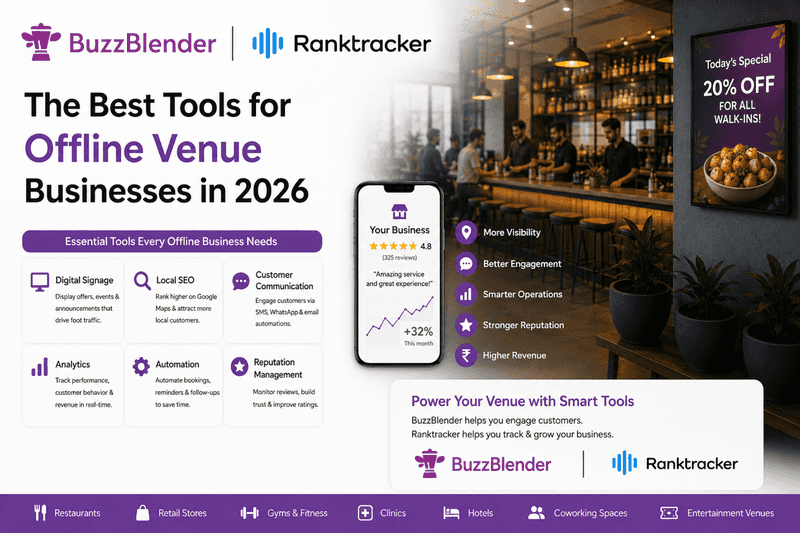
Offline businesses are going through a major transformation. Restaurants, retail stores, gyms, clinics, hotels, coworking spaces, and entertainment venues are no longer relying solely on foot traffic and word-of-mouth. In 2026, the most successful venue-based businesses combine physical experiences with smart digital tools that improve operations, customer engagement, and revenue.
The challenge is no longer whether businesses should digitize — it’s choosing the right tools without overcomplicating operations.
In this guide, we’ll explore the best tools for offline venues in 2026, including digital signage, local SEO, customer communication, analytics, automation, and reputation management. We’ll also look at practical real-world strategies businesses are using to increase visibility and customer retention.
Why offline businesses are investing more in digital tools
Consumer expectations changed dramatically over the past few years.
Customers now expect:
- Instant information
- Fast ordering
- Personalized experiences
- Seamless payments
- Real-time promotions
- Better in-store experiences
At the same time, venue owners face:
- Rising operational costs
- Staffing shortages
- Increased competition
- Higher customer acquisition costs
The solution for many businesses has been operational automation and customer experience technology.
The biggest winners in 2026 are businesses using lightweight, cloud-based tools that improve efficiency without requiring enterprise-level budgets.
1. Digital signage software
Digital signage has become one of the most effective tools for offline venues.
The All-in-One Platform for Effective SEO
Behind every successful business is a strong SEO campaign. But with countless optimization tools and techniques out there to choose from, it can be hard to know where to start. Well, fear no more, cause I've got just the thing to help. Presenting the Ranktracker all-in-one platform for effective SEO
We have finally opened registration to Ranktracker absolutely free!
Create a free accountOr Sign in using your credentials
Restaurants use it for menu boards. Retail stores use it for promotions. Gyms use it for schedules and motivation. Hotels use it for guest communication. Clinics use it for educational content and queue management.
Modern digital signage systems now act as:
- Sales tools
- Communication hubs
- Brand-building platforms
- Advertising channels
- Customer engagement systems
One of the most affordable and flexible options in 2026 is Buzzblender Signage Software.
Unlike traditional enterprise platforms, Buzzblender works across:
- LG WebOS screens
- Samsung displays
- Android TVs - Special Hotel mode
- Commercial media players
It’s increasingly used as an alternative to:
The biggest advantage is simplicity and cost efficiency.
At just $5 per screen monthly, businesses can manage screens remotely without expensive infrastructure or proprietary hardware requirements.
Best for
- Restaurants
- Retail chains
- Gyms
- Hotels
- Clinics
- Franchises
- Coworking spaces
Practical example
A restaurant chain replaced static printed menus with cloud-managed displays and reduced seasonal campaign update time from several days to under 30 minutes.
The result:
- Faster promotion launches
- Improved upsells
- Lower printing costs
- Better consistency across locations
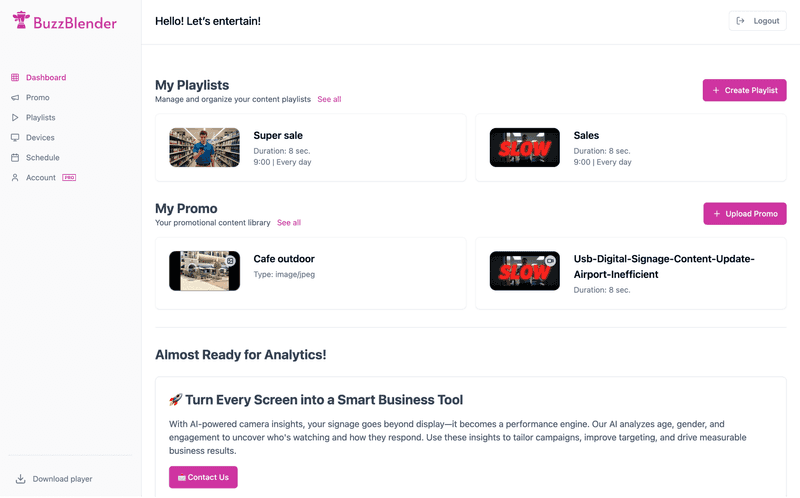
Buzzblender Admin Panel Interface: Easy Set up in 4 minutes
2. Local SEO and visibility tools
Offline businesses live or die by local discovery.
The All-in-One Platform for Effective SEO
Behind every successful business is a strong SEO campaign. But with countless optimization tools and techniques out there to choose from, it can be hard to know where to start. Well, fear no more, cause I've got just the thing to help. Presenting the Ranktracker all-in-one platform for effective SEO
We have finally opened registration to Ranktracker absolutely free!
Create a free accountOr Sign in using your credentials
When customers search:
- “best coffee near me”
- “gym nearby”
- “restaurant open now”
- “dentist in Tallinn”
Businesses with strong local SEO dominate foot traffic.
That’s why local SEO tools became essential for venue operators.
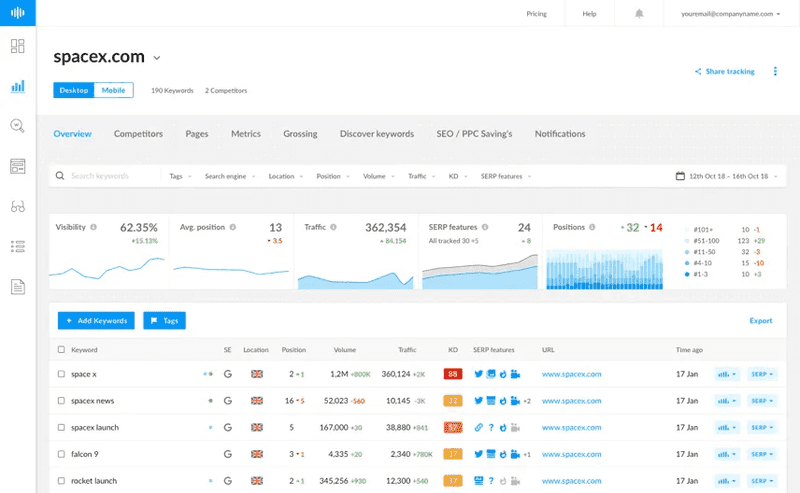
One of the leading platforms is Ranktracker.
Businesses use it to:
- Track local rankings
- Analyze competitor visibility
- Monitor keywords
- Improve Google Business Profile performance
- Discover search opportunities
Why this matters
Most offline purchases now begin online.
Even if the final transaction happens physically, the discovery process often starts with:
- Google Maps
- Reviews
- Search engines
- Social platforms
Businesses ignoring local SEO lose visibility before customers even arrive. Check their guide on how to use CRM Systems Effectively.
3. Reputation management platforms
Reviews influence nearly every offline industry.
Restaurants, clinics, salons, gyms, and hotels all depend heavily on reputation signals.
Customers trust reviews almost as much as personal recommendations.
The best-performing businesses actively manage:
- Google reviews
- Yelp
- TripAdvisor
- Facebook ratings
- Industry-specific review sites
Popular reputation management tools include:
- Birdeye
- Podium
- ReviewTrackers
Effective strategy in 2026
The best venues automate review requests immediately after customer visits using SMS or QR-based feedback systems.
This dramatically increases review volume while improving customer trust.
4. Smart booking and reservation systems
Consumers increasingly prefer self-service bookings.
Modern reservation tools help businesses:
- Reduce phone calls
- Improve scheduling
- Increase occupancy
- Minimize no-shows
- Automate reminders
Top platforms include:
- OpenTable
- Calendly
- Mindbody
Industry examples
Gyms use booking systems for classes. Clinics automate appointments. Restaurants optimize table management. Coworking spaces manage meeting rooms.
Businesses that reduce friction in reservations often improve conversion rates immediately.
5. Customer communication tools
Fast communication has become critical for offline businesses.
Customers expect:
- Instant responses
- Booking confirmations
- Order updates
- Event notifications
- Personalized offers
Modern businesses increasingly use:
- SMS marketing
- WhatsApp messaging
- Automated email flows
- Push notifications
Popular tools include:
- Twilio
- Mailchimp
- Klaviyo
Real-world trend
Restaurants and retailers are moving away from generic email blasts toward segmented campaigns triggered by:
- Visit frequency
- Purchase history
- Location behavior
- Loyalty participation
6. POS and payment ecosystems
Modern POS systems now function as operational hubs.
The best systems combine:
- Payments
- Inventory
- Analytics
- Loyalty
- Employee management
- CRM functionality
Leading platforms include:
- Square
- Toast POS
- Shopify POS
Why integrated systems matter
Disconnected tools create operational inefficiencies.
Integrated ecosystems help businesses:
- Reduce admin work
- Understand customer behavior
- Improve inventory forecasting
- Increase repeat purchases
7. Analytics and customer behavior tracking
Offline businesses increasingly rely on data-driven decisions.
Venue operators now analyze:
- Foot traffic
- Peak hours
- Dwell time
- Customer flow
- Promotion performance
Tools like:
- Google Analytics
- Hotjar
- Looker Studio
help connect online discovery with offline visits.
Emerging trend
Retailers increasingly combine digital signage analytics with POS data to understand:
- Which promotions drive purchases
- Which screen placements work best
- Which content performs by time of day
8. Loyalty and retention platforms
Acquiring new customers is expensive.
That’s why retention tools became a major priority in 2026.
Popular loyalty solutions include:
- Smile.io
- Loyalzoo
- Punchh
Best-performing loyalty strategies
Businesses now focus less on points systems and more on:
- Personalized rewards
- VIP experiences
- Gamification
- Visit streaks
- Community engagement
This creates stronger emotional customer attachment.
9. AI-powered automation tools
AI is rapidly entering offline operations.
Businesses now use AI for:
- Customer support
- Scheduling
- Content creation
- Inventory forecasting
- Dynamic promotions
- Staff optimization
Popular AI business tools include:
- ChatGPT
- Notion AI
- Zapier
Example
Restaurants use AI to automatically generate:
- Daily specials
- Social posts
- Menu descriptions
- Email campaigns
Retailers use AI for localized promotion scheduling.
10. Social media and UGC tools
Offline businesses increasingly rely on customer-generated content.
User-generated content builds:
- Trust
- Social proof
- Local awareness
- Community engagement
Popular tools include:
- Canva
- Later
- Buffer
High-performing tactic
Venues displaying Instagram posts and customer content on digital signage screens often improve engagement and brand recall significantly.
This is especially effective in:
- Cafes
- Gyms
- Restaurants
- Beauty salons
- Entertainment venues
The biggest trend for offline venues in 2026
The most successful businesses are blending physical experiences with digital infrastructure.
The All-in-One Platform for Effective SEO
Behind every successful business is a strong SEO campaign. But with countless optimization tools and techniques out there to choose from, it can be hard to know where to start. Well, fear no more, cause I've got just the thing to help. Presenting the Ranktracker all-in-one platform for effective SEO
We have finally opened registration to Ranktracker absolutely free!
Create a free accountOr Sign in using your credentials
The key trends include:
- Cloud-based operations
- Centralized management
- Real-time personalization
- AI automation
- Data-driven decisions
- Customer experience optimization
Businesses that adopt flexible, affordable tools early gain a major operational advantage.
Final thoughts
Offline businesses are no longer competing only on location or pricing.
They now compete on:
- Experience
- Speed
- Convenience
- Communication
- Visibility
- Operational efficiency
The best tools in 2026 help venue owners automate repetitive work while improving customer engagement.
For digital signage specifically, platforms like Buzzblender Digital Signage Software are helping businesses modernize communication across LG, Samsung, and Android displays without expensive enterprise licensing.
As more businesses move away from legacy systems like MagicINFO and LG Signage, affordable cloud-based alternatives are becoming the preferred solution for modern venue operations.