Intro

Artificial intelligence has become a practical tool that businesses actively integrate into their daily workflows. In 2026, AI is no longer experimental, it is used to automate routine tasks, improve efficiency, and support faster decision-making across teams.
From operations and finance to marketing and creative work, companies are leveraging AI-powered tools to reduce manual effort and streamline processes. Below are examples of how businesses are applying AI in real workflows to improve productivity and performance.
TL;DR
Artificial intelligence has become a practical, everyday tool for businesses looking to improve workflow efficiency in 2026. From automating repetitive operational tasks to enhancing decision-making and creative processes, AI is now embedded across multiple business functions.
Instead of relying on manual work and disconnected tools, companies are using AI-powered platforms to streamline operations, reduce costs, and improve productivity at scale. These tools help teams work faster, make better decisions, and focus on high-value activities.
The All-in-One Platform for Effective SEO
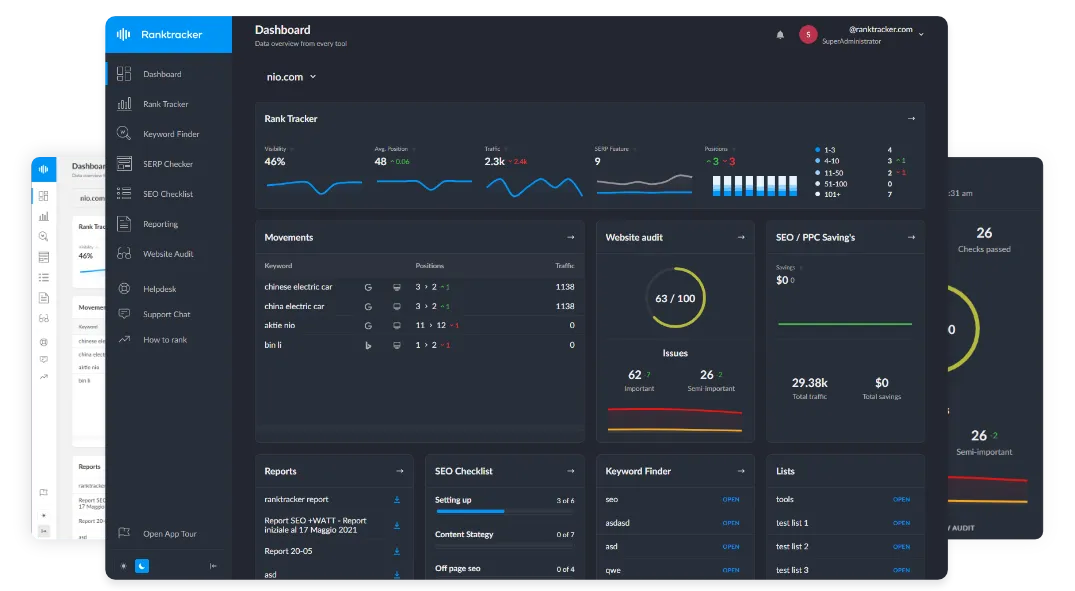
Behind every successful business is a strong SEO campaign. But with countless optimization tools and techniques out there to choose from, it can be hard to know where to start. Well, fear no more, cause I've got just the thing to help. Presenting the Ranktracker all-in-one platform for effective SEO
We have finally opened registration to Ranktracker absolutely free!
Create a free accountOr Sign in using your credentials
Top AI tools helping mature businesses improve workflow efficiency include:
- Yieldigo - AI-driven retail optimization for pricing and promotions
- UiPath - automation platform for repetitive and rule-based workflows
- Design.com - AI-powered design and branding tool
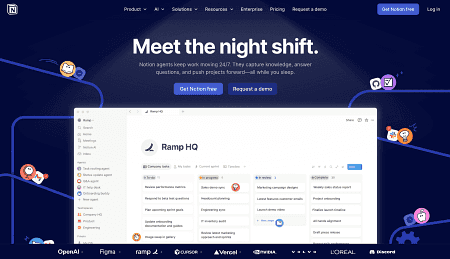
- Notion AI - AI-enhanced workspace for knowledge management and collaboration
Why AI Is Becoming Essential for Modern Businesses
Organizations today operate in increasingly complex environments. They manage large volumes of data, coordinate multiple digital tools, and must make decisions quickly in competitive markets.
Artificial intelligence helps businesses manage this complexity by automating routine tasks and analyzing large datasets faster than traditional methods.
Instead of relying entirely on manual analysis and operational work, companies can use AI to streamline workflows, identify patterns in data, and support faster decision-making across departments. As a result, AI is quickly becoming an essential part of how modern businesses operate.
Top AI Tools to Boost Workflow Efficiency in 2026. Tried & Tested
Artificial intelligence is rapidly becoming a core component of modern business operations. In 2026, companies are no longer experimenting with AI, they are actively embedding it into everyday workflows to automate repetitive tasks, improve accuracy, and enable faster decision-making. From data analysis and process automation to content creation and collaboration, AI tools are helping teams operate more efficiently across all functions.
As organizations scale, the need for smarter, more connected workflows continues to grow. AI-powered platforms allow businesses to reduce manual effort, streamline operations, and unlock new levels of productivity without increasing complexity. Below is a selection of tried-and-tested AI tools that businesses are using today to boost workflow efficiency and drive better results.
Yieldigo
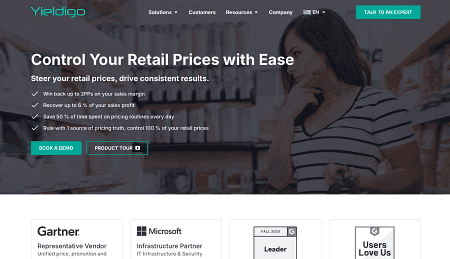
Yieldigo is an AI-driven retail optimization platform designed specifically for grocery and FMCG retailers. The platform uses advanced machine learning models to analyze sales performance, demand elasticity, competitive pricing signals, and product interactions across entire product assortments. By processing large volumes of retail data, Yieldigo generates actionable recommendations that help retailers optimize pricing strategies and promotional planning.
Instead of relying on manual analysis or fixed pricing rules, retailers using Yieldigo can simulate multiple pricing and promotion scenarios before implementing them in stores. This allows commercial teams to understand the potential impact of pricing changes, forecast promotional performance, and adjust strategies based on real-time market conditions.
Another important advantage of AI-driven retail optimization is the ability to evaluate interactions between products. Promotions often affect not only the promoted item but also related products within the category. Yieldigo’s machine learning models analyze these cross-product relationships to ensure that promotions increase overall category performance rather than simply shifting demand between products.
The All-in-One Platform for Effective SEO
Behind every successful business is a strong SEO campaign. But with countless optimization tools and techniques out there to choose from, it can be hard to know where to start. Well, fear no more, cause I've got just the thing to help. Presenting the Ranktracker all-in-one platform for effective SEO
We have finally opened registration to Ranktracker absolutely free!
Create a free accountOr Sign in using your credentials
By combining demand forecasting, price optimization, and promotion analytics in a single platform, Yieldigo helps retail teams make faster and more informed commercial decisions. As a result, retailers can improve promotional effectiveness, increase profitability, and manage pricing strategies at a scale that would be impossible to achieve manually.
As AI adoption continues to grow across the retail industry, platforms like Yieldigo demonstrate how advanced data science and machine learning can transform everyday retail decision-making.
UiPath
Artificial intelligence is increasingly used to automate repetitive and rule-based tasks across business operations. Many companies still spend significant time on manual data entry, reporting, and internal workflows that slow down overall productivity.
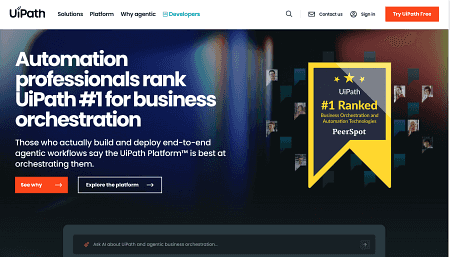
UiPath is an AI-powered robotic process automation (RPA) platform that helps businesses automate routine tasks and workflows. It combines automation with AI capabilities such as document understanding and process mining, allowing organizations to streamline operations and reduce manual effort.
Instead of relying on employees to handle repetitive processes, companies using UiPath can deploy software robots to execute tasks faster and with fewer errors. This improves efficiency, reduces operational costs, and frees up teams to focus on higher-value work.
Design.com
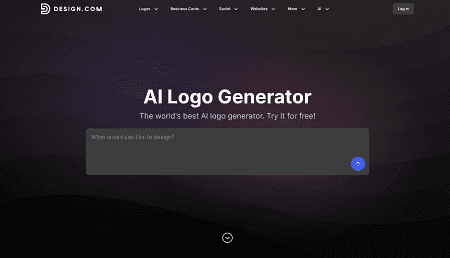
Design.com’s AI logo maker lets users produce professional-quality logos in minutes using smart automation. Drawing from a library of 400,000+ logo templates, a wide range of custom icons, and curated font pairings, the platform generates personalized designs based on your business name and preferences.
Through its conversational AI editor, users can quickly refine layouts, colors, and typography to fit their brand identity.
Beyond logo creation, Design.com provides over 1 million templates for websites, business cards, social media, and other marketing materials, supporting consistent branding with a suite of more than 50 design tools.
Built for startups and small businesses, the platform makes it easy to achieve fast, high-quality results without any prior design skills.
Notion AI
AI is also transforming how teams manage knowledge, collaborate, and organize daily work. In many organizations, information is scattered across tools, making it difficult to maintain clarity and alignment.
Notion AI enhances a popular workspace platform by adding AI-powered writing, summarization, and knowledge management features. It helps teams generate content, summarize documents, and structure information more efficiently within a single workspace.
With Notion AI, teams can speed up documentation, automate meeting notes, and improve internal communication. This allows organizations to reduce time spent on manual writing and focus more on execution and decision-making.
The All-in-One Platform for Effective SEO
Behind every successful business is a strong SEO campaign. But with countless optimization tools and techniques out there to choose from, it can be hard to know where to start. Well, fear no more, cause I've got just the thing to help. Presenting the Ranktracker all-in-one platform for effective SEO
We have finally opened registration to Ranktracker absolutely free!
Create a free accountOr Sign in using your credentials
Key Ways Companies Are Using AI in Daily Workflows
Across industries, businesses are integrating AI into several core operational areas. Below are some of the most common ways organizations are using artificial intelligence to improve efficiency in their daily workflows.
- Automating Repetitive Operational Tasks. One of the most common applications of AI is the automation of repetitive operational tasks. Many companies now use AI-powered tools to handle processes such as data entry, document classification, invoice processing and automation with tools like Order.co, and internal reporting. By automating routine activities, employees can focus more on strategic work that requires human judgment and creativity.
- Improving Data Analysis and Decision-Making. AI is also transforming how businesses analyze data and make strategic decisions. AI-powered analytics tools can quickly process large datasets, detect patterns, and generate actionable insights that would be difficult to identify manually. This helps teams forecast demand, analyze customer behavior, and identify operational inefficiencies more effectively.
- Enhancing Customer Support Operations. Customer support is another area where AI adoption is growing rapidly. AI-powered chatbots and virtual assistants can handle many routine customer inquiries, providing instant responses to common questions. This improves response times and allows human agents to focus on more complex cases.
- Optimizing Marketing Campaigns. Marketing teams increasingly rely on AI to analyze campaign performance and improve audience targeting. AI tools can evaluate historical campaign data, identify effective messaging strategies, and predict which customer segments are most likely to convert. These insights help marketers allocate budgets more efficiently and continuously improve campaign performance.
- **Supporting Financial Forecasting and Planning. **Finance departments are also adopting AI to improve forecasting accuracy and financial planning. AI models can incorporate a wider range of variables and update forecasts as new data becomes available. This allows companies to respond faster to market changes and make more informed financial decisions.
- Accelerating Product Development. Product teams are also benefiting from AI-powered tools that support research and development. AI systems can analyze market trends, customer feedback, and competitor activity to identify new product opportunities. These insights help teams develop products faster and bring innovations to market more efficiently.
Conclusion
Artificial intelligence is rapidly becoming a core component of modern business operations. What once seemed like an emerging technology is now embedded in everyday workflows across departments, from marketing and customer support to finance, product development, and retail operations.
Organizations are increasingly using AI to automate repetitive tasks, analyze complex datasets, and support faster, more informed decision-making. At the same time, AI tools are becoming more specialized. While some platforms focus on general productivity improvements, others are designed to solve industry-specific challenges.
For example, in retail environments, AI platforms such as Yieldigo help businesses optimize pricing and promotion strategies using advanced demand modeling and predictive analytics. Looking ahead, companies that successfully integrate AI into their daily workflows will gain a significant advantage in efficiency, agility, and data-driven decision-making.
In 2026 and beyond, AI is no longer simply a technological innovation, it has become an essential part of how modern organizations operate and compete.