Intro
The best VPNs in 2026 are no longer separated by vague “security” claims alone. The real differences now are network type, privacy verification, device limits, pricing structure, security risk, and whether the provider offers something genuinely distinctive, such as residential IPs, open-source apps, or unlimited simultaneous connections.. For this article, the five services worth comparing are Mysterium VPN, NordVPN, ExpressVPN, Proton VPN, and Surfshark.
There is no single best VPN for every reader. Mysterium stands out for residential IPs and decentralized infrastructure, NordVPN is the broad all-rounder, ExpressVPN is the premium simplicity pick, Proton VPN is the privacy-transparency leader, and Surfshark is the strongest value option for households. All pricing and plan details below come from official vendor pages checked on April 20, 2026, and final totals can still change with taxes, currency, coupons, and renewal terms.
What is a VPN and why is it important in 2026?
A VPN, or virtual private network, encrypts your internet traffic and routes it through a remote server so websites and services see the VPN server’s IP address instead of your home connection. In practical terms, that helps protect you on public Wi‑Fi, reduces visibility from local network snooping, and lets you browse as though you are connecting from another location.
What matters in 2026 is not just whether a VPN encrypts traffic, but how trustworthy and usable the service is after you install it. The strongest current signals are independently reviewed no-logs claims, RAM-only or similarly privacy-preserving server design, open-source apps where available, solid protocol support, and enough network breadth to keep speeds stable without forcing you onto crowded or distant locations.
Shortlist - Best VPNs for different needs
- Mysterium VPN - Best for residential IPs and location flexibility
- NordVPN - Best overall for most users
- ExpressVPN - Best premium option for simplicity
- Proton VPN - Best for privacy and transparency
- Surfshark - Best value for households
Best VPNs in 2026
1) Mysterium VPN
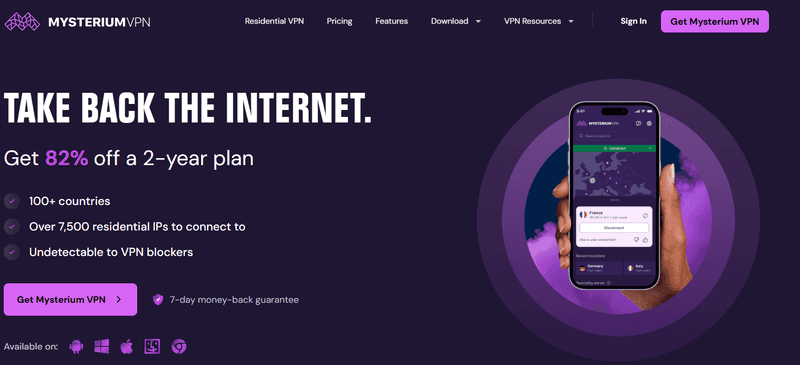
Mysterium VPN earns the client-first spot because it is doing something materially different from the standard centralized VPN pitch. Its official pages focus on a decentralized, peer-to-peer network and 7,500+ residential IPs in 100+ countries, which gives it a different appeal from ordinary data-center-heavy VPN services. If your priority is looking less like obvious VPN traffic while keeping broad VPN locations flexibility, Mysterium has the clearest specialist positioning in this list.
The plan structure matters, though. Mysterium’s Basic tier is a more conventional VPN offer with 6 devices and 57 supported countries on the pricing grid, while Plus and Pro are the tiers that unlock the headline benefits: 100+ supported countries, 7,500+ residential IPs, and city-level choices. The app supports WireGuard and OpenVPN, but Mysterium’s help center says manual WireGuard configuration files and router/device-level manual setup are not currently available, with router support planned for 2026 Q2.
Pros
- 7,500+ residential IPs in 100+ countries.
- Clear differentiation via decentralized, peer-to-peer infrastructure.
- Plus and Pro add city-level choice, which is a meaningful upgrade over a simple country list.
- Pro supports up to 15 simultaneous connections.
Cons
- Basic leaves out the features that make Mysterium stand out, including residential IPs and city-level choice.
- Manual WireGuard/router setup is not yet available.
- Refund coverage is 7 days, not 30.
Pricing
- Basic: $10.49 monthly, $3.69/month on 1 year ($44.28), or $2.59/month on 2 years ($62.16).
- Plus: $13.49 monthly, $4.29/month on 1 year ($51.48), or $3.09/month on 2 years ($74.16).
- Pro: $18.49 monthly, $6.99/month on 1 year ($83.88), or $4.79/month on 2 years ($114.96). VAT may apply.
2) NordVPN
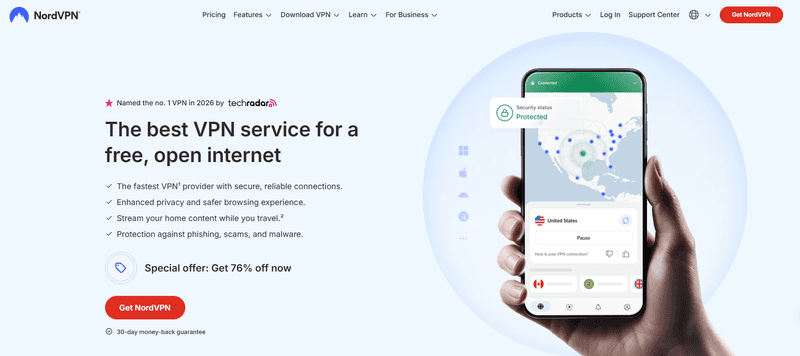
NordVPN is the easiest “default recommendation” in this roundup because its official product pages are strong across almost every mainstream buying criterion. Nord says it has 9,300+ servers covering 211+ locations, supports up to 10 devices, and offers specialized servers for use cases like Double VPN and Onion Over VPN. It also highlights RAM-only servers and 10 Gbps infrastructure, which gives it a mature, security-heavy positioning without forcing you into a niche use case.
The All-in-One Platform for Effective SEO
Behind every successful business is a strong SEO campaign. But with countless optimization tools and techniques out there to choose from, it can be hard to know where to start. Well, fear no more, cause I've got just the thing to help. Presenting the Ranktracker all-in-one platform for effective SEO
We have finally opened registration to Ranktracker absolutely free!
Create a free accountOr Sign in using your credentials
The privacy messaging is also unusually well-developed on Nord’s own site. Its no-logs page says the company’s practices have been verified by independent experts, and it details five separate no-log reviews across PwC and Deloitte. Add in the 30-day money-back guarantee and the current Basic plan pricing, and Nord looks like the safest all-round pick for readers who want breadth, polish, and fewer trade-offs.
Pros
- Very broad network footprint with 9,300+ servers across 211+ locations.
- Five independently reviewed no-logs assessments are clearly documented on Nord’s site.
- Specialized servers add flexibility for advanced privacy use cases.
- Up to 10 devices on one account.
Cons
- The cheapest prices are introductory and renew higher later.
- Extra tools and identity features are spread across higher-priced tiers, not just Basic.
- The plans page is feature-dense enough that new buyers may need to slow down and compare tiers carefully.
Pricing
- Basic: $12.99 monthly, $4.99/month on 1 year ($59.88 first year), or $3.09/month on 2 years with 3 extra months ($83.43 first 27 months).
- Higher tiers: current 2-year intro pricing shows Plus at $3.59/month, Complete at $4.99/month, and Prime at $6.99/month.
- New subscriptions are covered by a 30-day money-back guarantee.
3) ExpressVPN
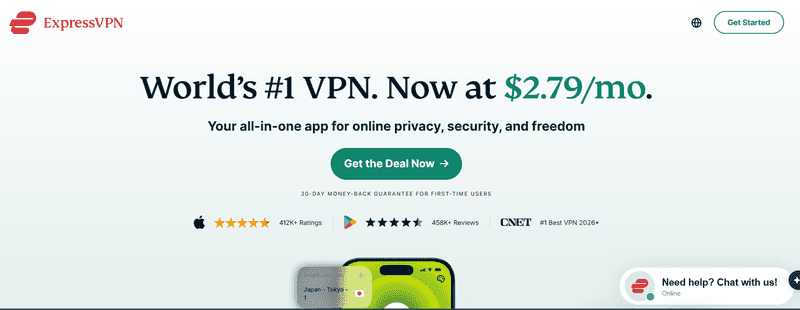
ExpressVPN still feels like the premium, polished option in this category. Its homepage leans on 105 countries, a 30-day money-back guarantee, easy setup, and broad platform support, while its trust materials emphasize TrustedServer and a no-activity-logs stance. If you want a provider that feels intentionally simplified rather than maximally feature-stacked, ExpressVPN still executes that positioning better than most rivals.
The new pricing structure is the main thing buyers need to understand. ExpressVPN now sells Basic, Advanced, and Pro tiers. Its pricing page currently lists Basic at 10 simultaneous connections, Advanced at 12, and Pro at 14, while the device page markets “up to 14” simultaneous active connections overall. On the trust side, ExpressVPN says TrustedServer runs entirely on RAM, wiping data on reboot, and it documents audits and assessments involving KPMG, PwC, and Cure53.
Pros
- Servers in 105 countries.
- Strong trust messaging around RAM-only TrustedServer and independently reviewed privacy/security claims.
- Clear tiering lets you decide whether you want a basic VPN or more bundled protection.
- 30-day money-back guarantee for new users.
Cons
- It is still priced like a premium product, especially if you move beyond Basic.
- Device limits now depend on tier instead of feeling totally uniform.
- Renewal pricing is much higher than the intro deal.
Pricing
- Basic: $3.49/month on 2 years + 4 months ($97.72 first 28 months), then renews at $99.95 annually. The same pricing page shows 10 simultaneous connections on Basic.
- Advanced: $4.49/month on 2 years + 4 months ($125.72 first 28 months).
- Pro: $7.49/month on 2 years + 4 months ($209.72 first 28 months), with 14 simultaneous connections on the pricing grid.
4) Proton VPN
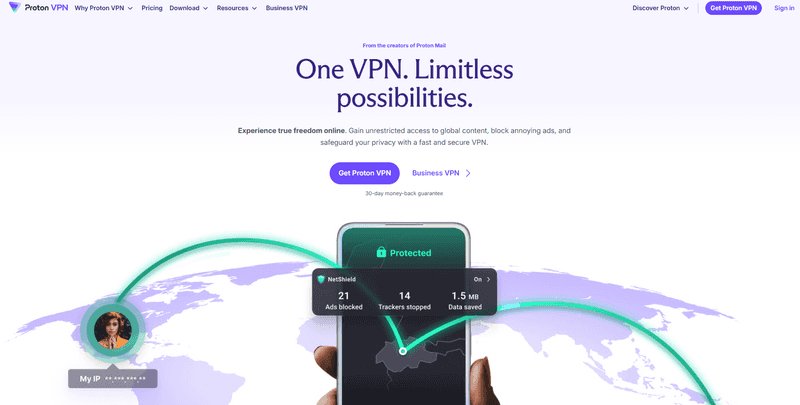
Proton VPN’s strongest argument is trust through transparency. Proton says its apps are 100% open source, independently audited, and backed by a strict no-logs policy. It also leans heavily on Swiss jurisdiction and keeps publishing annual no-logs audit results. For readers who care most about how a VPN proves its privacy claims rather than how aggressively it markets them, Proton has one of the clearest official trust stories in the category.
The paid Plus plan is also more competitive than many people assume. Proton’s current support materials list VPN Plus at €2.99/month on a two-year term, with 17,000+ servers in 126+ countries and support for up to 10 devices. Proton also documents WireGuard, OpenVPN, and IKEv2, plus features like Secure Core, streaming support, P2P, and NetShield on the paid plan.
Pros
- Open-source apps and independent audits are front and center.
- The no-logs policy is documented and supported by recurring Securitum audits.
- Strong paid-plan value with 17,000+ servers in 126+ countries and 10 devices on Plus.
- One of the most credible free-plan offerings on the market.
Cons
- You need VPN Plus for the full premium experience; the free plan is intentionally narrower.
- Device coverage is generous, but not unlimited.
- Proton’s broader ecosystem can tempt buyers upward into Unlimited if they want the full bundle.
Pricing
- Proton Free: free, with 1 VPN connection and servers in 10 countries selected from a limited pool.
- VPN Plus: €9.99/month, €47.88 for 1 year (€3.99/month), or €71.76 for 2 years (€2.99/month).
- Proton Unlimited: €12.99/month, €119.88/year, or €191.76 for 2 years (€7.99/month). Paid plans include a 30-day money-back guarantee.
5) Surfshark
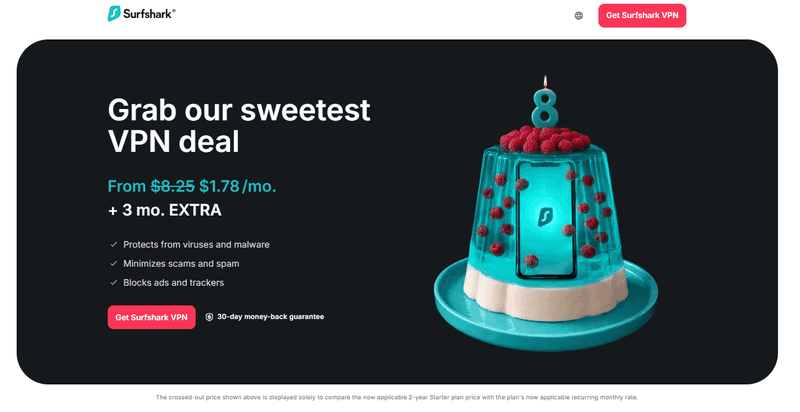
Surfshark’s appeal is simple and strong: one subscription, unlimited simultaneous connections, a broad country footprint, and aggressive long-term pricing. Official pages describe 4,500+ servers in 100 countries, RAM-only infrastructure, and a 30-day money-back guarantee, which makes Surfshark especially attractive when you want to cover a whole home without counting laptops, phones, tablets, TVs, and secondary devices one by one.
The All-in-One Platform for Effective SEO
Behind every successful business is a strong SEO campaign. But with countless optimization tools and techniques out there to choose from, it can be hard to know where to start. Well, fear no more, cause I've got just the thing to help. Presenting the Ranktracker all-in-one platform for effective SEO
We have finally opened registration to Ranktracker absolutely free!
Create a free accountOr Sign in using your credentials
It also does a good job of pairing affordability with recognizable privacy signals. Surfshark says its no-logs policy has been independently assured by Deloitte, and it now frames its server network around RAM-only infrastructure. The plan lineup is Starter, One, and One+, but the core VPN value proposition is already strong on Starter if your goal is low-cost, unlimited-device coverage.
Pros
- Unlimited simultaneous connections are the headline advantage.
- 4,500+ servers in 100 countries with RAM-only infrastructure.
- Deloitte-backed no-logs assurance gives the privacy pitch more weight.
- Strong long-term value on the Starter plan.
Cons
- The cheapest pricing is tied to long-term signup.
- Month-to-month pricing is much less compelling than the intro long-term rate.
- If you want the broader cybersecurity bundle, you may end up moving beyond the basic VPN tier.
Pricing
- Surfshark Starter: Surfshark’s current 2026 pricing content lists the Starter plan at $1.99/month on a 2-year term and $15.45/month month-to-month. Surfshark’s pricing page also states that the cheapest rate is on the 2-year Starter plan and that VAT, currency, and coupons can affect pricing.
- Other bundles: Surfshark also sells One and One+ bundles above Starter.
- Refund coverage is 30 days for eligible first purchases.
How to choose a VPN in 2026
Start by matching the VPN to the job. If you specifically need residential IPs and city-level flexibility, Mysterium is the specialist. If you want the broadest all-round feature set with fewer obvious trade-offs, NordVPN is the safer mainstream default. If you care most about open-source apps and transparent privacy validation, Proton VPN is the best fit. If you want a premium-feeling app and a simple trust story, ExpressVPN is the cleanest pick. If your top priority is covering as many devices as possible at a low long-term rate, Surfshark is the easiest answer.
Then look at the fine print buyers often skip: refund windows, renewal pricing, and which features live in the entry plan versus higher tiers. Mysterium’s residential IPs begin above Basic, Nord’s extras stack up as you move above Basic, Express spreads devices and protection across Basic/Advanced/Pro, Proton’s full experience lives on Plus, and Surfshark’s best value lives on long-term Starter pricing.
Key features to compare before you buy
- Network type and scope: Mysterium’s residential, decentralized approach is very different from Nord, Express, Proton, and Surfshark’s more conventional large-server networks.
- Privacy verification: Look for independent reviews of no-logs claims, RAM-only infrastructure, or open-source audited apps. Nord, Express, Proton, and Surfshark all document third-party validation in different ways.
- Device allowance: Mysterium Pro reaches 15 devices, Nord supports 10, Express currently ranges from 10 to 14 by tier, Proton Plus supports 10, and Surfshark is unlimited.
- Protocols and protections: WireGuard shows up across the shortlist, but the surrounding features differ. Proton documents WireGuard/IKEv2/OpenVPN, Mysterium documents WireGuard/OpenVPN, Surfshark emphasizes CleanWeb and related protections, and Express/Nord lean heavily on their own broader protection suites.
- Pricing structure: Monthly prices can look wildly different from long-term intro rates, and renewal pricing may jump after the first term. Compare both before buying.
Free vs paid VPNs: what changes in practice
A free VPN can be enough if your goal is basic encrypted browsing on a single device and you can live with a smaller network. Proton sets the benchmark here: its official materials say the free plan has no ads, no data limits, no logs, 1 connection, and access to servers in a limited set of countries. That is far more credible than most “free VPN” marketing you see elsewhere.
Paid plans are what unlock the features most people actually buy VPNs for: more locations, more devices, broader protocol access, streaming and P2P support, ad/tracker blocking, residential IPs, or a generous refund window. In this shortlist, that means Mysterium Plus/Pro for residential IPs, Nord for the full all-round package, Express for broader protection tiers, Proton Plus for the full network and premium features, and Surfshark Starter or above for unlimited-device paid coverage.
FAQ
Which VPN is best overall in 2026?
For most readers, NordVPN is the safest all-around pick because it combines a broad network, 10-device support, specialized servers, RAM-only infrastructure, and a heavily documented no-logs position. But “best overall” changes fast if you care most about residential IPs, transparency, or household value.
What makes Mysterium different from the others?
Mysterium’s core differentiator is its decentralized, peer-to-peer model and its focus on residential IPs. Its official pages position this as a way to give users more privacy, control, and flexibility than a standard VPN built only around data-center endpoints.
The All-in-One Platform for Effective SEO
Behind every successful business is a strong SEO campaign. But with countless optimization tools and techniques out there to choose from, it can be hard to know where to start. Well, fear no more, cause I've got just the thing to help. Presenting the Ranktracker all-in-one platform for effective SEO
We have finally opened registration to Ranktracker absolutely free!
Create a free accountOr Sign in using your credentials
How many devices do most people need?
If you only need coverage for a laptop and phone, almost any premium VPN here will do. But households with multiple people and smart devices should look more closely: Nord and Proton support 10 devices, Mysterium Pro reaches 15, Express currently ranges from 10 to 14 by tier, and Surfshark removes the cap entirely.
Is it smarter to buy monthly or long-term?
Almost always, long-term. Across the official pricing pages in this roundup, the cheapest effective monthly rates come from 1-year or 2-year terms, while month-to-month pricing is much higher. Monthly plans make sense for temporary use, but long-term plans win on value.