Intro
Every October, the Penn District in Midtown Manhattan transforms into the nerve center of the global advertising industry. Advertising Week New York — returning October 5–8, 2026 at 100 W. 33rd St. — draws thousands of marketing executives, agency creatives, brand strategists, media buyers, and content creators from across the world. The panels are sharp. The networking is relentless. And the brand activations? Fiercely competitive.
In that environment, every square foot of visible real estate becomes a statement. And no design element makes a bolder, more immediate brand statement than the step and repeat banner.
The Step and Repeat: More Than a Photo Backdrop
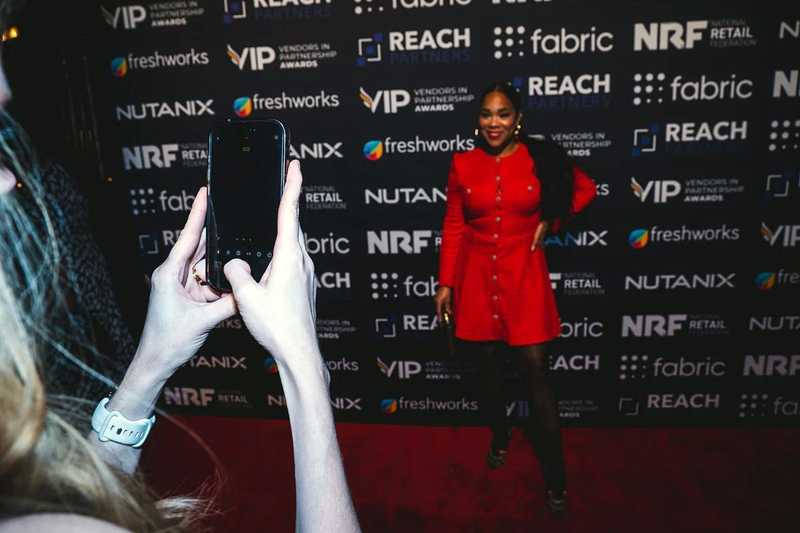
To the casual observer, a step and repeat is simply the logo-covered backdrop you see at red carpet events. But for brand managers and event producers who work the Advertising Week circuit, it's a precision branding instrument.
The repeating grid pattern — logos, wordmarks, and brand marks tiled in perfect diagonal offset — exists for one reason: no matter how a photo is cropped, a sponsor's mark appears somewhere in the frame. It's a design solution born from the logic of print production and refined through decades of live event execution. At an event like Advertising Week, where attendees are constantly photographing panels, networking moments, and brand activations for LinkedIn, Instagram, and X, that visual coverage is worth more than almost any other placement in the room.
Why Advertising Week Is a Step and Repeat Showcase
Advertising Week New York is unique among industry conferences because it is, in itself, a brand exhibition. Every major sponsor — from Meta to Snapchat to Adobe — activates with physical presence. That means dozens of custom-branded environments competing for attendee attention across multiple stages, lounges, and networking spaces simultaneously.
This is where the design quality of your nyc step and repeat becomes a competitive differentiator, not just a logistics item. A poorly printed backdrop with muddy blacks, misaligned logos, or inconsistent scaling gets noticed — by other brand professionals who know exactly what they're looking at.
The Penn District venue itself demands scale. With multiple floors and a sprawling footprint, brands often need multiple backdrop configurations: a hero piece at the main entrance, smaller placements at breakout sessions, and portable roll-up units for satellite activations in the surrounding neighborhood. Getting all of those to read consistently — same color fidelity, same tension in the fabric, same logo clarity — requires a production partner who treats your brand standards with the same precision your design team does.
From the Jacob K. Javits Center to SoHo: Backdrop Logistics in NYC
New York's event geography creates production challenges that don't exist in most other cities. The Jacob K. Javits Center on the Hudson — New York's flagship convention facility and home to events like NY Auto Show, Comic Con, and countless trade shows — requires backdrops scaled to enormous hall dimensions. A standard 8'×8' step and repeat that works perfectly in a hotel ballroom looks like a postage stamp against the Javits's floor-to-ceiling glass walls.
The All-in-One Platform for Effective SEO
Behind every successful business is a strong SEO campaign. But with countless optimization tools and techniques out there to choose from, it can be hard to know where to start. Well, fear no more, cause I've got just the thing to help. Presenting the Ranktracker all-in-one platform for effective SEO
We have finally opened registration to Ranktracker absolutely free!
Create a free accountOr Sign in using your credentials
SoHo activations operate at the opposite extreme. Pop-up brand experiences tucked into cast-iron loft spaces often need compact, quick-deploy solutions — retractable banner systems, tension fabric frames that can be installed by two people in under an hour, and materials that travel without wrinkling.
For brands doing the full Advertising Week activation — a presence at the Penn District venue plus satellite events across Midtown and SoHo — production coordination across multiple step and repeat New York installations becomes a genuine operational challenge. The backdrops need to be identical in output. The scheduling has to be airtight. And the print quality has to survive transport, multiple setups, and the photographic scrutiny of an audience that does this professionally.
Step and Repeat Festival Banners in NYC: The Multi-Day Event Problem
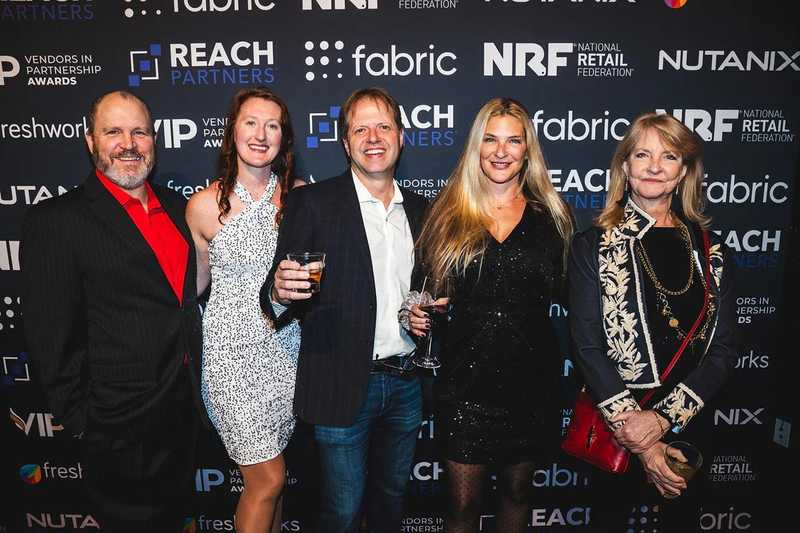
Advertising Week runs four days. That's four days of continuous photography, social media coverage, press walkthroughs, and high-profile appearances — all of which require your backdrop to hold up visually under constant use.
Step and repeat festival banners in NYC face a durability problem that single-event banners don't: repeated handling, environmental stress (temperature shifts between outdoor setups and climate-controlled interiors), and the accumulative wear of multiple days of photo traffic. Wrinkles become visible under the high-contrast lighting rigs used for professional photography. Color shifts that are imperceptible in person become obvious in post-processed images.
This is why fabric has become the dominant material for multi-day event step and repeats in professional event production. Dye-sublimation printing on stretch fabric eliminates wrinkles entirely — the tension frame keeps the graphic taut and smooth regardless of how many times it's been rolled, transported, or set up. Print quality is photographic-grade: sharp at wide angles, consistent across the full surface, with true-black saturation that makes logos pop against even the most aggressively branded surrounding environment.
For vinyl-based backdrops, gloss laminate finishes create glare problems under stage lighting — a detail that matters enormously when your backdrop appears in professional video coverage of a panel or keynote. Matte laminate solves this, but requires a production partner with the calibration to maintain accurate color under a matte coat.
Design Considerations for High-Volume Event Backdrops
The repeating logo grid is deceptively simple to look at and genuinely complex to produce correctly. A few design principles that separate professional event backdrops from amateur executions:
The All-in-One Platform for Effective SEO
Behind every successful business is a strong SEO campaign. But with countless optimization tools and techniques out there to choose from, it can be hard to know where to start. Well, fear no more, cause I've got just the thing to help. Presenting the Ranktracker all-in-one platform for effective SEO
We have finally opened registration to Ranktracker absolutely free!
Create a free accountOr Sign in using your credentials
The same principles apply whether you’re producing backdrops for a political campaign rollout or a Fortune 500 brand activation. As explored in a recent feature on Digital Synopsis, the visual language of large-format print — from campaign signage to event backdrops — succeeds or fails at the production level. Brand consistency starts in the file, but it’s won or lost in the print.
Logo clearance and spacing. The diagonal offset grid requires precise clearance between logo instances so that cropped photos don't bisect a logo awkwardly. Professional production files are built with photo-crop zones in mind — any 16:9 or 4:3 crop of the backdrop should yield at least one fully visible, uncropped logo instance.
Color matching to brand standards. Spot color matching to Pantone references is non-negotiable for brands with established style guides. Dye-sublimation on fabric and UV printing on vinyl require separate calibration — a backdrop that matches your brand on one substrate won't automatically match on the other.
Scale and viewing distance. A backdrop designed for a 6-foot red carpet read differently at 30 feet from a photo position. Logo size, stroke weight, and background contrast need to be optimized for the expected shooting distance, not just for how the file looks on screen.
Setup speed. At a venue with multiple brand zones running simultaneously, your backdrop installation time directly affects how much of the event day you lose to setup. Fabric tension systems install in minutes; grommeted vinyl requires significantly more time and equipment.
The Brand Moment That Travels
One thing distinguishes Advertising Week from most industry events: the photography doesn't stay at the event. Panels, keynote moments, and networking photos circulate through LinkedIn for weeks afterward. A well-placed step and repeat in that content isn't a one-day brand exposure — it's a recurring visual impression every time that photo gets shared, liked, or referenced in a recap post.
That changes the return-on-investment calculus for event production budgets. The backdrop you invest in for four days of Advertising Week actually earns impressions for four weeks of post-event social circulation. Quality, in that context, is not a nicety — it's the difference between a brand impression that reinforces credibility and one that quietly undermines it.
The All-in-One Platform for Effective SEO
Behind every successful business is a strong SEO campaign. But with countless optimization tools and techniques out there to choose from, it can be hard to know where to start. Well, fear no more, cause I've got just the thing to help. Presenting the Ranktracker all-in-one platform for effective SEO
We have finally opened registration to Ranktracker absolutely free!
Create a free accountOr Sign in using your credentials
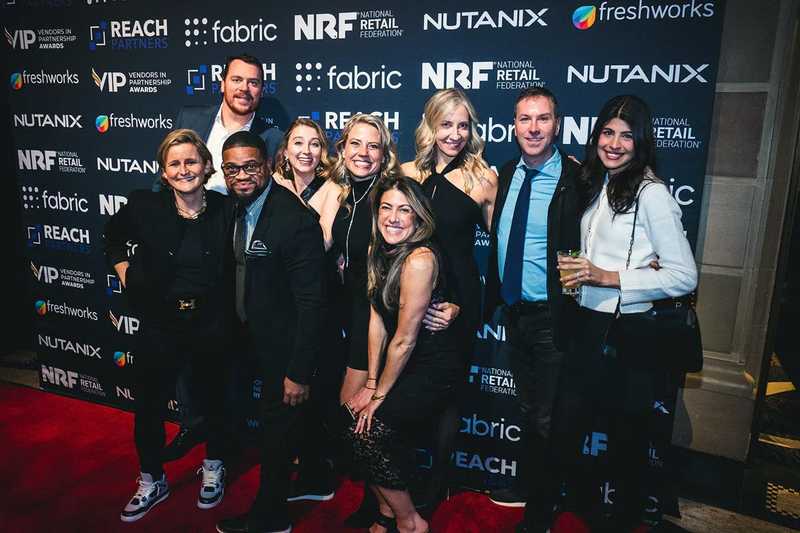
New York's advertising industry knows what good print looks like. At Advertising Week, your step and repeat is being evaluated — consciously and unconsciously — by the people who produce brand campaigns for a living.
Make it count.