Intro

Running an SEO agency may look glamorous from the outside — ranking clients on page one, pulling analytics dashboards, pitching strategy decks. What rarely makes it into the conversation is the mountain of administrative work that keeps the whole operation from falling apart. Contracts, invoices, client onboarding documents, NDAs — the list grows faster than most agency owners expect when they start out.
Most agency founders come from a marketing or technical background, not a business operations one. So when the paperwork starts piling up, they improvise. Some cobble together Google Docs workflows. Others email PDFs back and forth and lose track of which version was signed. That is where a free PDF editor tends to earn its place — handling annotation, form filling, and file conversion without adding another expensive tool to the stack.
Still, the real issue is not the tech stack — it is that most agencies never build a document workflow around it.
The Documents SEO Agencies Actually Deal With
It is easy to underestimate how many document types an agency handles on any given week. Here are the most common ones:
- Service agreements: These define scope, deliverables, and payment terms. Every client needs one, and they often require edits before signing.
- Monthly reports: Most agencies deliver PDF reports — from tools like Semrush, Ahrefs, or custom-built dashboards exported as PDFs.
- Proposal documents: Formatted pitches that often need to be tailored per client, sometimes on short notice.
- Invoices: For agencies not yet using accounting software, invoices often live as PDFs that get manually updated.
- NDAs and data processing agreements: Especially relevant when handling sensitive keyword strategies or access to client analytics accounts.
Each of these has its own lifecycle — drafting, editing, sending, signing, storing — and that lifecycle needs a reliable system behind it.
Where Things Break Down
The gaps usually show up in the same places, regardless of agency size or how long the team has been operating.
The Version Control Problem
Without a document management workflow, agencies end up with folders full of files named things like Final_Contract_v3_ACTUALLY_FINAL.pdf. It sounds like a joke, but it is a real operational hazard. An outdated contract sent to a client, or an old scope of work signed off without review, can lead to billing disputes or scope creep that eats into margins.
The Signature Bottleneck
Contract turnaround is often slower than it should be. Clients print, sign, scan, and email back — or worse, they do nothing for two weeks. Agencies that rely on manual processes lose days waiting for paperwork before onboarding can even begin. This directly delays project kickoff and, by extension, revenue.
Report Formatting and File Conversion
SEO reports frequently need to be reformatted before delivery. A designer or account manager might need to convert an image-heavy audit to PDF, merge several documents into one, or strip out internal notes before sending. These tasks sound minor, but add up across a client base of 20 or 30 accounts.

What a Proper Document Workflow Looks Like
Most agencies already know what good document hygiene looks like in theory. The trick is how to apply this knowledge in practice.
Templates First
Companies that get this right start with a library of templates — for proposals, contracts, reports, and invoices. Templates reduce the time spent on each new document from an hour to minutes, and they keep formatting consistent across the team.
Editable PDFs for Recurring Documents
Monthly report templates, onboarding checklists, and intake forms work much better as fillable PDFs than as Word documents emailed back and forth. Fillable forms reduce errors, look more professional, and are easier for clients to complete on any device.
The tools available for this have improved. Businesses can now edit, annotate, merge, and send PDFs for signature from a single platform, without separate tools for each step.
A Signing Process That Does Not Require a Printer
E-signature workflows are standard in most professional service industries at this point. For SEO agencies still relying on scan-and-email, the switch pays off quickly. Contracts close faster, the audit trail is cleaner, and there is less back-and-forth.
The Operational Cost of Ignoring This
Document chaos is not just an annoyance. It has a measurable cost: time spent hunting for files, delays in client onboarding, billing mistakes from using the wrong invoice versions, and the reputational hit of sending a client a report that has the wrong logo or last month's data.
The All-in-One Platform for Effective SEO
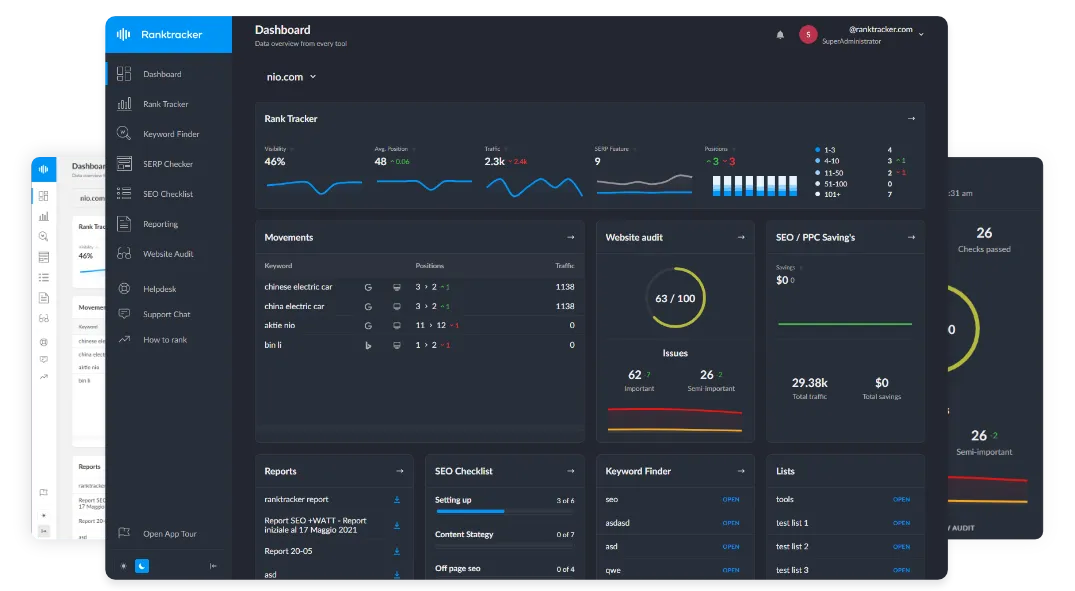
Behind every successful business is a strong SEO campaign. But with countless optimization tools and techniques out there to choose from, it can be hard to know where to start. Well, fear no more, cause I've got just the thing to help. Presenting the Ranktracker all-in-one platform for effective SEO
We have finally opened registration to Ranktracker absolutely free!
Create a free accountOr Sign in using your credentials
Agencies that treat document management as a back-office afterthought tend to hit a ceiling around the 10 to 15 client mark, where the operational overhead starts outpacing the capacity to grow. A clean document workflow built early is one of the less exciting investments an agency can make, but the results are worth it in the long run.