Intro

Here's a stat that should keep SEO professionals up at night: 58.5% of Google searches in the U.S. now end in zero clicks. That means only 415 out of every 1,000 queries actually send someone to the open web.
And it gets worse. Organic click-through rates drop by 20% to 40% when Google's AI Overviews appear on the results page. The old playbook of chasing keyword rankings simply doesn't cut it anymore.
Earning visibility in 2026 means shifting from keyword-centric optimization to what's now called Generative Engine Optimization (GEO), a discipline focused on getting cited by AI systems rather than just indexed by crawlers. The data backs this up: 86.07% of enterprise SEO experts have already woven AI into their strategies. Structured data and genuine information gain aren't optional extras; they're the new baseline.
The New Math of AI Search in 2026
Citation Consolidation and Zero-Click Reality
AI platforms don't retrieve information the way traditional algorithms do. They prioritize authoritative citations as their core performance metric, and that's created a concentration problem. The unique domains cited per response have dropped by roughly 20%, meaning fewer sites are sharing a much smaller citation surface.
Commercial search intent is shifting fast, too. By November 2025, Google's AI Overviews appeared in 15.69% of queries, a clear signal that algorithms now favor computational speed over source diversity.
But here's the thing: despite fewer sources getting cited, overall demand for information keeps climbing. Total search usage across traditional engines and LLMs worldwide surged by 26%. The traffic is there. It's just distributed differently.
Structuring Data for LLMs
From Strings to Things
Search platforms use the Knowledge Graph to identify distinct entities, not just match text strings. Large language models depend heavily on precise, machine-readable code. Pages with correct schema markup receive up to 40% more rich result impressions than pages without it.
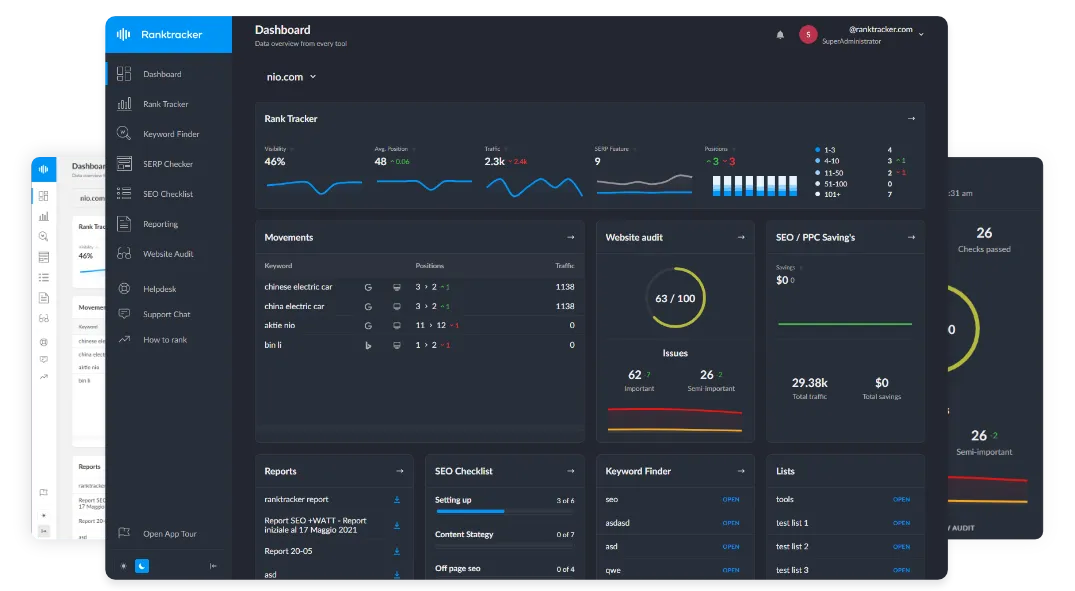
The All-in-One Platform for Effective SEO
Behind every successful business is a strong SEO campaign. But with countless optimization tools and techniques out there to choose from, it can be hard to know where to start. Well, fear no more, cause I've got just the thing to help. Presenting the Ranktracker all-in-one platform for effective SEO
We have finally opened registration to Ranktracker absolutely free!
Create a free accountOr Sign in using your credentials
So what does that mean for you? If your pages aren't clearly telling AI systems what your content is about (using structured data like Organization and Person (schema), you're essentially invisible to the systems that decide who gets cited.
Technical Indexing and URL Consistency
Automated content production introduces serious technical risks for site architecture. A recent analysis found that a surge in AI-generated content is causing instability in indexing and a rapid decline in URL consistency.
The comparison between traditional SEO and GEO comes down to fundamentally different priorities:
| Strategy Focus | Traditional SEO | AI Search Optimization (GEO) |
| Primary goal | Ranking pages via keyword density and links | Becoming the cited entity in LLM summaries |
| Content priority | Search volume and keyword targeting | Information gain and a unique perspective |
| Technical focus | Core Web Vitals and indexability | Schema markup and machine readability |
| Success metric | Click-through rate (CTR) | Brand citation rate and AI Overview inclusion |
Content Quality and E-E-A-T for GEO
Surviving Major Updates
Search algorithms actively punish generic output that lacks original data or a unique angle. After the March 2026 core update, industry tracking showed a 71% drop in traffic for mass-produced, unedited AI content. That's not a typo. Seventy-one percent.
On the flip side, publishing proprietary insights creates a real competitive advantage. Sites with original data saw a 22% increase in visibility, and being cited in an AI Overview boosted brand clicks by 35%.
Generation tools can speed up your workflow, sure. But they can't manufacture genuine expertise. Studies confirm that AI-generated content requires human editing and deliberate subject-matter depth to rank.
Want to build the kind of authority that earns AI citations? Here are the quality protocols that matter most:
- Run original research. Conduct primary surveys, case studies, or internal data analysis. LLMs can't extract what doesn't already exist on the public web.
- Build entity associations. Connect your authors, brand, and topics to established digital entities through
OrganizationandPersonschema. - Format for direct answers. Place high-density, concise responses to complex questions right beneath your H2 and H3 headings. This makes it easy for LLMs to pull from your content.
- Cite credible sources. Referencing high-tier external sources builds an algorithmic footprint of trust and factual accuracy.
- Update consistently. Keep cornerstone content fresh so your brand stays the most current, accurate source of truth for dynamic topics.
Troubleshooting Complex Technical Setups
When to Bring in an Expert
Internal marketing teams can usually handle basic schema updates and routine content tweaks on their own. But deep structural AI vulnerabilities are a different story. Some AI summarization modules use hidden manipulation tactics that distort machine memory, and fixing such problems requires specialized intervention.
Sound familiar? Challenges like Retrieval-Augmented Generation (RAG) optimization or fractured local citations aren't weekend DIY projects. If your enterprise domain isn't triggering AI citations despite strong content, it's time to call in the experts.
If your site relies on legacy code that blocks structured data implementation, or if your technical architecture simply wasn't built for generative engines, consulting an AI SEO consultant can bridge the gap. One example is Paul Teitelman SEO Consulting, with 15 years of experience in the search industry, specializing in AI Search Audits that identify competitive gaps across Google AI Overviews, Perplexity, and ChatGPT, then rebuild localized entity authority from the ground up.
Thriving in the AI-First Web
Landing prime real estate in AI summaries comes down to digital quality and technical hygiene. By March 2025, AI Overviews increased by 72% in Google search results. That kind of growth demands a commitment to publishing original, human-verified insights.
So where do you start? Audit your top-performing pages for structured data gaps right now. Then begin adapting your site architecture for zero-click visibility to retain your competitive share amid the major algorithm updates of 2026.