Intro
A business serving one town and a company selling across the United Kingdom may both want more search visibility, but they are solving different problems. Where customers live, how a service is delivered and which competitors appear in the results all affect the plan. Before building a keyword list or setting a ranking target, define the market the business can serve.
Start With the Market, Not the Keyword
Begin with a practical question: where can a searcher become a customer? For a café, the answer depends heavily on whether someone can visit. For an online retailer shipping nationwide, the customer’s distance from its office may matter much less. A service business can sit between those examples, serving several towns without having a physical location in each one.
Map the actual service area against where enquiries and sales come from. Then consider how people search at each stage. Someone looking for a nearby appointment may name a town or expect a useful map result. Someone comparing a product available across the UK may search by specification, problem or price without mentioning a location. The same broad keyword can represent different needs in those settings. This distinction helps you choose a sensible target before you invest in pages, profiles or campaigns.
What Local Search Can—and Cannot—Control
Local visibility has its own constraints. Google Business Profile guidance on local rankings identifies relevance, distance and prominence as the main factors behind local results. Relevance concerns how well a business matches a search. Distance reflects how far it is from the location in a query or, when no location is specified, from the searcher. Prominence concerns how well known the business is, drawing on information such as links and reviews.
You can make it easier for Google and customers to understand a business by keeping its profile accurate and complete. Check the category, contact details and hours; verify the profile; and respond to reviews where appropriate. Photos can also help customers assess a business before they get in touch. These are useful operational tasks, not switches that guarantee a particular position.
Distance is the clearest limit on what optimisation can change. A business cannot move closer to every searcher by editing its website. Nor can it request or pay for a better local ranking. If a target town lies outside the area a business can realistically serve, a page bearing that town’s name will not resolve the underlying mismatch. Local SEO works best when it describes a real offering in a real market.
When National Search Needs a Different Playbook
A nationwide organic search strategy typically covers a broader set of questions and more varied competitors. A buyer might begin with a problem, compare possible solutions and then look for a particular service or product. Useful coverage therefore extends beyond a homepage and a collection of place names. It may include clear service pages, product information and supporting explanations that help people make a decision.
Research should reflect that wider market. Group queries by what the searcher is trying to accomplish, then inspect the results to see which types of pages answer that need. A keyword research tool can help organise candidate terms, but volume alone does not tell you whether a business can serve the people searching. Compare the terms with the offer, the pages already available and the competitors a searcher is likely to encounter.
National reach does not mean every business should target the entire UK. Delivery limits, product availability and the ability to fulfil enquiries still define the useful market. Paid Google Ads campaigns can be planned for a wider geographic audience, but they are separate from organic SEO: buying ads does not improve a page’s organic ranking.
Build Pages Around Real Service Coverage
Once the market is clear, give each important offering a page that explains what customers can expect. A business serving several areas may have a reason to create location-specific pages when the details genuinely differ—for example, the service available, the way customers book or the places staff travel to. A useful local page should answer a visitor’s practical questions rather than simply repeat a generic pitch with a different town in the heading.
The All-in-One Platform for Effective SEO
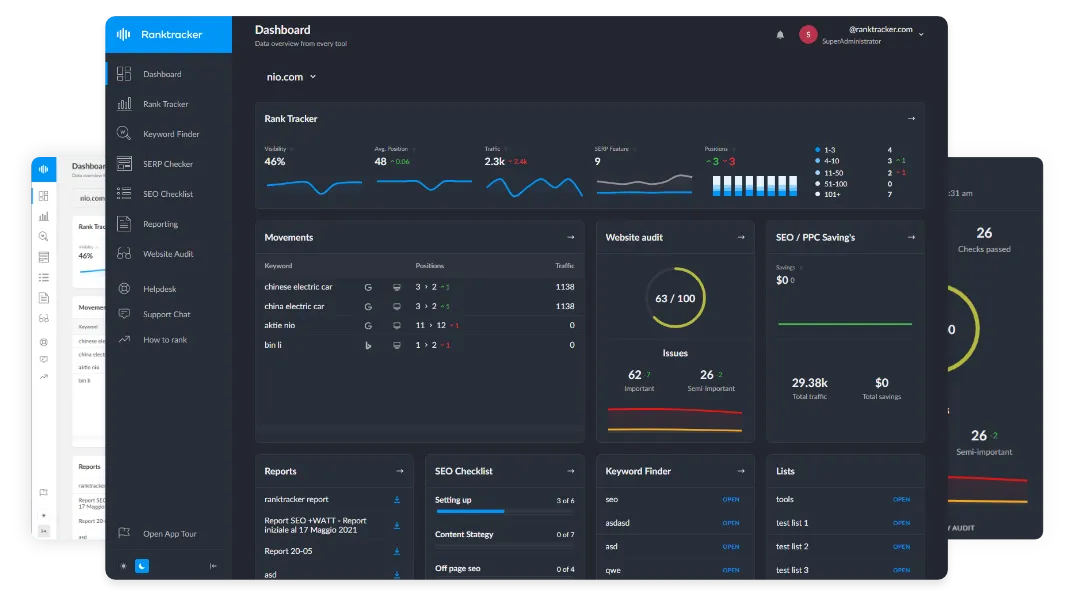
Behind every successful business is a strong SEO campaign. But with countless optimization tools and techniques out there to choose from, it can be hard to know where to start. Well, fear no more, cause I've got just the thing to help. Presenting the Ranktracker all-in-one platform for effective SEO
We have finally opened registration to Ranktracker absolutely free!
Create a free accountOr Sign in using your credentials
For a nationally available service, organise pages primarily around the offer and the questions buyers ask. You can still explain where the service is available, but multiplying near-identical city pages does little for someone who needs to understand the service itself. Keep business names, contact details and service-area descriptions consistent across the website and relevant profiles so customers do not receive conflicting information. Treat the page structure as a reflection of how the business operates, not as a way to claim a presence everywhere.
This approach also makes maintenance more manageable. If coverage changes, a small number of accurate, substantial pages are easier to update than dozens of thin location variants. Each page should have a clear purpose in the customer journey and describe an area the business can genuinely serve.
Measure Progress Against the Market You Target
A ranking checked from one location is a limited snapshot. For local work, review visibility in the places that matter, the searches that bring people in and the actions customers take after finding the business. Depending on the business, those actions might include calls, direction requests, bookings or enquiries. A rise in visibility far outside the service area may be less useful than a smaller change where customers can actually buy.
For a national organic strategy, examine which queries and pages attract relevant visits across the intended market. Look beyond a single headline keyword: supporting pages may introduce a business to people earlier in their research, while service pages may attract those closer to making an enquiry. Compare performance by page purpose and search intent so you can see whether the content meets the needs it was built to address.
Keep paid campaigns in their own reporting view. Their geographic settings, spend and outcomes answer different questions from organic search performance. In every case, pair visibility measures with evidence of customer interest. That gives you a stronger basis for deciding whether to improve an existing page, address a gap in coverage or reconsider the area you target.
Where Local and National Strategy Meet in Practice
A business can have more than one search market, but it should not force every activity into the same plan. A provider might help one set of customers compete for nearby searches while managing paid campaigns aimed at a wider audience. The two activities can inform an overall view of demand without being treated as interchangeable routes to a ranking.
When reviewing a provider such as Lojix, ask whether local organic priorities and any national paid campaigns have distinct objectives, audiences and reporting. The distinction matters regardless of who manages the work: local SEO and paid search answer different questions and should be assessed on their own terms.
A Practical Check Before Changing Course
Before expanding from local to national search—or narrowing a strategy that has become too broad—review three things together: where customers currently come from, where the business can fulfil demand and what people in those markets search for. Separate nearby, location-led queries from broader comparisons and service searches. Then check whether existing pages and profiles give each group a useful answer.
Choose measures that match those decisions. A local service may prioritise enquiries from its working area; a nationwide offer may need to assess relevant organic visits across a broader range of pages. Revisit the plan when actual customer demand or service coverage changes. Search strategy becomes easier to prioritise when the target market is grounded in the business’s ability to serve it.