Why mobile connectivity matters in the travel customer journey
The travel industry has become deeply connected to digital behavior. Before booking a trip, users compare destinations, read reviews, check transport options, search for accommodation, and evaluate practical services that can make their journey easier. During the trip itself, mobile connectivity becomes even more important. Travelers rely on their smartphones to access maps, translation tools, booking confirmations, airline apps, local recommendations, payment services, and customer support.
For travel brands, this shift has changed the way the customer journey should be understood. The user experience no longer stops after a booking is completed. It continues throughout the trip, and every digital interaction can influence satisfaction, trust, and future loyalty. In this context, eSIM technology is becoming increasingly relevant because it answers a simple but essential need: helping travelers stay connected without unnecessary friction.
What is an eSIM?
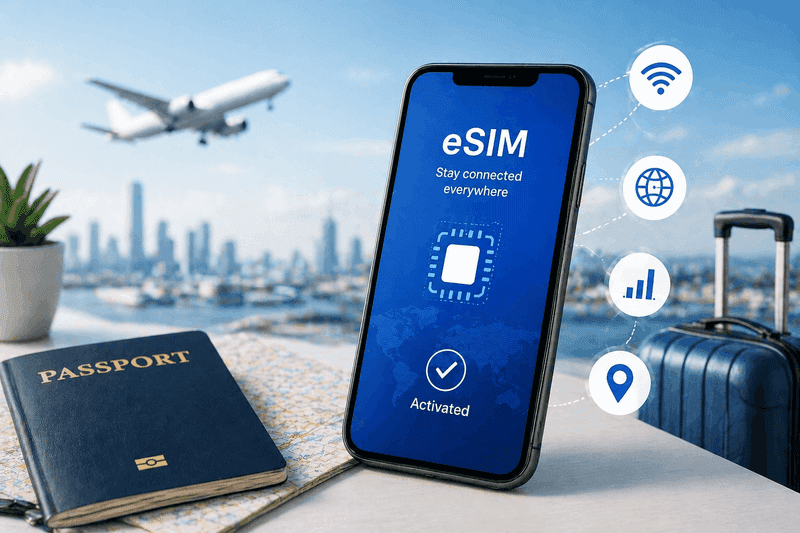
An eSIM, or embedded SIM, is a digital version of the traditional SIM card. Instead of inserting a physical card into a smartphone, users can activate a mobile data plan directly on a compatible device. The process usually involves scanning a QR code or installing a digital profile provided by the service provider. Once activated, the device can connect to a mobile network without requiring a physical SIM card.
For travelers, this technology offers a practical alternative to roaming fees and local SIM cards. Instead of searching for a mobile store after arriving in a new country, users can prepare their connectivity before departure and access mobile data as soon as they land. This simplicity is one of the main reasons why eSIM adoption is becoming increasingly relevant for international mobility.
Reducing friction in the travel experience
From a digital marketing perspective, friction is one of the biggest obstacles to conversion and user satisfaction. Any unnecessary step in the customer journey can create hesitation, frustration, or abandonment. The same principle applies to travel connectivity. If a traveler needs to compare local SIM cards, understand foreign telecom offers, wait in line at a store, or deal with technical setup issues, the experience becomes more complicated.
eSIM technology reduces this friction by making mobile data activation faster and more accessible. Users can choose a plan online, install it in a few minutes, and connect when they arrive at their destination. This creates a smoother experience, especially for travelers who value convenience and speed.
For brands operating in the travel ecosystem, this matters because connectivity supports nearly every digital touchpoint. A connected traveler is more likely to use apps, open emails, access booking platforms, interact with local services, and respond to personalized offers. In other words, better connectivity can indirectly strengthen engagement across the entire travel journey. Because of this, forward-thinking travel brands are no longer just relying on third-party telecom companies to keep their users online. By integrating modern API solutions, travel portals, digital agencies, and apps can now operate as an eSIM reseller. This enables them to sell branded global connectivity directly to their users, turning a logistical travel necessity into a highly profitable, recurring revenue stream.
The SEO opportunity around eSIM and travel intent
The rise of eSIM technology also creates opportunities for content marketing and SEO. Search behavior around travel is often highly practical. Users do not only search for inspiration; they also search for solutions. Queries related to mobile data abroad, international roaming alternatives, travel SIM cards, and internet access while traveling reflect strong informational and commercial intent.
The All-in-One Platform for Effective SEO
Behind every successful business is a strong SEO campaign. But with countless optimization tools and techniques out there to choose from, it can be hard to know where to start. Well, fear no more, cause I've got just the thing to help. Presenting the Ranktracker all-in-one platform for effective SEO
We have finally opened registration to Ranktracker absolutely free!
Create a free accountOr Sign in using your credentials
This makes eSIM a relevant topic for brands that want to attract travelers at different stages of the funnel. Informational content can explain what an eSIM is, how it works, which devices are compatible, and why it may be useful abroad. Comparison content can address eSIM versus roaming, eSIM versus local SIM cards, or the best connectivity options for specific destinations. Transactional content can guide users toward choosing a suitable plan.
For SEO teams, the key is to build content around user intent rather than simply repeating keywords. A strong article about eSIM technology should answer real questions, reduce uncertainty, and help readers make informed decisions. This approach improves content usefulness while supporting organic visibility.
Improving mobile-first experiences
Most travel-related searches now happen on mobile devices. This means that brands must think beyond traditional website traffic and focus on the quality of the mobile experience. A traveler searching for information on a smartphone expects fast loading pages, clear answers, simple navigation, and immediate solutions.
eSIM technology fits naturally into this mobile-first environment. It is purchased, installed, and managed directly from a mobile device. This makes it highly aligned with modern user behavior. Travelers who are already using their phone to plan, book, and navigate are likely to value a connectivity solution that can also be activated from the same device.
For marketers, this reinforces the importance of creating content that is easy to consume on mobile. Articles should be structured with clear headings, short sections, practical explanations, and direct answers to common questions. A well-optimized eSIM article can serve both SEO performance and user experience.
Building trust through practical information
Trust is essential when users are choosing digital services for travel. Connectivity is especially sensitive because travelers depend on it in unfamiliar environments. If users do not understand how a service works, what it includes, or how to activate it, they may hesitate before purchasing.
Content can help reduce this uncertainty. Clear explanations about activation, compatibility, data usage, coverage, and setup can make the decision easier. Brands can also improve trust by avoiding overly promotional language and focusing on practical value. For example, when discussing international mobile connectivity, it is useful to mention that travelers can explore eSIM data plans through platforms such as Holafly, which provide digital connectivity options for different destinations.
This type of contextual link integration feels natural because it supports the reader’s need for a practical solution without interrupting the editorial flow.
Why eSIM belongs in a digital marketing conversation
At first glance, eSIM may seem like a telecom or travel topic. However, it also has a strong connection with digital marketing. It affects user experience, mobile behavior, search intent, conversion paths, and customer satisfaction. For travel brands, publishers, SaaS platforms, and digital service providers, connectivity is part of the broader ecosystem that shapes how users interact online.
A traveler with reliable mobile data is more likely to engage with digital platforms throughout the journey. They can receive notifications, access personalized offers, check recommendations, and complete bookings in real time. This creates more opportunities for brands to remain present and useful during the trip.
Conclusion
eSIM technology is more than a convenient alternative to physical SIM cards. It reflects a broader shift toward simpler, faster, and more mobile-first digital experiences. For travelers, it removes unnecessary friction and makes international connectivity easier to manage. For marketers, it opens new opportunities to create useful SEO content, target high-intent travel queries, and support a smoother customer journey.
As mobile behavior continues to shape the travel industry, brands that understand the role of connectivity will be better positioned to serve modern users. By combining practical information, search intent analysis, and user-focused content, eSIM-related articles can become valuable assets within a broader digital marketing strategy.