Intro
The job market in 2026 has officially moved beyond the era of simple keyword matching. We are now living in the age of Semantic Recruitment. If you are still manually tweaking margins on a Word document or copy-pasting the same generic cover letter into Workday portals, you aren’t just behind - you’re effectively invisible to the systems that matter.
Recruiters today utilize “Context-Aware AI Gatekeepers”. These systems don't just look for "Python" or "Project Management"; they analyze the "semantic resonance" of your career story, checking if your described experiences actually match the complexity of the role.
To beat these sophisticated bots, you must use even more sophisticated tools. This guide will show you how to leverage high-end AI to land your dream role while maintaining the "human sparkle" that ultimately closes the deal.
The 2026 Reality: Why "Mass Applying" is Dead
In the mid-2020s, tools focused on "spray and pray" automation. They promised that applying to 1,000 jobs a day would solve your problems. In 2026, that strategy failed. Platforms like LinkedIn, Indeed, and specialized tech boards now employ “Automation Fingerprinting” to bypass ATS (Applicant Tracking Systems).
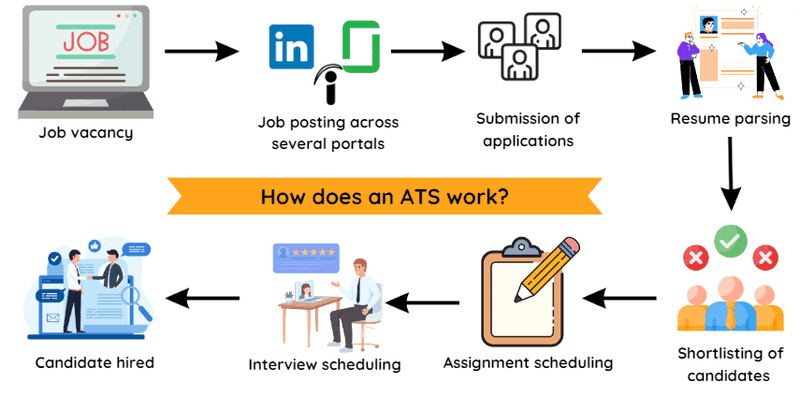
If an application is submitted with zero "human-like" dwell time on the page or lacks hyper-specific customization that reflects the company’s recent news or culture, it is flagged as spam. The winning strategy today is** Full-funnel** Augmented Application: Using AI to handle 95% of the heavy lifting (writing, formatting, tracking) while you provide the final 5% of critical editing.
To build a high-conversion "Application Stack," you need a suite of tools that specialize in different parts of the funnel.
The best AI job search and application platforms
-
AiApply - best for high-volume automation
-
Simplify - best for time-strapped professionals
-
Teal - best for the systematic job searcher
-
Rezi - best for asset customization
Comparison Table: 2026 AI Job Search Leaders for bypassing ATS:
| Feature | AIApply | Simplify | Teal | Rezi |
| Core Value | High-volume automation | Discovery & Speed | Search Management | ATS Optimization |
| Resume Logic | Semantic Rewriting | Profile Mapping | Layout Optimization | Mathematical Scoring |
| Interview Prep | Yes (AI Video Coach) | No | No | No |
| Application Style | Human-Mimicry Auto-fill | One-Click Apply | Manual Tracker | Manual / Export |
| Best For | High-Value Roles | Tech/Startup Roles | Organized Managers | Corporate/Enterprise |
1. AIApply
AIApply has claimed the top spot in the market by evolving from a simple resume builder into a full-scale all-in-one copilot. It is designed specifically to bypass the "bot-detection" filters used by modern ATS.
The All-in-One Platform for Effective SEO
Behind every successful business is a strong SEO campaign. But with countless optimization tools and techniques out there to choose from, it can be hard to know where to start. Well, fear no more, cause I've got just the thing to help. Presenting the Ranktracker all-in-one platform for effective SEO
We have finally opened registration to Ranktracker absolutely free!
Create a free accountOr Sign in using your credentials
The AiApply ecosystem is structured around a multi-tool dashboard encompassing resume generation, cover letter tailoring, and a real-time interview coaching system. However, its core strategic value proposition—and its most significant point of market friction—is the "Auto-Apply" engine. This system is designed to function as an autonomous agent, scanning job boards and company career pages to submit applications without direct human intervention. In practice, this creates a "volume as a service" model that prioritizes numerical presence over qualitative nuance.
| Feature | Strategic Outcome | Contextual Mechanism |
| Auto-Apply Engine | High-volume application throughput | Autonomous agent submits to dozens of roles daily to overcome low conversion rates |
| Interview Buddy | Real-time coaching during live interviews | AI-generated answer suggestions provided during actual virtual sessions |
| AI Resume Builder | Rapid, title-based document generation | Generates ATS-friendly documents in minutes, though often requires manual refinement for senior roles |
| Cover Letter Generator | Iterative, chat-based tailoring | Uses a ChatGPT-style interface to refine narratives over multiple prompts |
Core features:
- AI Resume Tailor: It doesn't just swap words; it rewrites your bullet points to align with the specific intent of a job description.
- Auto-Apply Bot: Applies to dozens of jobs daily across multiple boards while you sleep.
- The Interview Buddy: It uses real-time voice synthesis and a knowledge base of your specific application to coach you through mock interviews.
2. Teal
Teal remains the industry leader for the "Search Management" phase. In 2026, where you might be tracking 50+ active leads across various stages, Teal’s interface keeps you organized.
The platform integrates a resume builder, a job tracker, and a Chrome extension to create a centralized workspace. Its "Job Description Match" tool is particularly influential, providing a real-time score (0-100%) that indicates how well a candidate's resume aligns with a specific role. This score is calculated using GPT-4o technology to identify keyword gaps and suggest actionable improvements.
| Component | Technical Function | Strategic Outcome |
| Kanban Job Tracker | Drag-and-drop board for stages | High-level visibility into funnel health and conversion rates |
| Resume Matcher | Keyword extraction and skills gap analysis | Increases ATS compatibility through targeted technical optimization |
| LinkedIn Optimizer | Review of profile headlines and summaries | Ensures cross-platform consistency for the candidate's brand |
| Networking CRM | Contact management for recruiters | Facilitates the "hidden" job market through organized outreach |
Core features:
- Key Feature: The "Job Tracker" extension. It allows you to save jobs from any site and instantly see how your current resume stacks up against the requirements.
- AI Resume Builder: Analyzes job descriptions to give your resume a match score and suggests missing keywords to pass Applicant Tracking Systems (ATS).
3. Simplify
Simplify has mastered the art of the "One-Click" application for the tech-native generation. It functions as a massive database where your professional data is stored and instantly mapped to thousands of open roles.
The strategic output of Simplify is "efficiency of execution." It does not attempt to redefine the candidate's identity through generative AI as aggressively as its competitors. Instead, it serves as a utility layer that sits on top of the existing job search infrastructure.
| Functionality | Implementation Context | Strategic Advantage |
| Universal Autofill | Supports 100+ ATS platforms (Workday, iCIMS, etc.) | Eliminates repetitive data entry across disparate career portals |
| Application Tracking | Automatic dashboard logging | Replaces manual spreadsheets with a high-accuracy automated log |
| Keyword Detection | Real-time resume-to-JD analysis | Identifies missing keywords on the job page to allow for final tailoring |
| Personalized Matching | Discovery based on user "dealbreakers" | Short-circuits the job discovery process by filtering for salary and location |
Core features:
- One-Click Autofill: A browser extension that fills out any job portal (Workday, Greenhouse, etc.) in one click.
- Tailored Q&A: AI-generated answers for those annoying "additional questions" based on your bio.
- Application Tracking: Automatically logs every job you apply to, including the salary and status.
4. Rezi
While other tools focus on the "writing," Rezi focuses on the "math." It ensures your resume is mathematically optimized for the way legacy and modern ATS systems parse data.
The core of Rezi's strategic value is the "Rezi Score," a metric that evaluates a resume across 23 distinct criteria points, including content density, formatting consistency, and keyword optimization. This provides the user with an objective "readiness" indicator, reducing the anxiety of submission by providing a quantifiable measure of quality.
| Metric Category | Strategic Rationale | Contextual Detail |
| Content Analysis | Metric-driven results | AI prompts users to convert duties into achievement statements with quantifiable KPIs |
| Formatting Engine | ATS-safe layouts | Eliminates multi-columns and graphics that break parser logic |
| Keyword Targeting | Dual ranking system | Categorizes keywords by priority (1-3) to match JD hierarchy |
| Global Support | A4 vs. Letter toggling | Ensures formatting is preserved for international remote roles |
Core features:
- The Rezi Score: A comprehensive metric that evaluates your resume's readiness.
- Best For: Candidates applying to Fortune 500 companies that utilize legacy ATS platforms like Taleo or older versions of Workday.
The 5-Step AI Workflow to Land an Offer
Step 1: Build Your "Evidence Bank"
Before you apply to a single job, you need a "Source of Truth." This is an AI-indexed folder or document containing every achievement, metric, and "STAR" story from your career. Use AI to "interview" you and extract quantified achievements.
For example: "I fixed the server once" becomes "Spearheaded a critical infrastructure overhaul that reduced downtime by 40% and saved the firm $200k in annual maintenance costs."
Step 2: Generate the "Tailored" Resume
In 2026, the "Master Resume" is dead. Feed the Job Description (JD) into your AI Tailor. Ensure the AI isn't just "matching keywords" but is actually re-contextualizing your skills. If the JD emphasizes "Stakeholder Management," your resume should highlight your communication, not just your technical coding.
Step 3: The "Context-Rich" Cover Letter
Research the company’s recent quarterly earnings or news. Use AI to draft a letter that identifies a specific problem the company currently has and explains how your specific skills provide the solution.
Step 4: Intelligent Submission
When you reach the application portal, use your browser extension to populate the fields. Crucial Step: Spend at least 2–3 minutes on the page. Even if the AI fills the form in seconds, "dwell time" is a signal to recruiters that a human is actually present.
Step 5: Post-Application Interview Simulation
The moment you hit submit, start your interview simulation. Upload the JD and your tailored resume to an AI coach to generate the top 10 hardest questions you're likely to face.
Best Practices Checklist: The "Human-Plus" Standard
- The 90/10 Rule: Let AI do 90% of the drafting, but spend the final 10% on "humanizing" the text.
- Verify Every Metric: AI can sometimes hallucinate figures. If it suggests a percentage that isn't true to your experience, fix it immediately.
- Standardize Layouts: Avoid "creative" resumes with charts and icons. In 2026, clean, single-column layouts are the only ones that pass through AI filters 100% of the time.
- LinkedIn Synchronization: Ensure your AI-optimized resume doesn't contradict your LinkedIn profile. Recruiters use AI tools to "cross-reference" your data points.
Optimal Settings and Success Narratives
Successful candidates in the 2026 tech and marketing sectors have reported that the highest response rates (up to 12% callback) were achieved when users set narrow filters rather than broad targets.
For instance, a candidate seeking a "Lifecycle Email Marketer" role in the fintech space outperformed those seeking general "Marketing" roles by nearly 4x.
The All-in-One Platform for Effective SEO
Behind every successful business is a strong SEO campaign. But with countless optimization tools and techniques out there to choose from, it can be hard to know where to start. Well, fear no more, cause I've got just the thing to help. Presenting the Ranktracker all-in-one platform for effective SEO
We have finally opened registration to Ranktracker absolutely free!
Create a free accountOr Sign in using your credentials
Optimal settings for the 2026 environment include:
- Resume Style: Utilization of clean, single-column templates (such as the Harvard or Modern styles provided by AIApply) to ensure perfect parsing by ATS 2.0 systems.
- Targeting Logic: Configuring the Auto-Apply engine to only target roles with a "salary range present" and a specific seniority level to avoid "low-signal" job postings.
- The 3-Zone Rule: Allowing the AI to tailor only the professional summary, the skills section, and the top three bullet points of the most recent experience, while keeping the rest of the work history stable to maintain authenticity.
The Full-Funnel Advantage and Conversion Metrics
Traditional manual efforts typically yield an application-to-interview conversion rate of roughly 3%. By integrating the AI Resume Scanner - which identifies keyword gaps and structural risks - directly with the Auto-Apply engine, tools like Aiapply ensures that every submission reaches a threshold of "ATS-compatibility" before it is fired.
This systemic optimization is reported to improve response rates from a baseline of 2% to as high as 12% in specific mid-level marketing and technical cohorts.
The All-in-One Platform for Effective SEO
Behind every successful business is a strong SEO campaign. But with countless optimization tools and techniques out there to choose from, it can be hard to know where to start. Well, fear no more, cause I've got just the thing to help. Presenting the Ranktracker all-in-one platform for effective SEO
We have finally opened registration to Ranktracker absolutely free!
Create a free accountOr Sign in using your credentials
The integration of the Interview Buddy at the end of this funnel is crucial; it prevents "funnel collapse" where a candidate successfully secures an interview but fails to convert it into an offer due to lack of real-time tactical support
| Funnel Stage | Traditional Manual (2026) | AIApply Integrated Pipeline |
| Application to Initial Screen | 3% | 8% - 12% |
| Screen to First Interview | 40% | 45% - 50% |
| First Interview to Final Round | 25% | 35% - 40% |
| Final Round to Job Offer | 30% | 40% - 55% |
| Overall Funnel Efficiency | ~0.1% | ~1.5% - 2.2% |
How Ranktracker Can Take Your Resume to the Next Level
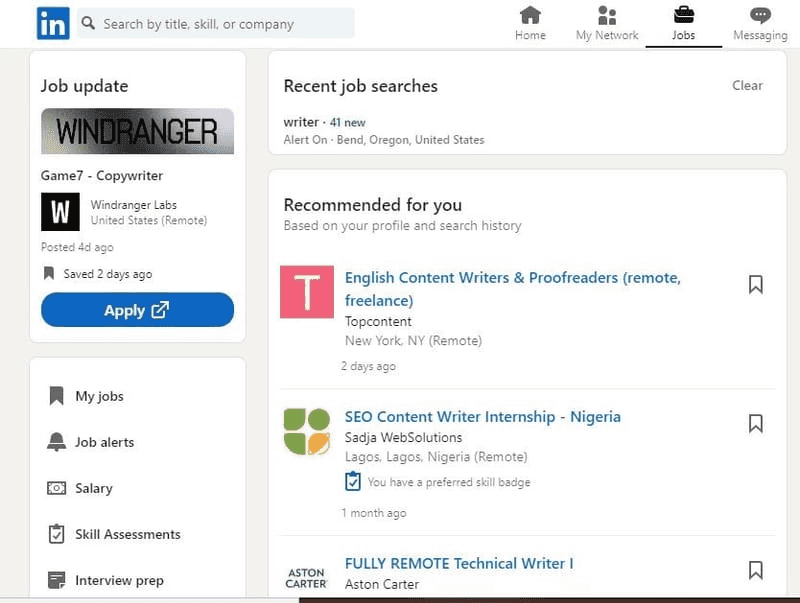
A great resume is just the beginning. Ranktracker helps job seekers optimize their online presence so recruiters can find them easily. Use Ranktracker’s SEO tools to:
- Optimize your LinkedIn profile so it ranks higher in recruiter searches.
- Improve your personal branding with SEO-driven career pages.
- Track resume visibility by analyzing search trends and job listing algorithms.
Comparative Strategic Framework
The selection of an AI job search platform depends on the candidate's specific search philosophy: volume vs. precision, automation vs. control.
| Platform | Primary Strategic Goal | Ideal User Profile | Key Weakness |
| AiApply | High-volume automation | Students/Tech seekers | Overlooks Strategic Storytelling |
| Simplify | Mechanical Efficiency | Entry-level seekers | Shallow customization |
| Teal | Pipeline Organization | Mid-senior professionals | No interview tools |
| Rezi | Technical Integrity | Engineers/Specialists | Plain templates |
FAQ: Navigating the AI Job Market
1. Is it safe to use AI for job applications?
Yes, provided you are using reputable tools that prioritize data security. In 2026, using AI to assist with drafting and organization is considered a standard professional skill. However, you should always review the generated content for accuracy to ensure you aren't misrepresenting your qualifications.
2. Can modern ATS systems detect AI-written resumes?
Modern Applicant Tracking Systems are increasingly sophisticated, but they generally screen for quality and relevance rather than "AI origin." High-quality AI tools produce text that is indistinguishable from professional human writing. Problems only arise when candidates use "low-effort" AI prompts that result in generic, repetitive phrasing or "keyword stuffing" that lacks context.
3. Do recruiters still value cover letters?
While many human recruiters may not read them in the initial stages, AI-driven screening modules often use cover letters to assess "cultural fit" and "intentionality." A well-crafted, context-aware cover letter can significantly boost your "match score" within the hiring portal.
4. How many applications should I submit per week?
In the current landscape, quality far outweighs quantity. Submitting 5–10 highly tailored, AI-augmented applications per week is typically more effective than submitting hundreds of generic ones. Modern platforms may flag or throttle accounts that demonstrate "bot-like" mass-application behavior.
5. How do I prepare for an AI-led video interview?
Many companies now use AI-driven video platforms for first-round screens. To prepare, focus on maintaining steady eye contact with the camera, speaking at a moderate pace, and using structured response frameworks like the STAR method (Situation, Task, Action, Result). Practicing with real-time feedback tools can help you normalize the experience of speaking to an algorithm.
6. What is the difference between keyword matching and semantic matching?
Keyword matching is a legacy process that looks for specific strings of text (e.g., "Python"). Semantic matching uses Natural Language Processing (NLP) to understand the meaning and depth of your experience. It can recognize that "leading a team of 10" is semantically related to "personnel management" even if the exact words aren't used.
7. How should I handle data privacy when using job search tools?
Look for tools that offer clear privacy policies and data encryption. Avoid entering highly sensitive information like Social Security numbers or bank details into third-party AI generators. Most reputable career platforms are compliant with standard data protection regulations (like GDPR or SOC2).
Conclusion: Become the Augmented Candidate
The 2026 job search is not about who can work the hardest; it's about who can best leverage the tools at their disposal.
AI-powered tools like Aiapply, Teal and Rezi are your secret weapon for landing more interviews. Combine it with Ranktracker’s SEO tools to optimize your digital presence, making it easier for recruiters to find you.
By automating the mundane, repetitive aspects of the search, you free up your mental energy to focus on what matters: the human connection during the interview.