Intro
The New Zealand gambling market has undergone a meaningful change. In early 2026, they will start to regulate offshore casino sites in an attempt to improve player safety. This is seemingly a great opportunity for legitimate businesses to improve their visibility and credibility. By actively embracing this form of monitoring, they can get certified and become a trusted option for Kiwis who love to gamble. Unfortunately, things are never that easy, especially when it comes to visibility and online presence. Regional and consumer differences really matter in SEO. To that end, it would be useful to go over those and understand the digital marketing challenges the iGaming industry faces.
Online Visibility and Promotion Are at Odds
It should be noted that all tried and tested practices still work. If you have well-structured and focused content, the site will perform better. You should look at PokiesLab.co.nz as a solid example of how this should be done, paired with organized internal links and intent-based posts. But PokiesLab has another thing going for it that allows it to rank well, and that is the type of content. They focus on promoting games rather than promoting online casinos, and there is a huge difference.
You see, the offshore sites are legal in NZ, but openly promoting those sites is not. In other words, texts that introduce a clear call to action or have a suggestive tone might get taken down. This tends to create problems for affiliate sites as they have their hand tied when it comes to using the greatest asset in a casino’s arsenal - sign-up bonuses. These offer a huge boost to new players and serve as a main incentive for acquiring users. So, talking about these bonuses could be perceived as a promotion, and the site faces increased compliance risk.
How is This Different Compared to Other Regions?
Truth be told, tightly regulated markets like the UK also have strict standards when it comes to promotions. However, those standards are clearly defined. Moreover, the promotions on casino sites are also in line with local regulations. So, pages that talk about these promotions and how they work are less likely to get in trouble when they adhere to the clearly defined legal framework. In New Zealand, whether the content adheres to the standards is more open to interpretation, so it can be hard to tell if each page is fully compliant.
The Text Cannot Fully Match the Search Intent
Anyone who has typed search queries like “the best casinos in NZ,” “New Casinos in NZ,” or “No Deposit Bonus Casino in NZ” has likely received results that lead to pages with similar content. The content isn’t exactly a detailed user guide or comparison of available sites. In essence, they get a text that’s about “how to stay safe playing at online casinos,” masquerading as a user guide to the best casinos or new NZ operators. The list and short descriptions are at the top of the text, but the rest of it usually deals with the following topics:
- Legality and how to check if the site’s license is valid
- How to check if the site has reputable and fair games
- How payouts work, and what are the safe payment methods to use
- Important bonus terms and whether they are a good choice
- Is it possible to settle disputes
- User feedback from other forums, like TrustPilot
- How to use responsible gambling tools
These are all useful bits of information, no doubt, but if you look at other content that evaluates digital entertainment, it’s vastly different. You are free to recommend a video game or a streaming service in your review, and then justify your recommendation. Even your arguments are allowed to sound promotional and have a positive tone. This isn’t the case with iGaming.
Is This a Big Problem?
On the surface, this doesn’t seem problematic, given how it’s in everyone’s interest to be safe while gambling. However, it’s not particularly helpful for the users either, and it doesn’t create a more competitive market. Someone who is legitimately looking to find the best value for their buck will have to do a lot more research. The text only tells them where to look, but not what they will find exactly.
Furthermore, the casinos aren’t really incentivized to have well-structured and valuable bonuses in order to compete with one another. There’s no point in having the best no-deposit bonus if you can’t promote your brand properly. You need to hope that someone will discover it on their own, and know it’s the best offer out of the bunch.
Volatile SERP
Compared to the US, Canada, the UK, and Australia, the gambling community in New Zealand is significantly smaller. What this means is that search volumes for gambling content are also lower. This makes it easier for sites to achieve a higher ranking in a shorter time frame when they use local SEO. So, the SERP changes frequently, which makes it difficult to build trust with the user base. Since results change so frequently, they simply look like noise, allowing a single site with a stronger authority to easily dominate in that region.
This creates a situation where it’s potentially better to go after low-volume search keywords. If one can rank well in this department, they are more likely to see consistent results. Going for high-volume searches isn’t a bad idea on its own, but you are more likely to experience diminishing returns. After all, the results or engagement you get will fluctuate. Regardless of the population, the competition here is tight. There are many offshore sites that care about this market, especially now with new legal changes on the horizon.
Competing with Local Monopolies
One SEO trend that you can easily notice in New Zealand is that almost all offshore gambling sites try to rank for keyword phrases that have to do with casinos. For clarity, some of them do have a sportsbook, but they only compete in this market as casino sites.
This is because sportsbook and racebook content is exclusive to TAB, and it’s illegal to offer these services outside of TAB. In essence, there is only one angle or product marketers can use to promote offshore operators, and they can’t even talk about bonuses in detail.
Emphasis on Social Responsibility
The rules or content creation guidelines limit SEO specialists’ ability to present products accurately. To be specific, making misleading claims about win probability or making the product appealing to a younger audience is forbidden.
However, users who care about these things will usually search for games or sites using phrases like:
- Highest win probability casino games
- Easy money or easy win pokies
- How to win at blackjack
- Winning strategies for baccarat
Any SEO specialist worth its salt immediately sees the problem here. You cannot effectively target the search intent of these queries because the content needs to be socially responsible. You’d need to start the text with disclaimers and safety alerts before you actually begin to answer these questions. If you use terms like easy money or biggest wins the text will lose trust, and its E-E-A-T signals for “Your Money and Your Life” (YMYL) will weaken.
Upcoming Changes are Unknown
The Department of Internal Affairs is still developing guidelines and legislation for offshore online casinos. In other words, it’s still uncertain what new content marketing rules will look like and how long it will take before those rules are adjusted again. This is potentially troublesome for existing affiliate sites. If the content on existing sites is deemed too “aggressive,” they will either have to take it all down or do a major overhaul.
The All-in-One Platform for Effective SEO
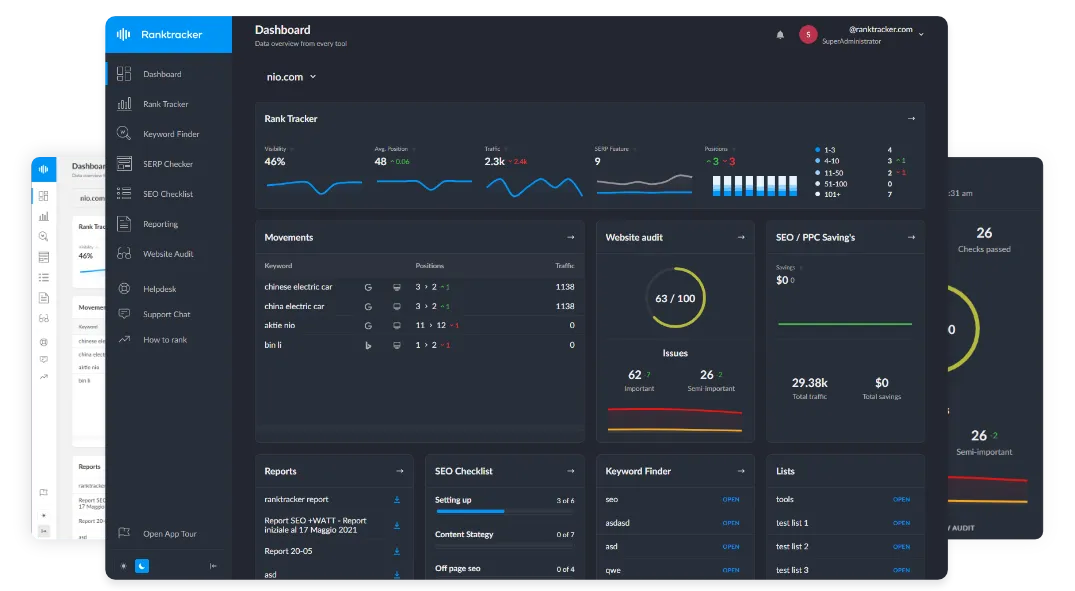
Behind every successful business is a strong SEO campaign. But with countless optimization tools and techniques out there to choose from, it can be hard to know where to start. Well, fear no more, cause I've got just the thing to help. Presenting the Ranktracker all-in-one platform for effective SEO
We have finally opened registration to Ranktracker absolutely free!
Create a free accountOr Sign in using your credentials
Meanwhile, the world doesn’t stop; people working in this sector still create content strategies for new pages. In other words, there is a possibility that all of the recently published guides and round-up lists will go down the drain once new legislation goes live. This isn’t the case in other markets where regulations are more stable, and marketers don’t have to tangle with a moving target.
Strategies That Currently Work
It should be noted that it’s not all doom and gloom in the NZ iGaming SEO space. There are still approaches that yield positive and consistent results that marketers use.
- Use the information first approach - Focus on legal landscape, safety tips, payment processing, and customer support efficiency. Talk about responsible gambling tools and safety features, and promote operators through this lens. Comparing brands based on these aspects is still safe and even aligns with DIA expectations.
- Structure your comparison pages carefully - Your text needs to sound neutral, use cold facts, and should not praise one operator over others. Avoid call to actions or suggestive language that can be perceived as overly promotional.
- Reputable authors - The text will have more credibility if it comes from industry experts. So, authors should have a background or expertise in game design, they should be players themselves, or gambling journalists/truth seekers who keep up with the latest developments in the iGaming space.
- Update pages that perform well - It’s important to send positive ranking signals and ensure your pages stay relevant. Online casinos make changes to their bonus offers, banking support, payout policies, and game catalog. You should make sure that pages that rank well constantly have up-to-date information.
- Be transparent - Don’t simply share your findings, share your methodology too. It’s easier to stay compliant if you are transparent about your rankings and talk about your ranking criteria. This also teaches readers who want to do a background check on casinos and make sure they are safe, how to do it.
If you are open about your business model and how you do things, people are more likely to trust you, regardless of whether your site is at the top of the results page. This helps you build a more stable user base, which will be better in the long run.