Intro
You pour weeks into a new SEO idea: research, mapping a cluster, outlining pillar pages and supporting posts. You finally ship the content, build some links, and then… wait. For weeks or months. Traffic trickles in, rankings move slowly, and it’s hard to tell whether the angle missed the mark or the algorithm just hasn’t caught up. That lag makes it tough to confidently say, “This topic deserves more investment.”
Native ad networks give you a way to cheat that waiting period. Instead of relying on Google alone to validate an idea, you can push different hooks and angles in front of real people right now, see what they actually click and engage with, and then bring only the proven winners back into your SEO roadmap.
Why native discovery works as an SEO testing ground
At first glance, Taboola-style widgets look nothing like a SERP. They’re busy, image-heavy, and often filled with sensational headlines. But structurally, they’re doing something very similar to search results: presenting competing ideas side by side and letting users “vote” with their clicks.
That makes native discovery surprisingly useful as a laboratory for SEO ideas. Instead of guessing whether “checklist”, “step-by-step guide”, or “case study” will resonate, you can pit them against each other and gather data in days, not months. And you’re not limited to one network either. If you want options that suit smaller budgets, different geos or stricter policies, a roundup like smart Taboola alternatives for native testing is a quick way to identify other discovery platforms worth testing without starting from scratch.
Experimentation in marketing isn’t a niche idea anymore; it’s a mainstream expectation. Google’s own team has been pushing a “test and learn” mindset for years, and resources like Think with Google’s marketing experiment playbook lay out how structured experiments routinely outperform static plans. Native networks simply add a fast lane to that playbook at the idea level.
Turn SEO hypotheses into structured native experiments
Native traffic only becomes useful for SEO when you start from a clear search hypothesis and then translate it into testable ad variants.
Start with SEO pages that actually matter
Begin with a shortlist of pages and topics that are strategically important:
-
A new landing page you’re about to launch
-
A content hub you’re planning around a high-value problem
-
Existing posts that sit on page two and clearly need a stronger hook
Before you spend a cent on native, run those URLs through Ranktracker’s SEO Checker to understand their current on-page situation: target keywords, title/meta structure, headings, and potential technical blockers. That baseline keeps your native experiment tied to specific SEO outcomes rather than turning into a random traffic stunt.
Build creatives that mirror SERP choices
When someone sees your result in Google, they’re responding mainly to your title, description, and any enhancements. So design your native experiments around those same ingredients:
-
Several headline angles for each idea (“X mistakes”, “checklist”, “quick wins”, “for [niche]”)
-
Two or three short descriptions that emphasize different outcomes (saving time, saving money, reducing stress, increasing revenue)
-
Visuals that roughly match the tone of the article or landing page, not generic clickbait
To keep the experiments honest, it helps to lean on basic testing discipline rather than instincts. A resource like HubSpot’s A/B testing kit gives you simple frameworks for setting hypotheses, estimating sample size, and avoiding the temptation to call a winner too early based on noisy data.
Run native campaigns like experiments, not evergreen buys
When you push these variants live on Taboola or alternative networks, treat the campaigns as experiments:
-
Keep audience and placement settings as stable as possible while you rotate creatives
-
Decide in advance what “success” looks like (click-through rate alone, or CTR plus minimum time on page, or micro-conversions like email signups)
-
Give each variant enough impressions to reach a meaningful sample before switching budgets
This is where the broader research on experimentation matters. Analyses summarised in Harvard Business Review’s refresher on A/B testing emphasize that teams who consistently run controlled experiments tend to uncover counterintuitive winners and avoid over-investing in ideas that merely “feel” strong.
Feed native learnings back into Ranktracker
Clicks on a widget aren’t the end goal; they’re a signal. The real work is turning those signals into SEO decisions you can track and refine.
Let winning hooks reshape your content and keyword plan
Imagine you’re planning a cluster on “SEO for local services” with pages for therapists, roofers, dentists, and accountants. For the therapist page, you test three native variants:
-
“SEO for Therapists: Get More Clients from Google”
-
“Fill Your Calendar: Local SEO for Therapists”
-
“Therapy SEO Checklist: Fix These 9 Website Issues”
If variant two consistently drives better click-through and stronger on-site engagement, you’ve learned that “local” + “calendar” language beats generic “more clients” messaging for this audience. That should influence:
-
The primary and secondary keywords you target
-
How you phrase title tags and H1S
-
The problems and outcomes you lead with in the intro
You can then sanity-check that new direction against best practices in Ranktracker’s SEO guide for beginners so you’re aligning messaging improvements with solid technical and structural foundations.
Check whether “lab winners” also win in organic search
Once you’ve updated existing pages or launched new ones based on native learnings, it’s time to see if those ideas carry over into search. That’s where ongoing tracking matters.
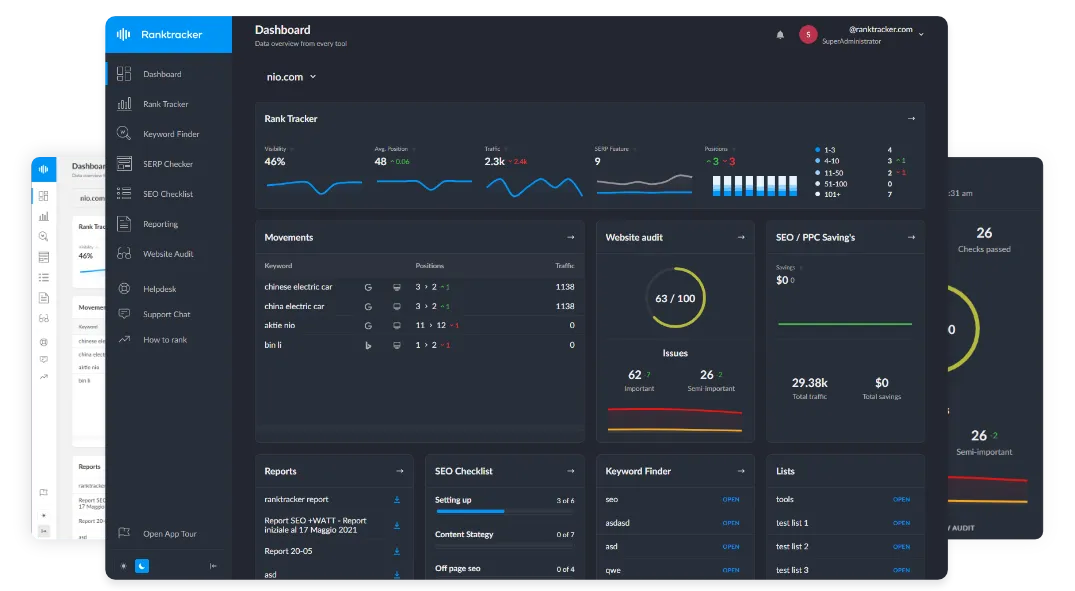
Using the Rank Tracker tool, you can monitor:
-
How quickly pages influenced by native experiments climb for their target keywords
-
Whether click-through rates improve when your snippet reflects the winning hook
-
How behaviour metrics (bounce, time on page, conversion rate) compare to pages that weren’t tested in native
If you notice that content informed by native experiments tends to climb faster or convert more reliably, you’ve just built a feedback loop: native for fast idea validation, Ranktracker for long-term performance monitoring.
A simple workflow you can roll out this quarter
You don’t need a huge team to make this work. Here’s a lean process you can plug into your existing roadmap:
-
Choose one high-priority cluster. Maybe it’s a new product use-case, a localization project, or a niche SEO theme (e.g., “SEO for therapists” or “reporting automation”).
-
Draft testable hooks for each key page. Aim for three to five headline variants and a couple of descriptions per idea, based on real search intent and problems.
-
Run short, controlled native tests. Use Taboola plus one or two alternative networks that fit your budget and targeting needs. Treat the spend as research, with a defined timeframe and clear success metrics.
-
Apply what you learn to titles, intros, and structure. Update copy, refine keyword mapping, and adjust internal links so your site now reflects the hooks that real users have already responded to.
-
Track and iterate. Watch how those pages behave over the next few months and keep a log of “idea tested in native → change made → organic results”. Over time, that log becomes evidence you can use to justify bigger experiments.
Wrapping it up
SEO will always move more slowly than paid media, but that doesn’t mean you have to guess which ideas deserve long-term investment. By treating Taboola widgets and other native discovery units as an experiment layer, you can validate hooks, angles, and offers in days instead of waiting for a quarterly SEO report.
When those experiments are designed around real search hypotheses and plugged back into your Ranktracker data, your content roadmap stops being a list of educated guesses. It becomes a portfolio of ideas your audience has already “pre-approved” with their clicks and attention — so every new piece you publish has a better chance of turning into a genuine search win.