Intro
Mobile trading is no longer just a convenience feature. In 2026, it plays a major role in how brokers, fintech brands, and investment platforms attract users, build trust, and compete online. As more traders manage portfolios, monitor markets, and execute trades directly from their phones, the search landscape around trading platforms continues to evolve as well.
For SEO professionals, this matters for a simple reason: changes in product behavior usually lead to changes in search behavior. When users shift toward mobile-first trading, they also start searching differently. They look for faster apps, simpler experiences, stronger security, smarter automation, and more integrated tools. That creates new keyword opportunities, new content angles, and new ways for financial brands to improve organic visibility.
In other words, mobile trading trends are not only important for product teams. They are also highly relevant for marketers and SEO teams that want to understand where demand is moving and how to capture it.
Why mobile trading matters more in 2026
Over the last decade, global smartphone adoption, faster internet speeds, and more user-friendly trading platforms have helped turn mobile trading into a mainstream behavior. What was once seen as a secondary option to desktop trading is now, for many users, the primary way they engage with the market.
This shift affects far more than app design. It influences how brokers structure landing pages, how they describe features, what comparisons users search for, and what kind of educational content performs best in search engines.
For brands in the trading and finance space, this means SEO strategies need to become more aligned with real mobile user intent. Broad keywords still matter, but more specific searches are increasingly valuable. Users want answers to precise questions, and the sites that provide those answers clearly are more likely to win rankings and conversions.
AI-powered trading assistants are shaping new search demand
Artificial intelligence is becoming a visible part of the trading experience. Mobile apps now increasingly offer AI-assisted insights, pattern recognition, automated alerts, market summaries, and smarter portfolio recommendations. For traders, these tools promise speed, convenience, and better decision support. For SEO teams, they open up a wide range of new keyword possibilities.
Instead of searching only for terms like “best mobile trading app,” users are becoming more specific. They search for phrases such as “AI trading app for beginners,” “mobile broker with trading signals,” “best app for market sentiment analysis,” or “AI-powered trading assistant.” That level of specificity creates more focused, higher-intent traffic.
The All-in-One Platform for Effective SEO
Behind every successful business is a strong SEO campaign. But with countless optimization tools and techniques out there to choose from, it can be hard to know where to start. Well, fear no more, cause I've got just the thing to help. Presenting the Ranktracker all-in-one platform for effective SEO
We have finally opened registration to Ranktracker absolutely free!
Create a free accountOr Sign in using your credentials
To compete in that environment, financial brands need more than one general app page. They need dedicated content that explains what their AI features actually do, who they are designed for, and how they improve the trading experience. This is where keyword research and ranking data become critical.
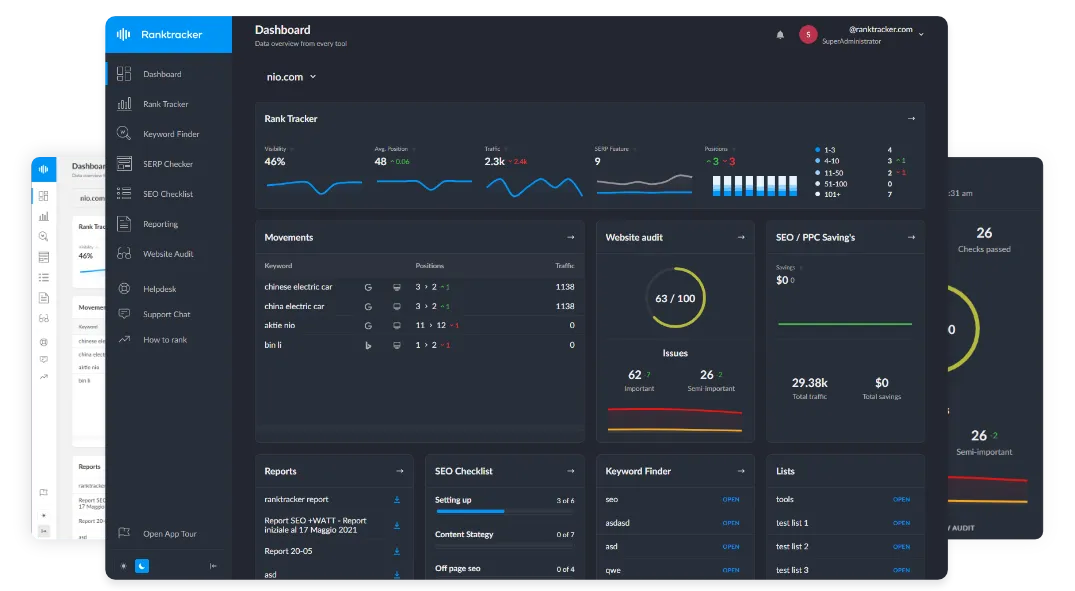
Using a platform like Ranktracker, marketers can identify growing keyword themes, track visibility across AI-related terms, and monitor whether their pages are gaining traction for feature-led searches. That helps turn a product trend into a measurable SEO opportunity.
Financial super apps are expanding the content strategy challenge
Another major trend in mobile trading is the rise of financial super apps. These platforms combine multiple services into a single experience, including digital wallets, savings tools, payments, investing, trading, and sometimes even budgeting features. For users, this all-in-one model is convenient. For SEO teams, it creates both an opportunity and a challenge.
The opportunity is obvious. A brand offering several services can target a wider range of search terms. The challenge is that those services need to be presented clearly to search engines and users alike.
Many brands make the mistake of trying to explain everything on one broad page. That usually leads to weak targeting and vague messaging. A stronger approach is to create clear, well-structured pages for each service area, supported by educational content that ties the ecosystem together.
A mobile trading platform that also supports payments, savings, and crypto should not rely on one homepage to rank for all of those topics. It needs separate pages, focused intent, strong internal links, and supporting articles that build topical authority over time.
This is one of the clearest examples of where SEO structure matters just as much as content quality.
Social trading is creating fresh keyword opportunities
Social trading continues to grow because it lowers the barrier to entry. Newer users are often more comfortable when they can observe experienced traders, follow public strategies, join discussions, or even copy trades directly within the app.
The All-in-One Platform for Effective SEO
Behind every successful business is a strong SEO campaign. But with countless optimization tools and techniques out there to choose from, it can be hard to know where to start. Well, fear no more, cause I've got just the thing to help. Presenting the Ranktracker all-in-one platform for effective SEO
We have finally opened registration to Ranktracker absolutely free!
Create a free accountOr Sign in using your credentials
As more platforms build community-driven features, the search demand around those features grows too. People are not only looking for trading apps. They are also searching for terms such as “best copy trading app,” “social trading platform,” “can you follow traders on mobile,” or “apps that let you copy trades.”
This matters because social trading deserves its own search strategy. It should not be treated as a small feature buried inside a pricing page or product overview. It often needs its own landing page, FAQs, comparisons, and supporting blog content.
With Ranktracker’s SERP Checker, teams can analyze which sites already rank for these terms, what kind of content performs best, and how competitive the results really are. That makes it easier to build content that has a realistic chance of winning visibility rather than guessing at what might work.
Faster execution and faster mobile experiences now go hand in hand
Speed has always mattered in trading. A delay in execution can affect price, timing, and decision-making. But in 2026, speed matters just as much from a search and user experience perspective.
If a mobile trading site is slow to load, difficult to navigate, or bloated with poor technical structure, it can undermine both rankings and conversions. That is especially important in finance, where trust is a major part of user behavior. A slow or clunky site often feels less credible, even before a visitor reads the content.
This is why mobile SEO can no longer be treated as an afterthought. It is not just about having a responsive design. It is about creating pages that load quickly, display properly on all devices, guide users smoothly, and reinforce trust at every stage of the journey.
Ranktracker’s Web Audit can help uncover the technical problems that often hold mobile pages back, including crawl issues, broken links, metadata gaps, and other on-site weaknesses that reduce search performance.
Crypto and multi-asset support are widening the SEO footprint
Trading platforms are increasingly offering access to multiple asset classes from a single mobile interface. In addition to forex, many now include crypto, ETFs, stocks, commodities, and other instruments. That expands the market appeal of these apps, but it also increases the need for a more disciplined SEO strategy.
When a platform covers many asset categories, content can easily become unfocused. Pages begin overlapping, terms start competing with each other, and keyword cannibalization becomes a real risk. That is why site architecture matters so much.
Crypto pages should target crypto intent. Forex pages should target forex intent. Educational articles should support those areas without blurring them together. The goal is to create a content structure where each asset category has its own clear place within the site.
This kind of structure helps search engines understand topical relevance, but it also improves the user experience. A visitor interested in crypto trading should immediately find focused, relevant content without being distracted by unrelated messaging.
Tracking performance across these topic areas is much easier when you can monitor rankings page by page and keyword by keyword. That is where a dedicated rank tracking workflow becomes especially useful.
Security is becoming part of the SEO conversation
Security remains one of the biggest concerns in mobile trading. Users want to know that their funds, data, and personal information are protected. Brokers like Exness continue to emphasize secure and reliable trading environments, and users increasingly expect features such as Biometric authentication, two-factor authentication, encryption, and fraud detection to be standard.
Even though security itself is often discussed as a product issue, it also plays a major role in organic performance. Search users evaluating financial brands often look for trust before they look for features. That means content around compliance, safety, account protection, and platform credibility can support conversions and strengthen the overall perception of the brand.
Security pages, transparent company information, clear platform policies, and strong educational content can all help reinforce trust. In competitive verticals, that trust can be the difference between a visitor bouncing away and becoming a customer.
In practical SEO terms, security-related content can also target informational searches around safe trading apps, account protection, fraud prevention, and secure mobile investing. These are not side topics anymore. They are part of how users evaluate platforms.
Cross-device behavior should shape SEO strategy
Modern users rarely follow a straight path. Someone might first discover a trading brand on mobile, compare alternatives later on desktop, read a few reviews, and then return to the app to sign up. That means the journey is often split across devices, sessions, and content types.
For SEO teams, this makes consistency essential. Landing pages, app pages, blog posts, feature pages, and trust content all need to align. The message users see in search should match the experience they get on-site.
This also makes visibility tracking more important. Rankings can vary by device, location, and search layout. What performs well on desktop may not have the same presence on mobile. A proper rank tracking setup helps teams understand how visibility changes across environments and where real opportunities exist.
Simpler user experiences are influencing content expectations
One of the clearest trends in mobile trading is the move toward cleaner, simpler interfaces. Users want dashboards that are easy to understand, straightforward order placement, visual portfolio summaries, and alerts that feel helpful rather than overwhelming.
That same expectation carries over into content. Trading brands often lose potential traffic because their pages are overly technical, cluttered, or written in a way that feels inaccessible to newer users. In 2026, the sites that perform best are often the ones that make complex topics feel easier to understand.
This does not mean oversimplifying everything. It means presenting information clearly, structuring pages well, and answering the user’s question without unnecessary friction. Good SEO content in finance is not only optimized for keywords. It is optimized for clarity.
What the future of mobile trading means for SEO teams
Looking ahead, mobile trading will likely become even more personalized, automated, and feature-rich. We can expect stronger AI integration, deeper voice support, smarter alerts, more visual interfaces, and further expansion into multi-service ecosystems.
But the real takeaway for marketers is this: every major product shift creates a search opportunity.
The All-in-One Platform for Effective SEO
Behind every successful business is a strong SEO campaign. But with countless optimization tools and techniques out there to choose from, it can be hard to know where to start. Well, fear no more, cause I've got just the thing to help. Presenting the Ranktracker all-in-one platform for effective SEO
We have finally opened registration to Ranktracker absolutely free!
Create a free accountOr Sign in using your credentials
As trading apps evolve, the language users type into Google evolves too. New features lead to new keywords. New habits lead to new content needs. New expectations lead to new ranking opportunities.
That is why SEO teams working in finance, fintech, and trading should pay close attention to product trends. The brands that succeed in organic search will be the ones that connect those trends to a focused keyword strategy, well-structured content, strong technical performance, and reliable rank tracking.
Conclusion
Mobile trading in 2026 is about much more than convenience. It is changing how financial brands position themselves, how users compare platforms, and how search demand develops across the trading space.
From AI-powered insights and social trading to stronger security, faster mobile experiences, and wider asset support, these trends are shaping both user expectations and SEO strategy. For brokers, fintech apps, and trading platforms, the challenge is no longer just building a better product. It is making sure that product is visible when users search for the features and benefits that matter most.
That is where a data-driven SEO approach becomes essential. By identifying emerging keyword trends, improving on-site performance, and tracking rankings with precision, brands can turn mobile trading demand into lasting organic growth.