Intro
Legacy systems, those long-standing software and hardware infrastructures, remain the backbone of many enterprises worldwide. Despite their critical role in supporting core business operations, these systems often struggle with compatibility, scalability, and security challenges. As cyber threats evolve with increasing sophistication and frequency, traditional endpoint security measures frequently fall short, leaving these legacy environments vulnerable to complex attacks. For managed IT service providers, the pressing question is how to safeguard these aging systems without disrupting operations or incurring prohibitive costs.
It’s estimated that over 60% of enterprises still rely heavily on legacy systems for their core business functions, underscoring the widespread nature of this challenge. This reliance creates a complex security environment where conventional antivirus and firewall solutions cannot adequately detect or respond to advanced persistent threats (APTs) targeting endpoints. Furthermore, legacy systems often lack the flexibility needed to integrate modern security protocols, making them prime targets for cybercriminals seeking to exploit outdated defenses.
The consequences of these vulnerabilities are significant. A successful breach can lead to data theft, operational downtime, and severe financial losses. According to IBM, the average cost of a data breach in 2023 reached $4.45 million, highlighting the critical need for robust security measures, especially in environments where legacy systems prevail. For organizations bound to legacy infrastructure, the challenge is balancing security enhancements with operational continuity, all while managing limited IT budgets and resources.
The Rise of AI-Driven Endpoint Security
Artificial intelligence (AI) and machine learning (ML) technologies are revolutionizing how endpoint security is implemented, especially within managed IT services. By leveraging AI, security frameworks gain the ability to analyze vast quantities of data, recognize behavioral anomalies, and respond to threats in real-time, capabilities that are essential for protecting legacy systems that lack modern security architectures.
AI-driven endpoint security solutions can proactively detect zero-day vulnerabilities and unknown malware by employing predictive analytics instead of relying solely on signature-based detection. This proactive approach drastically reduces the window of exposure and minimizes the risk of data breaches. In fact, organizations that adopt AI-powered security tools report a 30% reduction in breach detection time and a 40% decrease in incident response time.
Managed IT service providers are increasingly incorporating these AI capabilities into their offerings, allowing clients to maintain operational continuity while significantly enhancing their security posture. For companies interested in exploring these advancements, the solutions offered by PrimeWave IT present a compelling range of options designed to integrate seamlessly with existing infrastructure.
Integrating AI Security with Legacy Systems
One of the most significant hurdles in upgrading endpoint security is ensuring that AI solutions are compatible with legacy systems. Unlike modern applications, legacy environments may not support the latest security protocols or APIs, which can hinder the deployment of advanced tools.
To overcome this, managed IT services use adaptive AI models that can be customized to fit the unique parameters of legacy platforms. These models employ techniques such as sandboxing, virtual patching, and network segmentation to isolate vulnerabilities without requiring extensive overhauls of existing systems. For example, virtual patching acts as a protective shield by intercepting and neutralizing threats before they reach vulnerable applications, effectively compensating for outdated software that cannot be immediately replaced.
The All-in-One Platform for Effective SEO
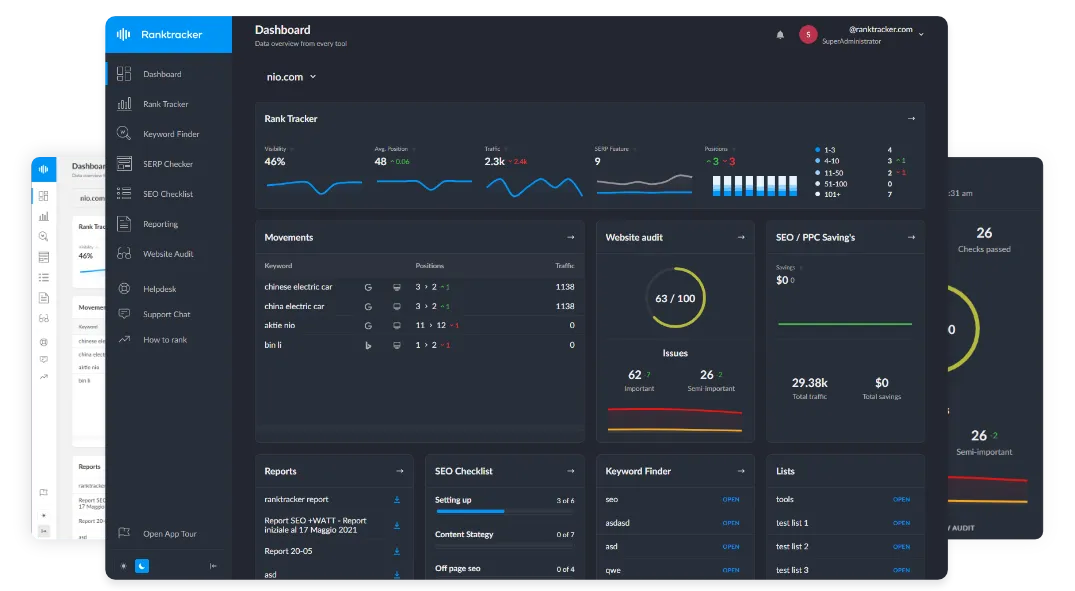
Behind every successful business is a strong SEO campaign. But with countless optimization tools and techniques out there to choose from, it can be hard to know where to start. Well, fear no more, cause I've got just the thing to help. Presenting the Ranktracker all-in-one platform for effective SEO
We have finally opened registration to Ranktracker absolutely free!
Create a free accountOr Sign in using your credentials
Additionally, endpoint detection and response (EDR) tools powered by AI provide continuous monitoring and automated remediation. This approach enables early threat detection and rapid containment, which is crucial for legacy systems where manual intervention can be slow and error-prone. AI-driven EDR platforms can analyze endpoint behaviors in real-time, identifying suspicious patterns that indicate potential compromise and triggering automated isolation protocols to prevent lateral movement within the network.
For businesses seeking to expand their understanding of AI-driven security integrations and outsourcing options, more on trav-tech.com offers valuable insights and resources.
Quantifying the Impact of AI in Managed Endpoint Security
The integration of AI-driven technologies into managed IT services is not just theoretical; measurable benefits are being realized across industries. According to a study by Cybersecurity Insiders, 61% of organizations using AI-powered endpoint security reported improved threat detection capabilities, while 55% experienced faster incident resolution times. These improvements translate directly into enhanced protection for legacy systems that were previously more vulnerable to sophisticated attacks.
Moreover, the global market for AI in cybersecurity is expected to grow at a compound annual growth rate (CAGR) of 23.3% from 2021 to 2028, highlighting the increasing adoption of these solutions. This growth reflects the growing recognition that AI-driven security is not only a technological advancement but a strategic necessity for organizations facing evolving cyber threats.
The cost-effectiveness of AI-driven endpoint security also plays a crucial role. By automating threat detection and response, organizations can reduce reliance on extensive human resources, which are often scarce and expensive. This automation is especially beneficial for managing legacy systems, where manual security processes are inefficient and error-prone.
Best Practices for Implementing AI-Driven Endpoint Security
To maximize the benefits of AI in protecting legacy systems, organizations should consider the following best practices:
-
Comprehensive Assessment: Begin with a thorough evaluation of existing legacy systems to identify vulnerabilities and compatibility issues. This includes inventorying hardware and software assets, assessing patch levels, and understanding communication protocols.
-
Customized AI Models: Work with managed IT service providers to develop AI models tailored to specific legacy environments. Customization ensures that AI algorithms account for the unique behaviors and constraints of older systems, reducing false positives and improving detection accuracy.
-
Continuous Monitoring: Implement AI-driven EDR tools that provide 24/7 surveillance and automated threat response. Continuous monitoring is vital for early detection of threats and minimizing the impact of potential breaches.
-
Regular Updates and Training: Ensure AI algorithms are updated frequently to adapt to emerging threats, and train staff to understand AI security mechanisms. Human expertise remains essential in interpreting AI alerts and making informed decisions.
-
Collaborative Approach: Foster close collaboration between IT teams and managed service providers to ensure smooth integration and rapid response to incidents. This partnership enables the sharing of insights and the continuous improvement of security posture.
-
Phased Implementation: To minimize disruption, adopt a phased approach when integrating AI-driven security tools. Start with critical endpoints and expand gradually, allowing time to address challenges specific to legacy environments.
By following these steps, organizations can transform their legacy systems from security liabilities into resilient components of their IT ecosystem. This transformation not only mitigates risk but also extends the operational lifespan of legacy infrastructure, providing greater return on investment.
The Future of Legacy Systems and AI Security
As AI technologies continue to advance, their role in enhancing endpoint security will only grow more sophisticated. Future developments may include deeper integration of AI with Internet of Things (IoT) devices, improved predictive analytics to anticipate attacks before they occur, and greater automation in threat hunting and remediation.
IoT devices, often lacking robust security features, represent a growing attack surface, especially when connected to legacy systems. AI-driven security solutions will be critical in monitoring these devices, detecting anomalies, and preventing exploitation. Additionally, advancements in federated learning could enable AI models to learn from distributed data sources without compromising privacy, enhancing threat detection across diverse environments.
Managed IT service providers will play a pivotal role in driving these innovations, offering scalable and adaptive security solutions that evolve alongside both legacy and modern systems. The ultimate goal is to create a security infrastructure that is agile, intelligent, and capable of defending against the complex cyber threats of tomorrow.
Moreover, as regulatory requirements tighten globally, AI-driven security tools will assist organizations in maintaining compliance by providing detailed audit trails and real-time risk assessments. This compliance aspect is particularly important for industries such as healthcare and finance, where legacy systems are prevalent, and data protection is paramount.
Conclusion
The convergence of AI-driven endpoint security and managed IT services marks a transformative shift for businesses dependent on legacy systems. By harnessing AI’s capabilities, organizations can overcome the inherent vulnerabilities of outdated infrastructure, enhance their threat detection and response, and ensure business continuity in an increasingly hostile cyber environment.
In an era where cyber threats grow more sophisticated by the day, embracing AI-driven endpoint security within managed IT services is not just an option. It’s a necessity for sustainable digital resilience. By investing in these advanced technologies, businesses can protect their critical assets, maintain operational efficiency, and confidently navigate the evolving digital landscape.