Intro
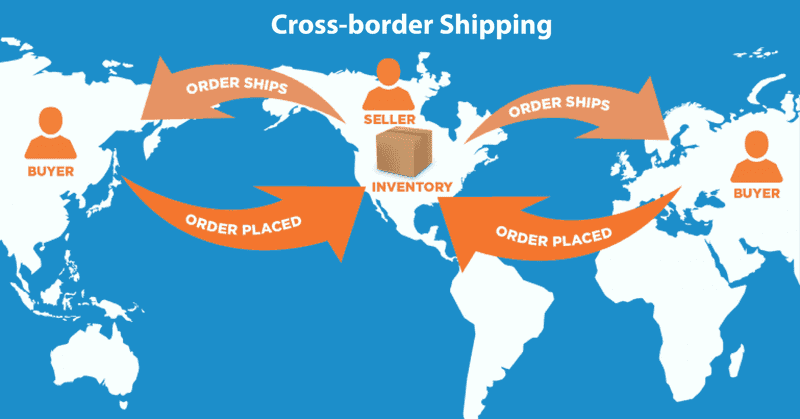
Shipping across borders isn’t simply “domestic shipping with extra distance.”
It’s a multi-layered operational system involving:
- Regulatory compliance
- Tax law
- International trade classification
- Multi-carrier orchestration
- Data integrity
- Customer experience design
- Financial risk management
And when ecommerce brands underestimate this complexity, they experience:
- Customs delays
- Margin erosion
- Refused deliveries
- Tracking gaps
- Customer support overload
- Refund losses
- Negative reviews
- Chargebacks
That’s why serious brands don’t just “offer international shipping.”
They implement structured cross border shipping solutions — integrated systems that transform international logistics from unpredictable chaos into scalable infrastructure.
If you're comparing platforms and providers, this overview of cross border shipping solutions provides a structured breakdown of leading tools across ecommerce models.
But tool comparison is only the final step.
The All-in-One Platform for Effective SEO
Behind every successful business is a strong SEO campaign. But with countless optimization tools and techniques out there to choose from, it can be hard to know where to start. Well, fear no more, cause I've got just the thing to help. Presenting the Ranktracker all-in-one platform for effective SEO
We have finally opened registration to Ranktracker absolutely free!
Create a free accountOr Sign in using your credentials
Before selecting a solution, you need to understand the architecture behind successful international shipping systems.
This guide explains everything.
What Are Cross Border Shipping Solutions?
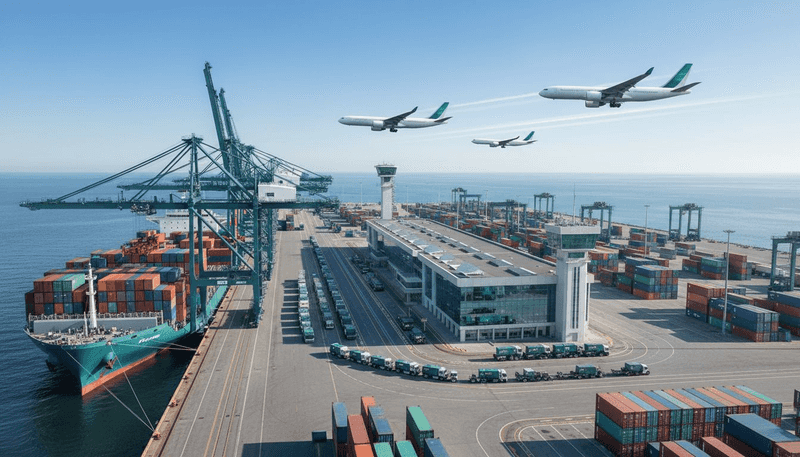
Cross border shipping solutions are integrated logistics ecosystems that combine:
- Software
- Carrier networks
- Customs automation
- Tax calculation engines
- Tracking systems
- Compliance workflows
- Operational reporting
- Returns infrastructure
They enable ecommerce brands to sell internationally without operational breakdown.
A true cross-border system handles:
- Multi-carrier rate shopping
- Automated customs documentation
- HS / commodity code mapping
- Duties and VAT calculation (DDP / DAP)
- Landed cost display at checkout
- Real-time end-to-end tracking
- Exception management alerts
- Cross-border returns workflows
- Compliance validation per country
- Inventory routing optimization
If your current “solution” only prints international labels, you do not have a cross-border shipping solution.
You have exposure.
Why International Shipping Fails Without Structure
Many brands expand internationally using domestic workflows.
This almost always breaks.
1. Customs Delays
Incorrect:
- Product descriptions
- HS codes
- Country of origin declarations
- Declared values
Cause customs holds.
The All-in-One Platform for Effective SEO
Behind every successful business is a strong SEO campaign. But with countless optimization tools and techniques out there to choose from, it can be hard to know where to start. Well, fear no more, cause I've got just the thing to help. Presenting the Ranktracker all-in-one platform for effective SEO
We have finally opened registration to Ranktracker absolutely free!
Create a free accountOr Sign in using your credentials
Each hold results in:
- Delivery delays
- Increased WISMO tickets (“Where is my order?”)
- Refund risk
- Negative customer sentiment
Repeated delays damage brand trust in new markets.
2. Surprise Duties & Taxes
If customers are hit with unexpected import fees at delivery:
- They refuse the parcel
- The shipment returns internationally
- The brand pays reverse logistics
- Revenue is lost
- Reviews turn negative
Transparent landed cost calculation is not optional in 2026 — it’s competitive infrastructure.
3. Carrier Handoff Blind Spots
International shipments often pass through:
- Origin carrier
- Linehaul partner
- Customs broker
- Destination courier
Without multi-carrier visibility integration, tracking disappears mid-transit.
Customers assume the parcel is lost.
Support volume spikes.
4. High International Return Costs
Returns across borders can exceed the original shipping cost.
Without structured return workflows:
- Margin collapses
- Inventory becomes stranded
- Refund processing slows
Cross border shipping solutions exist to eliminate these systemic inefficiencies.
The 5 Core Pillars of a Scalable Cross Border Shipping System
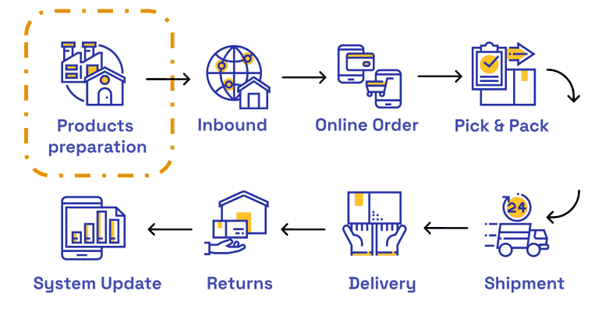
If you're building a global ecommerce brand, these pillars matter more than choosing the cheapest carrier.
1. Product-Level Customs Data Architecture
Every SKU must contain structured international metadata:
- HS / commodity code
- Country of origin
- Accurate commercial description
- Net and gross weight
- Dimensions
- Declared value logic
- Materials (if required for regulatory compliance)
2. Duties Strategy: DDP vs DAP
DDP (Delivered Duty Paid)
You collect duties & taxes upfront.
Customer pays nothing at delivery.
Best for:
- DTC ecommerce
- High-AOV brands
- Markets sensitive to surprise fees
- Premium customer experience
Pros:
- Higher delivery success rates
- Fewer refusals
- Lower support volume
- Better reviews
DAP / DDU (Delivered At Place)
Customer pays import fees upon arrival.
Best for:
- B2B buyers
- Early-stage international testing
- Buyers registered as importers
Pros:
- Lower upfront integration complexity
- No duty pre-financing required
Risk:
- Higher refusal rates
- Customer friction
Modern cross border shipping solutions must support both.
3. Carrier Orchestration (Not Carrier Loyalty)
Scalable brands don’t use one carrier globally.
They design carrier logic by:
- Shipping lane
- Delivery speed expectation
- Cost structure
- Risk profile
- Parcel dimensions
A mature setup includes:
- Express option (premium speed)
- Economy option (margin protection)
- Lane-optimized fallback carrier
- Smart routing automation
This reduces cost while maintaining delivery performance.
4. Real-Time Multi-Carrier Tracking
Tracking must:
- Persist across carrier handoffs
- Surface customs status
- Trigger automated notifications
- Provide branded tracking pages
- Offer API-level data visibility
Visibility reduces support tickets by up to 30–50% in international lanes.
5. Exception Management System
International shipping will always generate exceptions.
The difference between chaos and scale is response time.
Strong systems:
- Flag documentation issues early
- Detect customs holds in real time
- Trigger automated customer communication
- Provide internal dashboards
- Track exception resolution metrics
You cannot scale what you cannot monitor.
Types of Cross Border Shipping Solutions
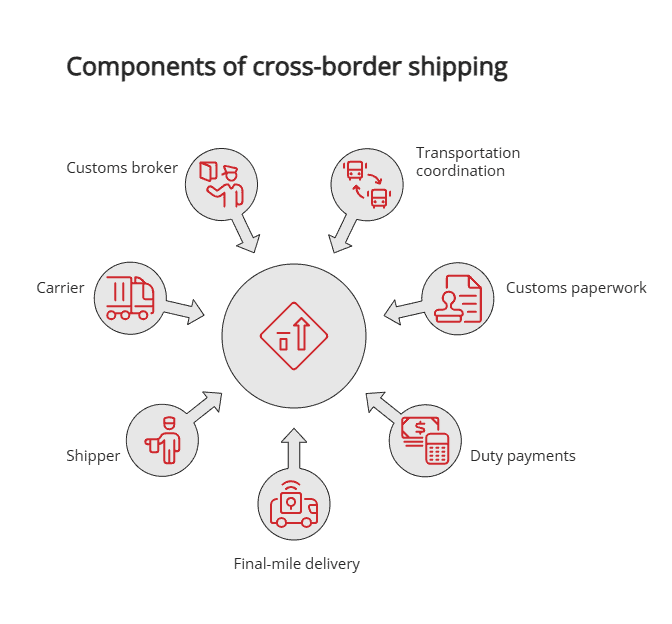
Different business models require different infrastructure.
A) Parcel-Focused Ecommerce Platforms
Best for:
- Shopify stores
- WooCommerce sellers
- Marketplace sellers
- Mid-volume DTC brands
Features:
- Rate comparison
- Discounted international labels
- Duties calculation at checkout
- Tracking dashboards
- Basic returns management
Ideal for 500–10,000 parcels/month.
B) Distributed Fulfillment & 3PL Networks
Best for:
- High-growth brands
- Subscription models
- Fast-delivery expectations
- Regionalized demand
Features:
- Multi-country warehouses
- Local shipping lanes
- Reduced customs friction
- Faster delivery
- Lower last-mile cost
This reduces cross-border dependency by localizing inventory.
C) Freight & Supply Chain Platforms
Best for:
- Manufacturers
- Importers
- B2B wholesalers
- Bulk inventory movement
Features:
- Ocean & air freight coordination
- Customs brokerage
- Supply chain visibility
- International + domestic trucking
- Container management
This layer often feeds ecommerce distribution systems.
Advanced Cost Optimization Strategies (2026 Framework)
Reducing international cost isn’t about negotiating harder.
It’s about systems design.
Optimize Packaging Engineering
Dimensional weight pricing dominates air shipping.
Even 1–2 cm of excess packaging can increase costs significantly.
Strategies:
- Custom box sizing
- Poly mailer optimization
- SKU bundling analysis
Lane-Based Service Optimization
Not all markets require express delivery.
Segment countries by:
- Customer expectation
- AOV
- Competitive landscape
- Shipping tolerance
Match service level to market maturity.
Improve Documentation Accuracy
Customs holds generate hidden costs:
- Storage fees
- Administrative time
- Customer refunds
- Support labor
Improved HS mapping reduces these friction costs dramatically.
Inventory Distribution Modeling
At scale, distributed inventory often outperforms pure cross-border shipping.
Positioning inventory:
- Reduces duty complexity
- Speeds delivery
- Lowers last-mile cost
- Improves conversion rates
AI-Driven Carrier Selection
In 2026, advanced platforms use:
- Machine learning
- Lane performance analysis
- Cost vs delivery modeling
- Predictive exception detection
This reduces both cost and failure rates.
Financial Modeling for International Expansion
Before scaling internationally, calculate:
- Landed cost per SKU
- Return rate by country
- Average customs delay time
- Support ticket volume per 1,000 shipments
- Duty pre-financing cash flow impact
International shipping affects:
- Cash flow
- Margin structure
- Working capital
- Refund risk exposure
Without modeling, expansion becomes margin erosion.
Common Cross Border Shipping Challenges
Customs holds → Automated documentation + HS validation
Surprise import fees → Landed cost calculator at checkout
Tracking gaps → Multi-carrier tracking dashboards
High shipping cost → Intelligent rate shopping + lane optimization
Returns friction → Local return hubs or returnless refunds
Cash flow strain (DDP) → Duty management and forecasting tools
Cross Border Ecommerce Trends in 2026
International ecommerce is evolving rapidly.
Major trends include:
- AI-driven logistics orchestration
- Real-time landed cost transparency
- Automated tax compliance (EU VAT, IOSS, UK VAT)
- Nearshoring inventory strategies
- Increased demand for DDP checkout experiences
- Carrier diversification beyond legacy express networks
Brands that modernize their shipping stack outperform those relying on legacy manual workflows.
Frequently Asked Questions
What are cross border shipping solutions?
Integrated systems that automate customs documentation, duties calculation, carrier orchestration, and international tracking to enable scalable global shipping.
How do I reduce cross-border shipping costs?
Use lane-based carrier optimization, packaging engineering, landed cost modeling, and distributed inventory strategies.
Should I use DDP or DAP?
DDP improves customer experience and reduces refusals. DAP lowers upfront complexity but increases delivery risk.
What’s the biggest mistake brands make?
Treating international shipping like domestic shipping with international labels.
Do I need a 3PL for international shipping?
Not always. But at higher volume, distributed fulfillment often improves cost and speed.
How do I calculate landed cost?
Landed cost includes product cost + shipping + duties + taxes + brokerage + insurance.
How important are HS codes?
Critical. Incorrect classification causes customs delays and fines.
Final Thoughts
International shipping is not complex because packages travel further.
The All-in-One Platform for Effective SEO
Behind every successful business is a strong SEO campaign. But with countless optimization tools and techniques out there to choose from, it can be hard to know where to start. Well, fear no more, cause I've got just the thing to help. Presenting the Ranktracker all-in-one platform for effective SEO
We have finally opened registration to Ranktracker absolutely free!
Create a free accountOr Sign in using your credentials
It’s complex because responsibility transfers across:
- Borders
- Regulations
- Carriers
- Tax jurisdictions
- Compliance systems
The right cross border shipping solution transforms that complexity into structured infrastructure.
When implemented correctly, international ecommerce becomes:
Predictable Scalable Margin-protected Customer-friendly Strategic
And that’s when global expansion shifts from operational risk to competitive advantage.