Intro

Every digital marketer has experienced that familiar sinking feeling. You see a flashy sales page for a new software tool promising to revolutionize your business for a low one-time price. You click "buy," excited to start. But immediately after entering your credit card details, you aren't taken to the dashboard. Instead, you're hit with another sales page. And then another. And another. Suddenly, the "complete solution" you bought feels incomplete without the "Pro," "Enterprise," or "Reseller" upgrades that cost five times the original price. This is the reality of modern software launches, and navigating it requires a strategic shift in how we approach purchasing tools.
The Hidden Complexity of Modern Software Launches
The digital marketplace has evolved significantly over the last decade. In the early days of internet marketing, software was often sold as a single, standalone product. What you saw was what you got. However, as competition increased and customer acquisition costs rose, developers and vendors adopted a more aggressive monetization strategy: the sales funnel.
A sales funnel in the software world is not inherently bad. It allows vendors to offer a basic version of their tool at a low entry price—often called the "Front End" (FE) offer—making it accessible to beginners. Advanced features are reserved for users who need them and are offered as One-Time Offers (OTOs) or upsells.
The problem arises when the Front End product is severely limited, almost to the point of being unusable, without the upgrades. Marketers often find themselves trapped in a sequence of upsells where they feel pressured to spend hundreds of dollars more than anticipated just to get the functionality they thought they were buying originally. This "funnel fatigue" leads to buyer's remorse, refund requests, and wasted time.
This is where the concept of pre-purchase analysis becomes vital. Smart marketers no longer buy blindly. They research the entire funnel architecture before spending a dime. Platforms like OtosLinks have emerged as essential resources in this due diligence phase, providing transparency where sales pages often provide ambiguity. By understanding the full scope of a product launch—including every upgrade, bundle deal, and downsell—you regain control over your budget and your business decisions.
Decoding the Anatomy of a Launch Funnel
To make informed decisions, you first need to understand the standard components of a software launch funnel. Most launches follow a predictable structure, though the specific offers vary.
The Front End (FE)
This is the hook. It's the low-priced offer you see in emails and social media ads, typically priced from $17 to $37 during the launch period. While the marketing copy promises the world, the FE is often restricted by usage credits, account limits, or missing key features like commercial rights.
The OTOs (One-Time Offers)
Immediately after purchasing the FE, you enter the OTO sequence. These are the upgrades. Common types include:
- Unlimited Edition: Removes the caps on data, searches, or rendering limits found in the FE.
- Pro/Enterprise: Adds advanced features, better templates, or faster processing speeds.
- Done-For-You (DFY): Provides pre-made assets to save time.
- Agency/Reseller: Grants the ability to sell the software to clients or create sub-accounts.
The Bundle Deal
Increasingly common, the "Bundle Deal" is an offer usually presented on a webinar or a specific page that allows you to buy the FE and all OTOs for a single, discounted price.
Without visibility into this structure, you are flying blind. You might buy an FE for $27, only to realize the feature you actually needed—say, the ability to export video files—is locked behind OTO 2, which costs $97.
The All-in-One Platform for Effective SEO
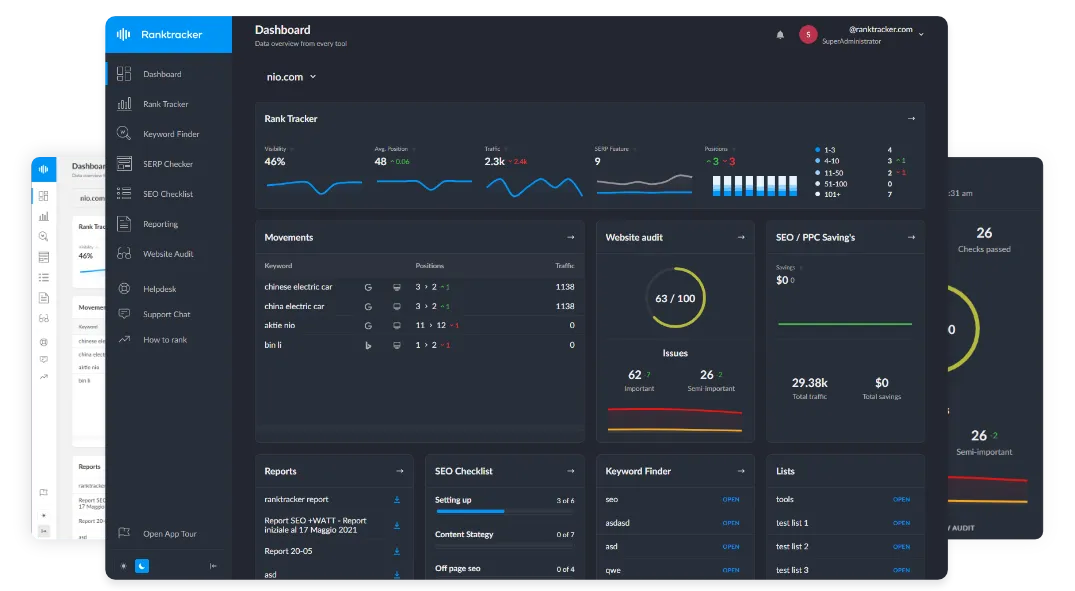
Behind every successful business is a strong SEO campaign. But with countless optimization tools and techniques out there to choose from, it can be hard to know where to start. Well, fear no more, cause I've got just the thing to help. Presenting the Ranktracker all-in-one platform for effective SEO
We have finally opened registration to Ranktracker absolutely free!
Create a free accountOr Sign in using your credentials

The Financial Risk of "Blind Buying"
Impulse buying in the B2B software space is dangerous for cash flow. When you purchase without analyzing the funnel, you risk falling into the sunk cost fallacy. This happens when you buy the FE, realize it's insufficient, and then feel compelled to buy the upgrades because you have already spent money on the initial product.
Let's look at a hypothetical scenario. A new AI content creator launches.
- FE Price: $27.
- OTO 1 (Unlimited): $67.
- OTO 2 (Plagiarism Checker): $47.
- OTO 3 (Agency Rights): $97.
If you blindly buy the FE expecting a full suite, you are unprepared for the additional $211 required to unlock the full potential. However, if you had utilized a resource like OtosLinks beforehand, you would have seen the total cost of the funnel. You might have noticed a "Bundle Deal" available for $197, saving you money compared to buying the upgrades individually. Or, you might have realized that the features in OTO 1 were not necessary for your current project, allowing you to skip that upgrade with confidence rather than fear of missing out (FOMO).
Transparency is the New Currency
The most successful marketers today value transparency above all else. They treat software purchases as investments, not expenses. An investor would not invest in a stock without reading the prospectus; similarly, a business owner should not buy software without reading the "funnel prospectus."
This need for transparency is why checking the OTO structure is critical. It answers key questions:
- Is the Front End usable on its own? If the "Unlimited" upgrade is OTO 1, it implies the FE is limited. Knowing the specific limits helps you determine whether the FE is sufficient for your needs.
- Are there hidden costs? Sometimes, vital integrations (like connecting to an autoresponder or a payment gateway) are locked behind an upsell.
- Is there a Bundle Deal? Often, vendors hide the Bundle Deal link deep in the funnel or only show it to webinar attendees. Finding this link early can save significant money.
By using aggregation sites that list these details, you shift the power dynamic. You are no longer reacting to high-pressure sales tactics and countdown timers inside the funnel. You are proactively assessing the value proposition of the entire package.

How to Conduct a Pre-Purchase Audit
Before you click "Buy Now" on the next shiny object, run through this mental checklist to ensure the software aligns with your goals and budget.
1. Identify the Core Functionality
Read the sales page, but look past the hype. What does the software actually do? Strip away the adjectives and focus on the verbs. Does it "generate," "host," "send," or "analyze"? Ensure the core function solves a specific problem you currently have.
2. Map the Funnel
This is the most crucial step. Visit OtosLinks or similar directories to find the breakdown of the specific product launch. Look at the list of OTOs. What are they called? What is the pricing for each?
3. Determine Your "Must-Haves" vs. "Nice-to-Haves"
Look at the features of each OTO. Do you need the "White Label" rights offered in OTO 4? If you are not an agency, probably not. Do you need "Unlimited" credits in OTO 1? If you only plan to create five videos a month, the FE limits might be sufficient.
4. Check for Down-sells
A "down-sell" is a discounted version of an OTO offered when you decline the initial upgrade. Sometimes, the down-sell is the exact same product with a $10 or $20 discount. Sometimes it is a "lite" version. Knowing these exist can help you negotiate a better price for yourself during the buying process.
5. Evaluate the Bundle Deal
If you find that you need the FE plus two or three of the upgrades, calculate the total cost. Then, compare this to the Bundle Deal price. Often, the bundle is the most improved financial decision for power users.
Moving From Impulse to Strategy
The shift from impulse buying to strategic acquisition is what separates struggling side-hustlers from successful entrepreneurs. Software tools are assets. They are meant to increase efficiency, reduce labor costs, or generate revenue. If a tool becomes a source of frustration because of hidden costs or confusing upgrade paths, it becomes a liability.
Analyzing sales funnels is about respect for your own resources. It is about acknowledging that while the vendor has a right to monetize their hard work, you have a right to understand exactly what you are paying for.
By taking a few minutes to research the funnel structure, you protect your wallet and ensure that every tool you add to your tech stack is there because it serves a purpose, not because you were manipulated by a slick sales process.
Strategic Spending is Your Competitive Advantage
In a digital landscape crowded with tools and subscriptions, your ability to curate a lean, effective tech stack is a competitive advantage. Wasted money on unused software upgrades eats into ad budgets and hiring funds.
Make it a habit to pause before purchasing. Look for the "One-Time Offer" map. Understand the hierarchy of the product. When you know exactly what is behind the curtain, you can make purchase decisions that propel your business forward, rather than weighing it down with unused features and unexpected expenses.