Intro
CRM platforms sit at the center of modern business operations. Sales, marketing, support, RevOps, leadership — everyone touches the CRM, and everyone has an opinion about what it should do.
That makes CRM one of the most searched, debated, and misunderstood software categories on the internet.
AI Overviews now sit directly on top of that confusion.
Google is no longer just ranking CRM vendors. It is explaining what a CRM is, what it replaces, what it integrates with, and how businesses should use it — often before a buyer ever visits a vendor website.
For CRM platforms, AI Overviews are not a traffic problem. They are a category-definition problem.
The All-in-One Platform for Effective SEO
Behind every successful business is a strong SEO campaign. But with countless optimization tools and techniques out there to choose from, it can be hard to know where to start. Well, fear no more, cause I've got just the thing to help. Presenting the Ranktracker all-in-one platform for effective SEO
We have finally opened registration to Ranktracker absolutely free!
Create a free accountOr Sign in using your credentials
This article is part of Ranktracker’s AI Overviews series and goes deep into how AI Overviews affect CRM platforms specifically, how buyers interact with AI-driven SERPs, how Google selects sources for CRM explanations, what content actually influences those explanations, and how CRM vendors can protect and expand authority when attribution disappears.
1. Why AI Overviews Matter More for CRM Platforms Than Almost Any Other SaaS Category
CRM is not a niche tool category. It is foundational infrastructure.
That creates three unique pressures.
CRM Is Conceptually Overloaded
CRM now overlaps with:
- Marketing automation
- Sales enablement
- Customer success
- Support desks
- Data platforms
- RevOps tooling
Buyers constantly ask:
- “What does a CRM actually do?”
- “Do we need a CRM or something else?”
- “Is our CRM doing too much — or not enough?”
AI Overviews attempt to simplify and standardize these answers.
Whoever influences that explanation controls the category narrative.
CRM Buyers Search for Understanding, Not Vendors
Common CRM queries include:
- “What is a CRM?”
- “How does CRM software work?”
- “CRM vs CDP vs marketing automation”
- “When does a business need a CRM?”
- “What problems does a CRM solve?”
These are high-volume, high-impact AI Overview triggers.
If Google answers them without your framing, your product positioning becomes reactive.
CRM Decisions Are Long-Lived and Risk-Averse
Once chosen, CRMs are hard to replace.
AI Overviews influence:
- Perceived switching risk
- Expectations of what “good CRM” means
- Internal justification language
- Feature assumptions before demos happen
SEO influence now happens before vendor evaluation begins.
2. How AI Overviews Reshape the CRM Buyer Journey
AI Overviews compress months of CRM research into minutes.
Awareness → Definition
AI Overviews define:
- What a CRM is today (not what it was)
- Who should own it
- What it should integrate with
- What problems it is expected to solve
If your platform’s worldview isn’t present here, buyers enter the journey misaligned.
Consideration → Normalization
Buyers ask:
- “Is this a CRM problem or a process problem?”
- “Is our CRM supposed to do this?”
- “Do modern CRMs include X?”
AI Overviews normalize expectations before demos are booked.
Evaluation → Silent Elimination
By the time vendors are compared:
- Certain features feel “standard”
- Certain architectures feel outdated
- Certain approaches feel risky
CRM SEO now influences who gets eliminated without ever being compared.
3. The CRM Attribution Gap Created by AI Overviews
CRM platforms already struggle with proving SEO impact because:
- Sales cycles are long
- Attribution is multi-touch
- Buyers revisit vendors weeks later
AI Overviews widen that gap.
The All-in-One Platform for Effective SEO
Behind every successful business is a strong SEO campaign. But with countless optimization tools and techniques out there to choose from, it can be hard to know where to start. Well, fear no more, cause I've got just the thing to help. Presenting the Ranktracker all-in-one platform for effective SEO
We have finally opened registration to Ranktracker absolutely free!
Create a free accountOr Sign in using your credentials
Your content may:
- Define CRM best practices
- Shape buyer expectations
- Influence internal CRM debates
- Normalize your platform’s philosophy
Yet analytics may show:
- Fewer visits
- Flat demo starts
- No direct attribution
This creates a false narrative:
“SEO is declining”
When in reality:
SEO is shaping decisions before attribution exists.
4. How Google Chooses Sources for CRM AI Overviews
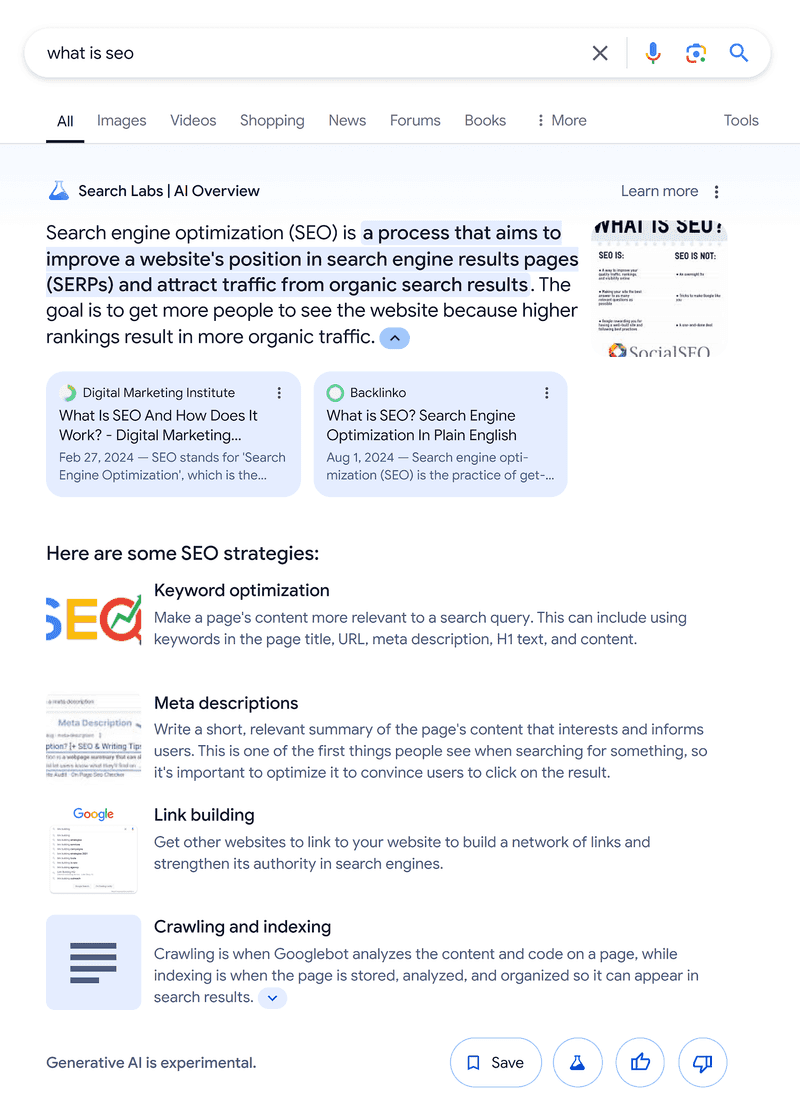
Google applies strong trust heuristics to CRM topics because of their business-critical nature.
4.1 Category Authority Beats Feature Authority
Google prefers sources that:
- Explain CRM as a system, not a product
- Separate CRM concepts from vendor features
- Cover lifecycle, data, and organizational impact
- Show long-term consistency in explanations
Pure product pages rarely influence AI Overviews alone.
CRM vendors must prove they understand customer management itself, not just their UI.
4.2 Entity Signals and Market Role Clarity
Google treats CRM platforms as entities with defined roles.
Signals include:
- Consistent positioning as CRM (not everything at once)
- Repeated association with sales, marketing, or customer data contexts
- Clear articulation of what the CRM owns vs integrates with
- Alignment between blogs, docs, and product language
Vendors that blur definitions weaken AI trust.
4.3 Language Precision and Definition Stability
CRM content often drifts as vendors expand.
AI Overviews penalize:
- Redefining CRM to fit roadmaps
- Shifting terminology across pages
- Overusing marketing abstractions
AI favors:
- Stable definitions
- Clear scope boundaries
- Honest trade-offs
5. The Strategic Shift for CRM SEO Teams
Old CRM SEO
- “Rank for CRM software”
- “Publish best CRM lists”
- “Optimize product pages”
AI-First CRM SEO
- Define what modern CRM means
- Explain how CRM fits into the stack
- Normalize expectations and workflows
- Become the educational reference Google trusts
If Google explains CRM without your logic, competitors inherit the narrative.
6. Content Types That Influence AI Overviews for CRM Platforms
6.1 Foundational Definition Pages
Examples:
- “What Is a CRM?”
- “What Does CRM Software Do?”
- “CRM vs CDP vs Marketing Automation”
These anchor AI explanations.
6.2 System and Workflow Explanations
CRM buyers want clarity on:
- Data ownership
- Customer lifecycle tracking
- Sales vs marketing responsibilities
- Automation boundaries
AI Overviews favor system-level clarity.
6.3 Frameworks and Lifecycle Models
Named models:
- CRM maturity stages
- Customer lifecycle frameworks
- Pipeline and account hierarchies
AI prefers structured, labeled thinking.
6.4 Balanced, Educational Comparisons
AI Overviews favor content explaining:
- When CRM is essential
- When spreadsheets or lightweight tools suffice
- Where CRM overlaps other platforms
Sales-led “vs” pages are less influential.
7. How to Structure CRM Content for AI Overviews
Lead With the CRM Definition
Every core page should start with:
- A one-sentence definition
- Clear scope
- Immediate explanation
Avoid storytelling intros.
Enforce Semantic Discipline Across the Site
CRM vendors must maintain:
- One definition of CRM
- One framing of customer data ownership
- Consistent language across blog, docs, and landing pages
AI distrusts conceptual drift.
Build Category Coverage, Not Campaign Content
CRM SEO should cover:
- Core CRM functions
- Adjacent tools
- Organizational impact
- Adoption and data hygiene challenges
Coverage density signals authority.
8. Measuring CRM SEO Success in an AI Overview World
Traffic alone is no longer sufficient.
CRM SEO teams should track:
- Which CRM keywords trigger AI Overviews
- Desktop vs mobile SERP behavior
- Visibility loss without ranking loss
- Changes in buyer expectations during demos
- Growth in branded + CRM education searches
SEO becomes category education infrastructure.
9. Why AI Overview Tracking Is Mandatory for CRM Platforms
CRM platforms cannot afford to lose narrative control.
Without AI Overview tracking, you won’t know:
- When Google rewrites CRM definitions
- When competitors replace your explanations
- Which CRM concepts you’re losing authority on
- Where educational gaps exist
This is where Ranktracker becomes essential.
Ranktracker allows CRM teams to:
- Track AI Overviews at the keyword level
- Monitor desktop and mobile SERPs separately
- View AI results alongside full Top 100 rankings
- Detect AI-driven visibility shifts before pipeline impact
You cannot manage CRM SEO in 2026 without AI-layer observability.
10. Conclusion: AI Overviews Decide What CRM Means — Vendors Must Shape That Meaning
AI Overviews do not diminish CRM SEO. They decide the category narrative.
In an AI-first SERP:
- Traffic is optional
- Authority is decisive
- Definitions shape buying behavior
- Visibility precedes attribution
CRM platforms that adapt will:
- Define what modern CRM really is
- Influence buyers before demos happen
- Reduce dependency on paid demand capture
- Build defensible, long-term search authority
The CRM SEO question has permanently changed.
It is no longer:
The All-in-One Platform for Effective SEO
Behind every successful business is a strong SEO campaign. But with countless optimization tools and techniques out there to choose from, it can be hard to know where to start. Well, fear no more, cause I've got just the thing to help. Presenting the Ranktracker all-in-one platform for effective SEO
We have finally opened registration to Ranktracker absolutely free!
Create a free accountOr Sign in using your credentials
“How do we rank for CRM software?”
It is now:
“How does Google explain CRM — and are we shaping that explanation?”
Those who shape the explanation shape the market.