Intro
AI Overviews are redefining how B2B SaaS platforms are discovered, evaluated, and trusted. This is not a surface-level SEO change. It is a structural shift in how buying decisions are influenced — especially in long, complex, multi-stakeholder B2B sales cycles.
For B2B SaaS, search has never been about impulse clicks. It has always been about education, validation, and risk reduction. AI Overviews now sit directly at that decision-shaping layer, often replacing dozens of exploratory clicks with a single synthesized explanation.
Google is no longer simply ranking vendors. It is standardizing how problems and solutions are explained.
This article goes deep into how AI Overviews affect B2B SaaS platforms specifically, how enterprise buyers interact with AI-driven SERPs, what Google looks for when selecting sources, and how B2B SEO teams can maintain visibility, authority, and pipeline impact in an AI-first search environment.
1. Why AI Overviews Matter More for B2B SaaS Than SMB or Consumer SaaS
B2B SaaS buying behavior is fundamentally different from consumer or SMB software.
B2B buyers:
- Research over weeks or months
- Validate internally with multiple stakeholders
- Look for “industry-standard” approaches
- Avoid experimental or poorly understood tools
- Heavily rely on definitions, frameworks, and best practices
AI Overviews directly influence what feels standard, safe, and credible.
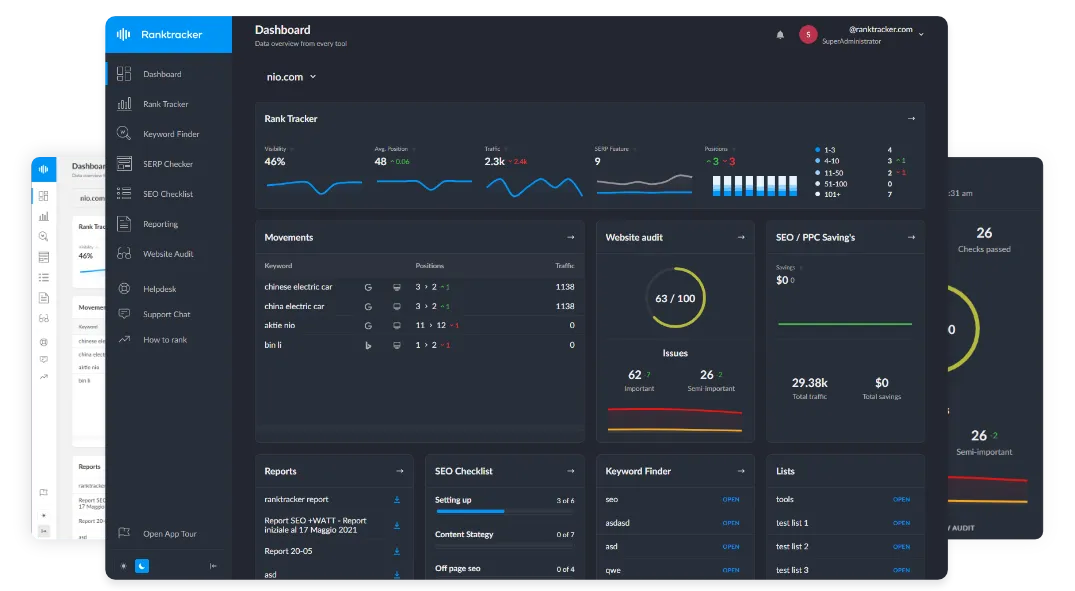
The All-in-One Platform for Effective SEO
Behind every successful business is a strong SEO campaign. But with countless optimization tools and techniques out there to choose from, it can be hard to know where to start. Well, fear no more, cause I've got just the thing to help. Presenting the Ranktracker all-in-one platform for effective SEO
We have finally opened registration to Ranktracker absolutely free!
Create a free accountOr Sign in using your credentials
When Google explains:
- “What is customer data unification?”
- “How enterprise identity management works”
- “Best practices for SOC 2 compliance automation”
It is shaping:
- Internal discussions
- Vendor shortlists
- Perceived risk
- Budget justification language
That influence often happens before a vendor’s website is ever visited.
2. AI Overviews and the Enterprise Buyer Journey
In B2B SaaS, search rarely maps cleanly to a funnel. AI Overviews compress and reshape that journey.
Awareness → Framing
AI Overviews define:
- What the problem is
- Why it matters
- Which approaches are “common”
If your platform’s approach is missing here, you may never enter the conversation.
Consideration → Normalization
At this stage, buyers look for:
- Accepted methodologies
- Tool categories
- Architectural patterns
AI Overviews reinforce what feels normal versus risky.
Evaluation → Elimination
By the time buyers compare vendors, AI Overviews may have already:
- Narrowed solution types
- Established baseline expectations
- Filtered out non-standard approaches
B2B SaaS SEO now influences who is excluded, not just who is clicked.
3. The Attribution Problem in B2B SaaS SEO
One of the biggest challenges AI Overviews introduce is invisible influence.
Your platform’s content may:
- Shape definitions
- Influence buyer language
- Appear in AI explanations
- Guide internal discussions
But analytics may show:
- No traffic
- No referral source
- No obvious attribution
For B2B SaaS, this is dangerous if SEO success is still measured only by:
- Sessions
- Form fills
- Last-click attribution
AI Overviews turn SEO into a pre-attribution channel — influencing pipeline before tracking begins.
4. How Google Chooses Sources for B2B SaaS AI Overviews
Google’s AI systems do not randomly select SaaS content. They evaluate enterprise-level trust signals.
4.1 Topic Authority at the Category Level
For B2B SaaS, Google looks for:
- Deep coverage of a problem space
- Multiple perspectives on the same concept
- Clear subtopic relationships
- Long-term consistency
A single “ultimate guide” is weaker than:
- Definitions
- Architecture explanations
- Implementation guides
- Risk considerations
- Compliance implications
Enterprise authority is built through breadth + depth, not volume.
4.2 Entity Signals and Market Positioning
Google increasingly treats B2B SaaS platforms as entities with roles.
Signals include:
- Consistent category placement
- Mentions in analyst-style content
- Clear differentiation language
- Repeated association with specific use cases
If your platform is consistently described as:
“An enterprise-grade X solution for Y”
AI systems learn to associate your brand with that explanation.
4.3 Stability and Precision of Language
Enterprise buyers hate ambiguity — and so do AI systems.
The All-in-One Platform for Effective SEO
Behind every successful business is a strong SEO campaign. But with countless optimization tools and techniques out there to choose from, it can be hard to know where to start. Well, fear no more, cause I've got just the thing to help. Presenting the Ranktracker all-in-one platform for effective SEO
We have finally opened registration to Ranktracker absolutely free!
Create a free accountOr Sign in using your credentials
B2B SaaS content that performs well in AI Overviews:
- Uses precise definitions
- Avoids marketing-driven language shifts
- Maintains consistent terminology across pages
- Explains trade-offs clearly
Content that constantly reframes concepts for SEO loses trust.
5. The Strategic Shift for B2B SaaS SEO Teams
Traditional B2B SEO focused on:
- Ranking “software + keyword”
- Capturing demo traffic
- Optimizing BOFU pages
AI Overviews shift the real battleground upstream.
Modern B2B SaaS SEO focuses on:
- Owning problem definitions
- Shaping how categories are described
- Becoming the reference for “how this works”
- Influencing buyers before vendor evaluation
If Google explains your category without you, you are already late.
6. Content Types That Influence AI Overviews in B2B SaaS
6.1 Concept and Definition Pages
Enterprise buyers search for clarity first.
Strong examples:
- “What Is Zero-Trust Access in Enterprise IT?”
- “What Is Revenue Intelligence in B2B Sales?”
These pages anchor AI explanations.
6.2 Architecture and Workflow Explanations
B2B buyers want to understand:
- How systems integrate
- Where data flows
- What breaks if something fails
AI Overviews heavily favor structured, logical explanations.
6.3 Frameworks, Models, and Methodologies
Named frameworks:
- Reduce uncertainty
- Are easier to reference
- Become internal language within organizations
AI systems prefer structured models over vague advice.
6.4 Neutral, Use-Case-Driven Comparisons
Overt sales content is often excluded.
Balanced explanations of:
- When one approach works
- When it doesn’t
- Trade-offs and constraints
Are far more likely to influence AI summaries.
7. How to Structure B2B SaaS Content for AI Overviews
Lead With the Enterprise Definition
Start pages with:
- One-sentence definition
- Clear scope (who it’s for, where it applies)
- Immediate explanation
Avoid storytelling intros.
Reinforce the Same Concepts Across Multiple Pages
Enterprise authority is cumulative.
Ensure:
- Definitions don’t drift
- Supporting pages reinforce core explanations
- Internal links connect concept → implementation → outcomes
Build Category Coverage, Not Campaign Content
AI Overviews reward coverage density, not publishing frequency.
Map:
- Core enterprise problem
- Adjacent risks
- Compliance concerns
- Integration scenarios
- Organizational impact
Then cover them systematically.
8. Measuring SEO Success for B2B SaaS in an AI Overview World
B2B SaaS SEO must evolve beyond traffic dashboards.
Key signals now include:
- Which keywords trigger AI Overviews
- Desktop vs mobile SERP differences
- Visibility loss without ranking loss
- Growth in problem-aware branded searches
- Sales feedback (“buyers already understand the space”)
SEO becomes market education infrastructure.
9. Why AI Overview Tracking Is Critical for B2B SaaS Platforms
Without visibility into AI Overviews, B2B SaaS teams are operating blind.
You need to know:
- When AI Overviews appear
- Which keywords are affected
- How rankings interact with AI summaries
- Where authority is being displaced
This is where Ranktracker becomes essential for B2B SaaS teams.
Ranktracker provides:
- AI Overview tracking per keyword
- Desktop and mobile SERP monitoring
- Full Top 100 ranking visibility alongside AI results
This allows B2B SEO teams to:
- Detect AI-driven visibility loss early
- Prioritize content updates strategically
- Understand where SEO influence still exists
- Align SEO with real buyer behavior
You cannot manage AI visibility without measurement at the AI layer.
10. Conclusion: AI Overviews Redefine How B2B SaaS Wins Search
AI Overviews do not eliminate B2B SaaS SEO. They elevate it.
In an AI-first SERP:
- Traffic is optional
- Authority is mandatory
- Explanations outperform rankings
- Visibility precedes attribution
B2B SaaS platforms that adapt early will:
- Shape how their category is understood
- Influence buyers before vendor evaluation
- Reduce dependency on paid demand capture
- Build durable, defensible SEO authority
The B2B SaaS SEO question is no longer:
The All-in-One Platform for Effective SEO
Behind every successful business is a strong SEO campaign. But with countless optimization tools and techniques out there to choose from, it can be hard to know where to start. Well, fear no more, cause I've got just the thing to help. Presenting the Ranktracker all-in-one platform for effective SEO
We have finally opened registration to Ranktracker absolutely free!
Create a free accountOr Sign in using your credentials
“How do we rank?”
It is now:
“How do we define the problem Google explains?”
Those who control the explanation control the market.